Skip to content
In the realm of industrial heating and fluid processing, maintaining the ideal medium temperature is crucial for ensuring production efficiency and product quality. Whether heating water, chemical solutions, or heavy-duty industrial lubricants, immersion heaters are the go-to solution. However, when faced with specific procurement or engineering designs, purchasing managers and engineers often encounter a classic dilemma: Should you choose a Flange Heater or a Screw Plug Heater?
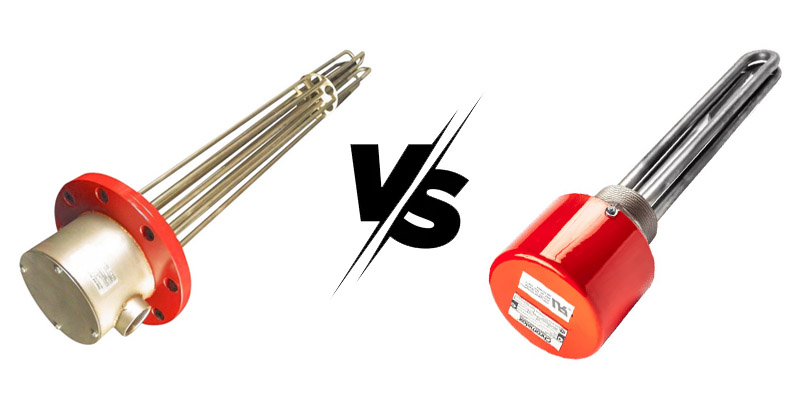
Making the wrong choice can not only lead to poor heating efficiency and soaring energy costs, but it can also cause equipment downtime due to mismatched installation or insufficient power. This article provides an in-depth analysis of these two most common immersion heaters to help you make the smartest decision for your next project procurement.
Key Takeaways
- Flange Heaters are built for heavy-duty applications: Ideal for ultra-high power requirements (up to several megawatts), large storage tanks, and industrial environments that need to withstand high pressure.
- Screw Plug Heaters focus on flexibility and compactness: Suitable for small to medium power needs and space-constrained small vessels. Installation and replacement are extremely convenient.
- Mounting methods determine the application scenario: Flange types are secured with bolts and gaskets to a matching companion flange on the exterior of the tank wall; screw plug types are threaded directly into a tapped hole in the tank wall.
- Core Selection Advice: If your tank capacity is massive and the required kilowatts (KW) are extremely high, choose a flange heater without hesitation. If you are winterizing a small water tank or heating localized oil, a screw plug heater is the most cost-effective choice.
Background Concepts: The Underlying Logic of Immersion Heating
Before comparing these two products, we must first understand their commonality: the direct immersion heating principle.
Both heaters submerge their heating elements (typically made of Stainless Steel, Incoloy, or Copper) directly into the liquid or gas that needs to be heated. This means 100% of the heat generated is transferred directly to the medium, resulting in exceptional thermal efficiency. The underlying criteria for evaluating them primarily rely on two factors:
- Wattage and Watt Density: The amount of heat emitted per unit of surface area. Different heating media (e.g., water vs. thick asphalt) require completely different watt densities to prevent the medium from coking or the heating elements from burning out.
- Mechanical Structure (Mounting Style): How these heating elements are bundled together and ultimately connected to your tank. This is the biggest difference between flange and screw plug designs.
Deep Dive: Flange Heater
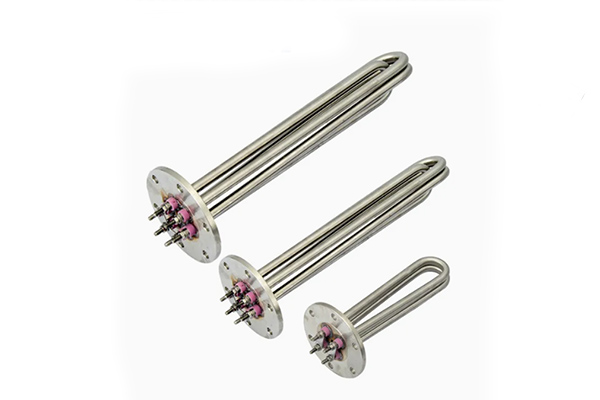
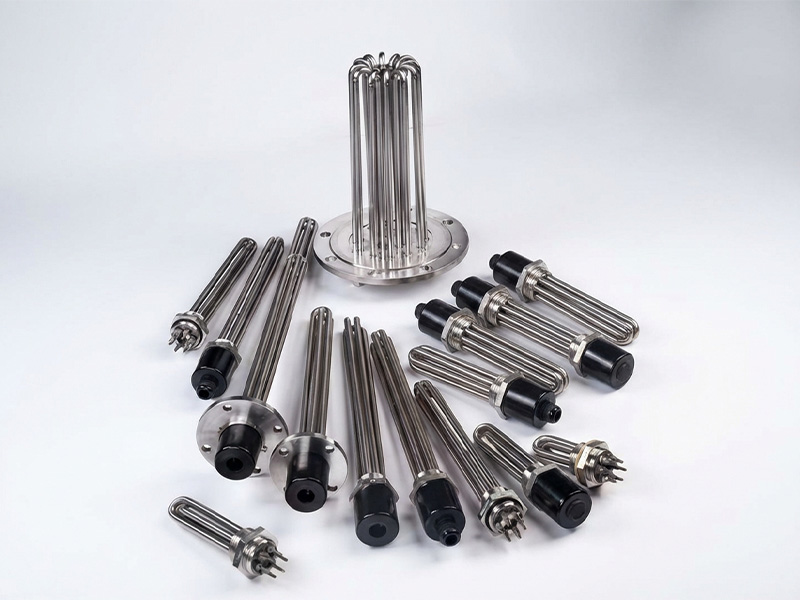
A flange heater consists of multiple hairpin tubular heating elements welded or brazed onto a standard steel or stainless steel flange. It is typically equipped with a terminal enclosure to protect the electrical connections.
Core Technical Specs & Features:
- Extremely High Power Capacity: Because the flange surface area is large, it can accommodate dozens or even hundreds of heating elements, easily achieving massive power outputs ranging from a few kilowatts to several megawatts.
- High-Pressure Resistance: Utilizing standard flange interfaces (such as ANSI flanges) combined with sealing gaskets and high-strength bolts, they can withstand extremely high internal system pressures.
- High Degree of Customization: The immersion length of the heating elements can be customized according to the tank depth, and thermocouples or RTDs can be integrated for precise temperature control.
Typical Application Scenarios:
- Large Industrial Water Towers and Tanks: Providing continuous hot water supply for large factories.
- Petrochemical Storage Tanks: Used for heating and maintaining the temperature of highly viscous liquids like crude oil and heavy fuel oil, ensuring smooth pumping.
- Large Cleaning and Degreasing Tanks: Maintaining chemical solution temperatures in large cleaning vats used in automotive or machinery manufacturing.
- High-Pressure Boilers and Steam Generators: Generating steam within closed vessels that require high-pressure tolerance.
Deep Dive: Screw Plug Heater
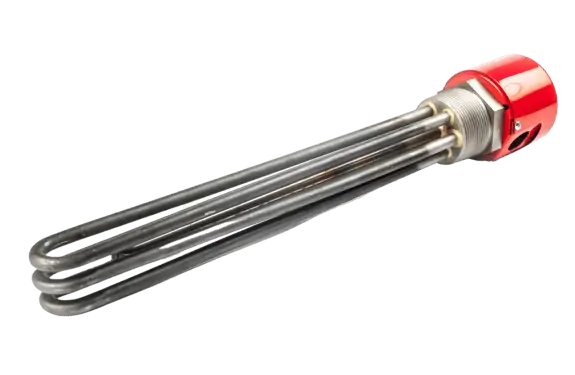
A screw plug heater (also known as a threaded immersion heater) features 1 to 3 (sometimes up to 6) U-shaped heating elements welded or brazed into a hex head screw plug equipped with pipe threads (usually NPT or BSP standards).
Core Technical Specs & Features:
- Compact and Easy to Install: Small in size, it simply requires a wrench to thread it into a female port on a tank or pipe, eliminating the need for complex welding or flange matching.
- Low to Medium Power Range: Limited by the physical size of the plug, the number of heating elements it can hold is restricted. Power ratings typically range from 0.5 KW to 30 KW.
- Highly Cost-Effective: Not only is the initial purchase cost lower, but the extremely simple installation also significantly reduces labor costs.
Typical Application Scenarios:
- Small Engine and Gearbox Oil Heating: Preventing lubricating oil from thickening in cold environments to protect machinery.
- Freeze Protection Systems: Winterizing small water tanks, piping systems, or cooling towers.
- Commercial Food Service Equipment: Small water heating applications in commercial dishwashers, coffee machines, and hot water boilers.
- Laboratory and Medical Cleaning Equipment: Providing precise heating for small solution baths.
Core Differences Comparison: Flange Heater vs. Screw Plug Heater
To give you a clear overview, we have compared these two across 5 critical dimensions:
| Dimension | Flange Heater | Screw Plug Heater |
|---|---|---|
| Mounting & Interface | Bolted to a matching companion flange (requires a gasket) | Threaded directly into a threaded tank port (NPT/BSP) |
| Power Range (Wattage) | Very High (Typically 10KW - Multi-Megawatts) | Low to Medium (Typically 0.5KW - 30KW) |
| Suitable Vessel Size | Large storage tanks, massive reactors, high-pressure vessels | Small tanks, pipe installations, space-restricted equipment |
| Maintenance & Replacement | Higher difficulty (requires draining the tank, removing multiple bolts and a heavy flange) | Lower difficulty (can be unscrewed with a wrench, single-person operation) |
| Initial Cost | Higher (involves more materials, flange components, and complex fabrication) | Lower (simple structure, highly standardized) |
Detailed Explanation of Core Differences:
- Mounting Mechanism and System Pressure: This is a primary concern for engineers. Screw plug heaters rely on thread engagement and thread sealant/Teflon tape to prevent leaks, making them suitable for low to medium-pressure systems. In contrast, flange heaters use high-strength bolts and industrial-grade gaskets to provide face-to-face physical compression, making them the only reliable choice for high-pressure systems (like pressure vessels).
- Scalability of Power Density: If your business expands and a tank requires faster heat-up times, a screw plug heater will quickly hit a physical bottleneck (the plug is too small to add more elements). A flange heater, however, can exponentially increase the number of heating elements by sizing up the flange (e.g., upgrading from a 3-inch to a 14-inch flange), meeting the most demanding heating requirements.
How to Choose (Selection Guide)
From a procurement and engineering maintenance perspective, you can make quick decisions based on the following rules:
- Choose a Flange Heater if:
- Your target storage tank has a massive capacity (e.g., over 1,000 gallons).
- The process demands extremely high heating power (50KW and above).
- The system operates under high-pressure conditions.
- The medium is highly corrosive or highly viscous, requiring a customized low watt density and large surface area heating array.
- Choose a Screw Plug Heater if:
- You have a limited budget, and the heating requirement is simply maintaining temperature or heating a small vessel.
- Internal equipment space is tight, only allowing for a 1" to 2.5" threaded opening.
- Your application is a standard atmospheric water tank, light oil heating, or basic freeze protection.
- You want your maintenance team to be able to quickly replace the heater alone without the need for heavy lifting equipment.
Frequently Asked Questions (FAQs)
Q1: If my tank currently uses a screw plug heater but I need more power, can I directly swap it for a flange heater? No, you cannot swap them directly as the interfaces are completely different. A screw plug uses a female threaded hole, while a flange heater requires a flanged nozzle welded to the tank wall and a matching companion flange. Upgrading requires hot work and tank modifications.
Q2: Which type of heater is easier to clean and descale? Because of its small size and light weight, a screw plug heater is much easier to remove for acid cleaning and descaling. A flange heater is bulky and heavy, requiring more labor to remove. However, since flange heaters often have wider spacing between elements than tightly packed screw plugs, they may be less prone to severe scaling buildup in certain situations.
Q3: How should I choose the sheath material for the heating elements? This depends entirely on your heating medium. Generally, copper or 304 stainless steel is used for clean water; 316 stainless steel is recommended for mildly corrosive liquids or oils; for highly corrosive high-temperature gases or strong acids/bases, premium materials like Incoloy 800/840 or even Titanium are required.
Q4: Which type of heater is more prone to leaking? As long as they are installed correctly, neither should leak. Screw plug leaks are usually due to degraded thread sealant or insufficient tightening torque. Flange heater leaks are typically caused by using the wrong gasket material (e.g., not rated for the temperature) or uneven bolt tightening.
Conclusion & Call to Action (CTA)
Choosing the right immersion heater is an art of balancing performance, cost, and long-term maintenance convenience. Flange heaters dominate the heavy industrial sector with their massive power and pressure capabilities, while screw plug heaters shine in light industrial and commercial equipment due to their compactness and cost-effectiveness. Clearly defining your tank size, required wattage, and installation conditions is the foundation for making the right decision.
Still struggling with heater selection? Let the ELEKHEAT expert team solve it for you!
As a world-leading manufacturer of heating elements, ELEKHEAT boasts extensive experience in exporting industrial-grade heaters globally. Whether you need a standardized, highly cost-effective Screw Plug Heater or a heavy-duty Flange Heater customized for harsh operational environments, we can provide the most professional solution.
Our engineering team will precisely calculate the optimal watt density and recommend the best materials based on your medium type, vessel dimensions, and temperature control requirements, ensuring your equipment operates safely and efficiently.
Don't let the wrong equipment choice disrupt your production schedule! Contact ELEKHEAT today for a free technical consultation and a personalized quote, and let us provide lasting, reliable power for your industrial heating needs.