 Skip to content
ELEKHEAT Industrial Immersion Heater Manufacturer | Custom Heating Solutions from China
ELEKHEAT is a professional immersion heater manufacturer in China specializing in custom industrial heating solutions for water, oil, chemical, and process heating applications.
We manufacture flange immersion heaters, screw plug heaters, circulation heaters, and explosion-proof immersion heaters with customizable voltage, wattage, sheath materials, and installation types.
Our immersion heaters are widely used in chemical processing, oil tanks, water treatment systems, food processing, and industrial equipment worldwide.
Process‑driven sizing
Watt density matched to your fluid
Hazardous‑location options
ATEX/IECEx/NEC
Traceable materials
MTR & FAT reports
Product Categories

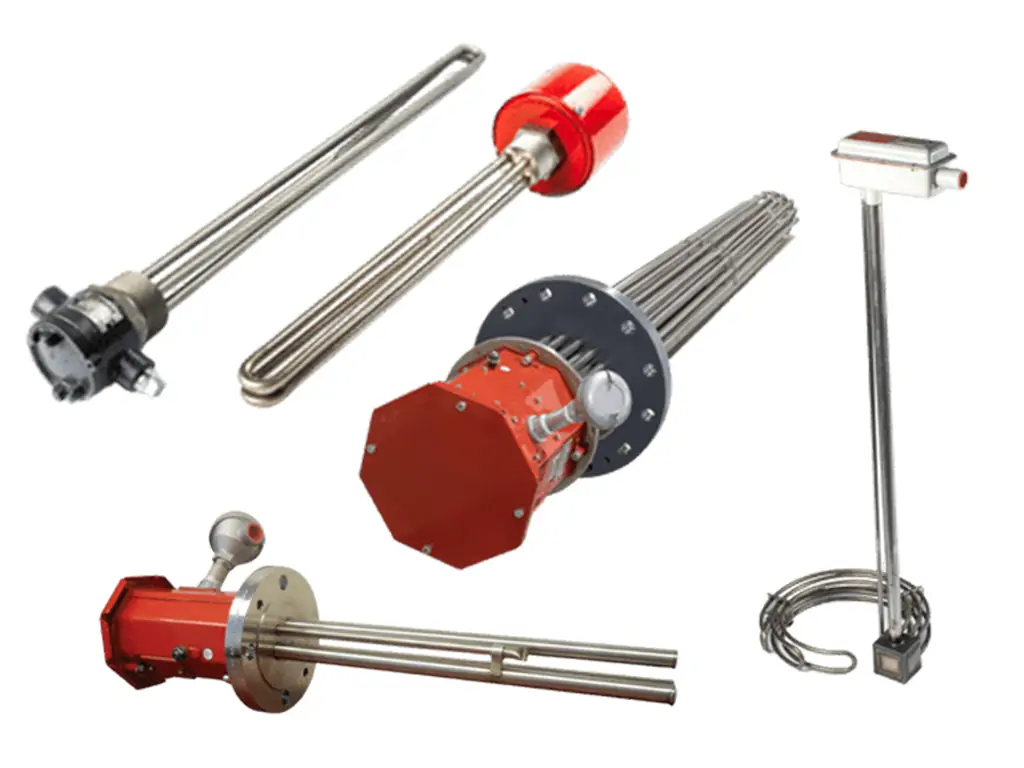
Flange Immersion Heaters
Structure:
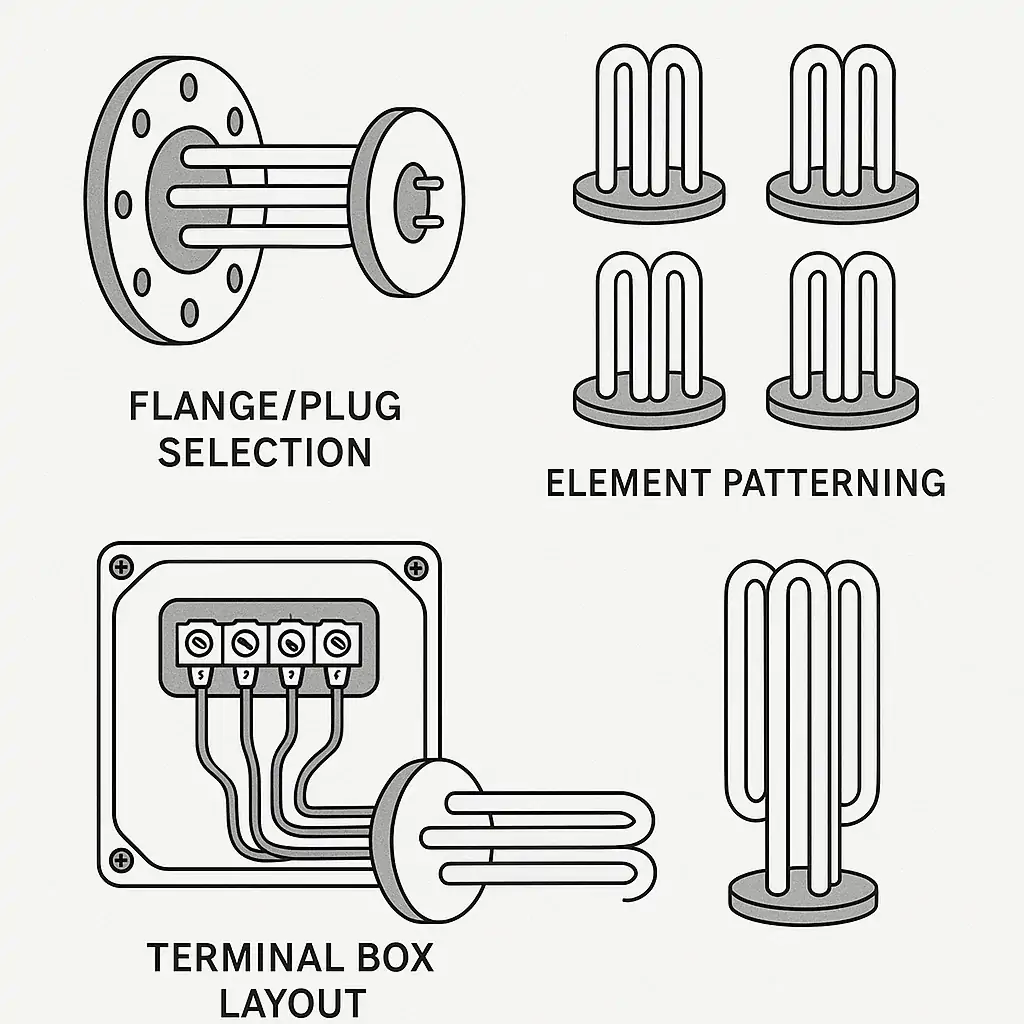
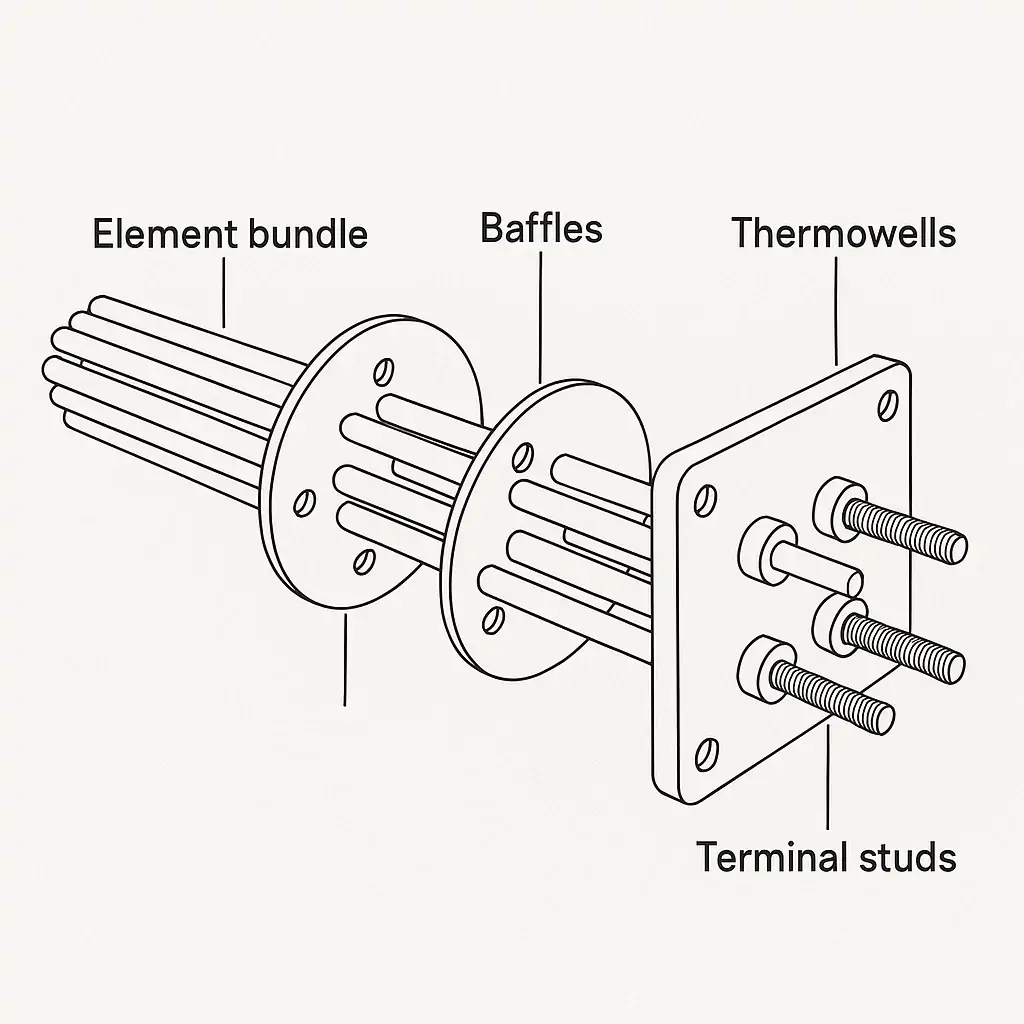
Multiple U-shaped or W-shaped tubular elements welded or brazed to a standard flange and equipped with a terminal box.
Features:
- Wide power range, from several kilowatts to several hundred kilowatts
- High pressure resistance, suitable for high-pressure vessels
- Easy installation and maintenance, with fully replaceable heating elements
Applications:
Large storage tanks, boilers, reactors, thermal oil systems, and other industrial equipment.
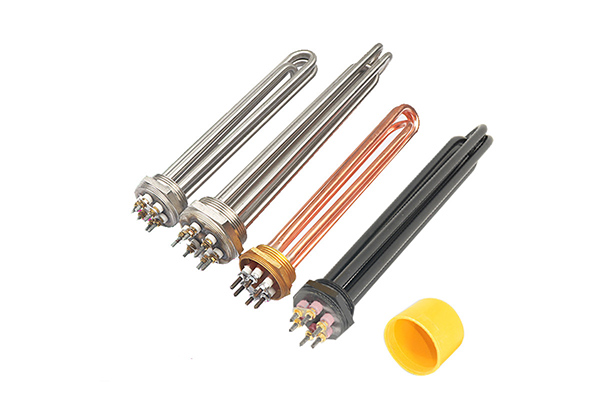
Screw Plug Immersion Heaters
Structure:
The heating element is welded to a threaded screw plug, typically consisting of one to three U-shaped tubular elements.
Features:
Compact structure, easy installation, and cost-effective design suitable for low-power applications.
Standard Thread Sizes:
NPT 0.5″–2.5″ or BSP threads.
Applications:
Small water tanks, oil tanks, water heaters, hydraulic systems, and other compact heating equipment.

Side Immersion Heaters
Structure:
The heating element is bent into an L-shape or U-shape and suspended from the side of the tank using a mounting bracket.
Features:
Easy to install and remove, with portable and flexible operation.
No drilling or modification of the tank is required. Available in side-heating and bottom-heating designs.
Applications:
Open tanks, electroplating tanks, temporary heating systems, and containers where drilling is not feasible.

Bottom Immersion Heater
Structure:
The heating element is installed at the bottom of the tank or vessel, typically using flange or threaded mounting for direct liquid heating.
Features:
Provides efficient bottom heating with uniform heat distribution.
Suitable for applications requiring rapid heat transfer and stable temperature control. Easy to install and maintain.
Applications:
Water tanks, oil storage tanks, chemical processing equipment, thermal fluid systems, and other industrial heating applications.

Cartridge Immersion Heater
Structure:
The cartridge heating element is inserted directly into a drilled hole or metal block for efficient heat transfer and localized heating.
Features:
Compact structure with high watt density and fast heat response.
Suitable for precise temperature control and applications with limited installation space.
Applications:
Molds, packaging machinery, sealing equipment, metal heating systems, laboratory equipment, and other precision industrial heating applications.

Household Immersion Heater
Structure:
The heating element is typically composed of a compact tubular heater with a lightweight flange or threaded connection for direct water heating.
Features:
Compact design, fast heating performance, and easy installation.
Suitable for residential water heating applications with economical and energy-efficient operation.
Applications:
Domestic water heaters, small water tanks, bathrooms, kitchens, and household hot water systems.
Types of Immersion Heater Installation

Flange Installation
Flanges are used to mount immersion heaters securely to tanks or vessels.
Both heavy-duty industrial flanges and compact flanges for domestic water heaters are available.

Screw Plug Installation
Screw directly into the threaded hole or joint of the tank and seal with thread sealant.

Over the side installation
Designed for easy installation, over-the-side heaters can be mounted directly onto the tank without drilling or welding.
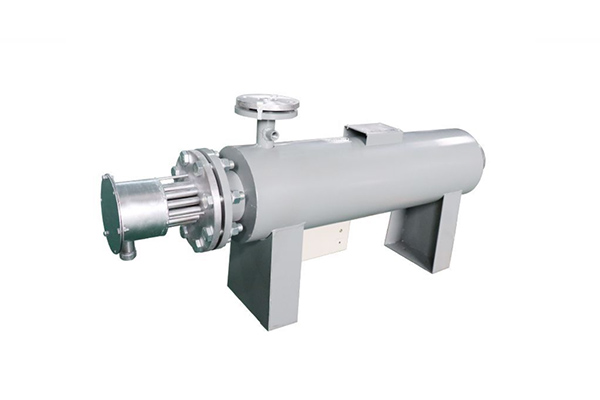
Circulation pipe installation
Circulation heaters are installed in pipeline systems, where the liquid or gas flows through a heated chamber for efficient inline heating.
Flange heater product parameters
Flange Immersion Heater (EK-FIH Series)
| Power Range | 3kW - 500kW Customized |
| Voltage | 110V-480V AC |
| Heating Tube | Φ10 / Φ12 / Φ14 / Φ16mm |
| Sheath Material | SUS304 / SUS316L / Incoloy 800 / Titanium |
| Flange Size | DN40-DN100 Customized |
| Insulation | High Purity MgO Powder |
| Application | Water Tank, Boiler, Chemical Tank |
Screw Plug Immersion Heater (EK-SPI Series)
| Power Range | 0.5kW - 30kW |
| Voltage | 110V / 220V / 240V / 380V |
| Connection | 1" / 1.5" / 2" BSP or NPT Thread |
| Tube Material | SUS304 / SUS316L / Incoloy |
| Heating Length | 200mm - 2000mm |
| Application | Small Tank, Hydraulic Equipment |
Explosion Proof Immersion Heater (EK-EX Series)
| Power Range | 5kW - 300kW |
| Voltage | 220V - 690V |
| Explosion Grade | Ex d IIC T4/T5/T6 |
| Certification | ATEX / IECEx Optional |
| Material | SS316L / Incoloy / Hastelloy |
| Application | Oil & Gas, Chemical Industry |
Circulation Immersion Heater (EK-CIH Series)
| Power Range | 6kW - 300kW |
| Pipe Size | DN25 - DN150 |
| Housing Material | Carbon Steel / SS304 / SS316 |
| Heating Medium | Water / Oil / Thermal Fluid |
| Pressure | 1.0MPa - 3.0MPa |
| Application | Pipeline Heating System |
Thermal Oil Immersion Heater (EK-OIH Series)
| Power Range | 5kW - 500kW |
| Voltage | 380V / 415V / 480V |
| Sheath Material | Incoloy 800 / 825 |
| Oil Temperature | 300°C - 500°C |
| Control | PID Temperature Control |
| Application | Thermal Oil System |
Industrial Immersion Heater Applications
ELEKHEAT designs and manufactures customized immersion heaters for different industrial heating systems. The heater structure, sheath material, watt density, and installation method are selected according to the actual operating conditions.
Industrial Water Heating
Immersion heaters are widely used in industrial water tanks, process water systems, cleaning equipment, and heating vessels. Direct immersion heating provides efficient heat transfer and stable temperature control.
ELEKHEAT Heating Solution
For water heating applications, ELEKHEAT selects flange immersion heaters or screw plug immersion heaters according to tank structure and installation requirements. Heating capacity is calculated based on water volume, temperature rise, heating time, and heat loss.
Recommended Configuration
- Sheath Material: SS304 / SS316L stainless steel
- Heating Element: High efficiency tubular heating element
- Insulation: Electrical grade MgO with high thermal conductivity
- Temperature Control: Thermocouple or RTD sensor integration
Technical guide: Industrial Water Tank Heating System Design


Oil & Thermal Fluid Heating
Oil heating requires careful control of heating surface temperature because oil generally has lower thermal conductivity than water. Improper design may cause overheating, oxidation, or carbon deposits.
ELEKHEAT Heating Solution
ELEKHEAT designs oil immersion heaters with optimized watt density and increased heating surface area to maintain uniform heat transfer. For high temperature thermal oil systems, nickel-based alloy materials are selected for improved oxidation resistance.
Recommended Configuration
- Sheath Material: Incoloy 800 / Incoloy 825
- Low watt density heating design
- High temperature resistant terminal structure
- Multiple heating element configuration for large tanks
Related article: How to Select Immersion Heater for Oil Heating Applications
Chemical Processing
Chemical processing equipment requires immersion heaters with excellent corrosion resistance and long-term stability. Material selection depends on chemical composition, concentration, temperature, and operating environment.
ELEKHEAT Heating Solution
ELEKHEAT selects different sheath materials according to chemical compatibility. SS316L is commonly used for general chemical applications, while titanium or special alloys are selected for highly corrosive environments.
Recommended Configuration
- SS316L for general chemical solutions
- Titanium sheath for aggressive corrosive media
- Incoloy alloy for high temperature chemical processes
- Customized flange and installation structures
Technical reference: Chemical Immersion Heater Material Selection Guide


Food Processing
Food processing applications require hygienic materials, stable heating performance, and reliable temperature control. Immersion heaters are commonly installed in cleaning tanks, processing vessels, and hot water systems.
ELEKHEAT Heating Solution
ELEKHEAT provides stainless steel immersion heaters with smooth surface finishing, food-compatible materials, and customized installation designs for food processing equipment.
Recommended Configuration
- SS316L stainless steel construction
- Smooth surface and easy maintenance design
- Temperature sensor integration
- Customized flange connection
Selection of protection level for immersion heaters
IP65
IP65 provides complete dust protection and resistance against water splashes and low-pressure water jets. It is commonly used for standard industrial immersion heaters in indoor and light outdoor environments.
IP66
IP66 offers complete dust protection and resistance to powerful water jets and harsh outdoor conditions. It is ideal for chemical plants, offshore equipment, and outdoor industrial heating applications.
IP69K
IP69K is designed for food and pharmaceutical industries, providing resistance to high-temperature and high-pressure washdown cleaning during CIP/SIP processes.
Ex d IIB T4 Gb
Ex d IIB T4 Gb is a common explosion-proof rating for petrochemical environments, preventing ignition of hazardous gases in Zone 1 and Zone 2 areas.
IP68
IP68 is designed for long-term underwater operation, making it suitable for submersible heaters, aquaculture systems, and underwater heating applications.
Sheath material selection
| Material Category | Specific Grade | Max Continuous Liquid Temp | Key Corrosion Resistance | Typical Applications |
| Carbon Steel | Q235/Q345 | 100℃ | Very poor; prone to rust and scaling | Temporary construction site water heaters, simple drying equipment |
| Stainless Steel Series | 304 Stainless Steel | 300℃ | Resists fresh water, neutral salts, steam; not resistant to chloride ions | Domestic water heaters, water boilers, rice steamers, general water tanks |
| 316L Stainless Steel | 350℃ | Contains 2-3% molybdenum; 3x better chloride resistance than 304; resists weak acids/alkalis | Mariculture, food processing, swimming pool heating, chemical wastewater | |
| 321 Stainless Steel | 550℃ | Contains titanium; resists high-temperature oxidation and intergranular corrosion | Steam generators, high-temperature hot water boilers | |
| 310S Stainless Steel | 800℃ | Resists high-temperature oxidation and sulfur corrosion | High-temperature thermal oil furnaces, incinerator waste heat recovery | |
| Nickel-Based Alloy Series | Incoloy 840 | 600℃ | Resists high-temperature oxidation, steam and demineralized water corrosion | Industrial thermal oil furnaces, steam generators |
| Incoloy 800H | 750℃ | Resists high-temperature oxidation, carburization and hydrogen corrosion | Petrochemical hydrogenation reactors, high-temperature boilers | |
| Incoloy 825 | 550℃ | Resists sulfuric acid, phosphoric acid, nitric acid and other acids | Chemical pickling tanks, metal surface treatment | |
| Inconel 600 | 900℃ | Resists high temperatures, strong alkalis and chloride stress corrosion | Chlor-alkali industry, caustic soda evaporation equipment | |
| Inconel 625 | 980℃ | Resists pitting and crevice corrosion; withstands long-term seawater immersion | Seawater desalination, offshore platform equipment | |
| Hastelloy C276 | 650℃ | Resists almost all strong acids and alkalis, including aqua regia | Semiconductor manufacturing, fine chemicals, nuclear industry | |
| Titanium & Titanium Alloys | Pure Titanium TA2 | 140℃ | Excellent; almost no corrosion in seawater and chloride solutions | Seawater desalination, electroplating tanks, chemical pharmaceuticals |
| Titanium Alloy TC4 | 300℃ | Same as pure titanium with higher strength | Offshore engineering, chemical high-temperature eactors | |
| Copper & Copper Alloys | Red Copper T2 | 200℃ | Moderate; not resistant to acids, alkalis and chloride ions | Instant water heaters, small water dispensers, precision instruments |
| Non-Metallic Materials | PTFE (Teflon) | 105℃ | Excellent; resists almost all acids, alkalis and organic solvents, including hydrofluoric acid | Pickling tanks, semiconductor cleaning tanks, electroplating tanks |
| Enamel Coating | 200℃ | Resists general acids and alkalis; anti-scaling | Water heater inner tanks, water boilers | |
| Nano Ceramic Coating | 300℃ | Anti-scaling; improves corrosion resistance | Industrial water tanks, hot water boilers |
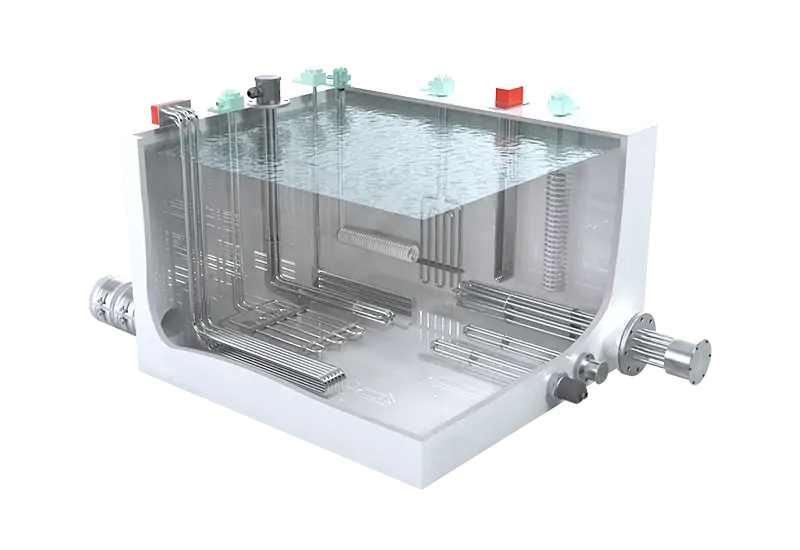
Why choose ELEKHEAT immersion heaters?
- Process‑driven sizing — heat‑up, hold and losses calculated; watt density tuned to fluid.
- Hazardous‑location designs — EX d/e terminal boxes, certified assemblies.
- Energy efficiency — high immersion efficiency, SCR/PID control, insulation options.
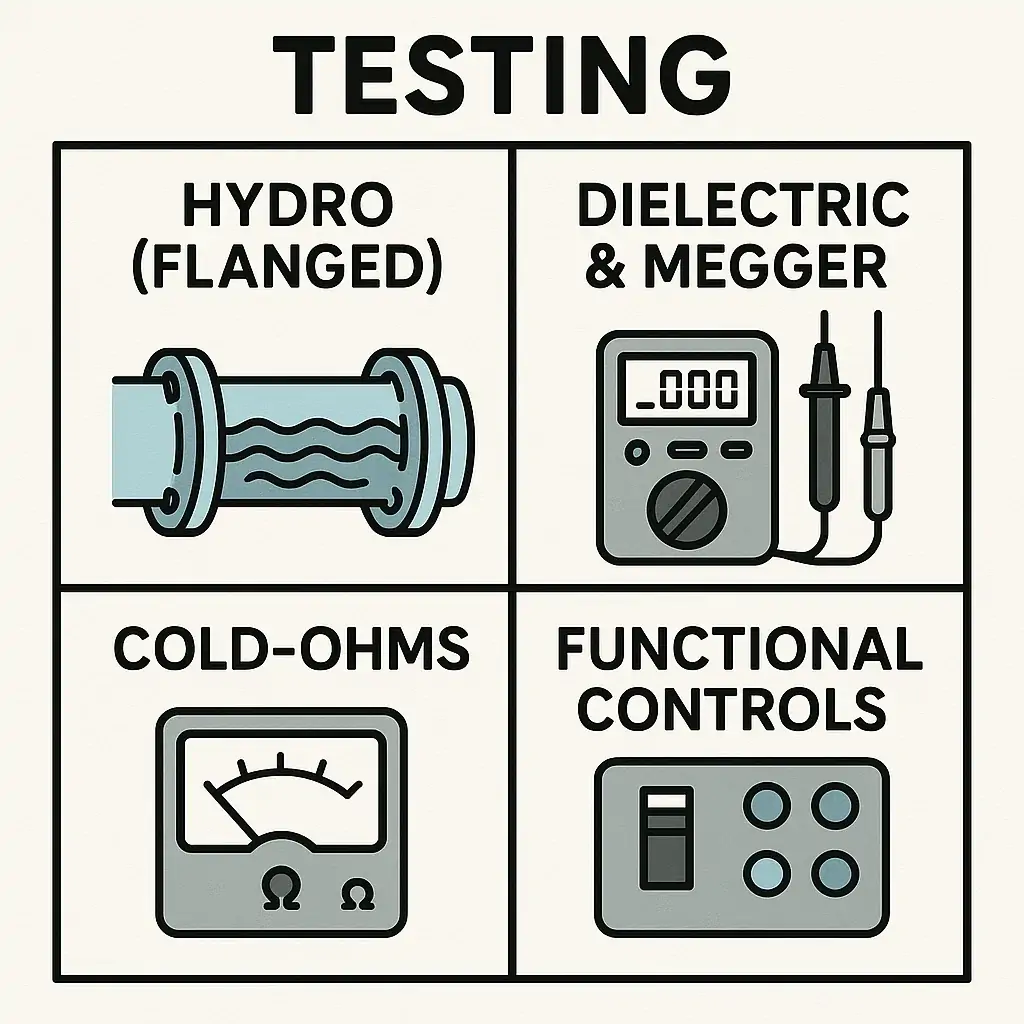
- Reliability — TIG‑welded elements, hydro‑tested heads, replaceable bundles.
- Lifecycle support — commissioning, spares, documentation, FAT.
Immersion Heater Manufacturing Process
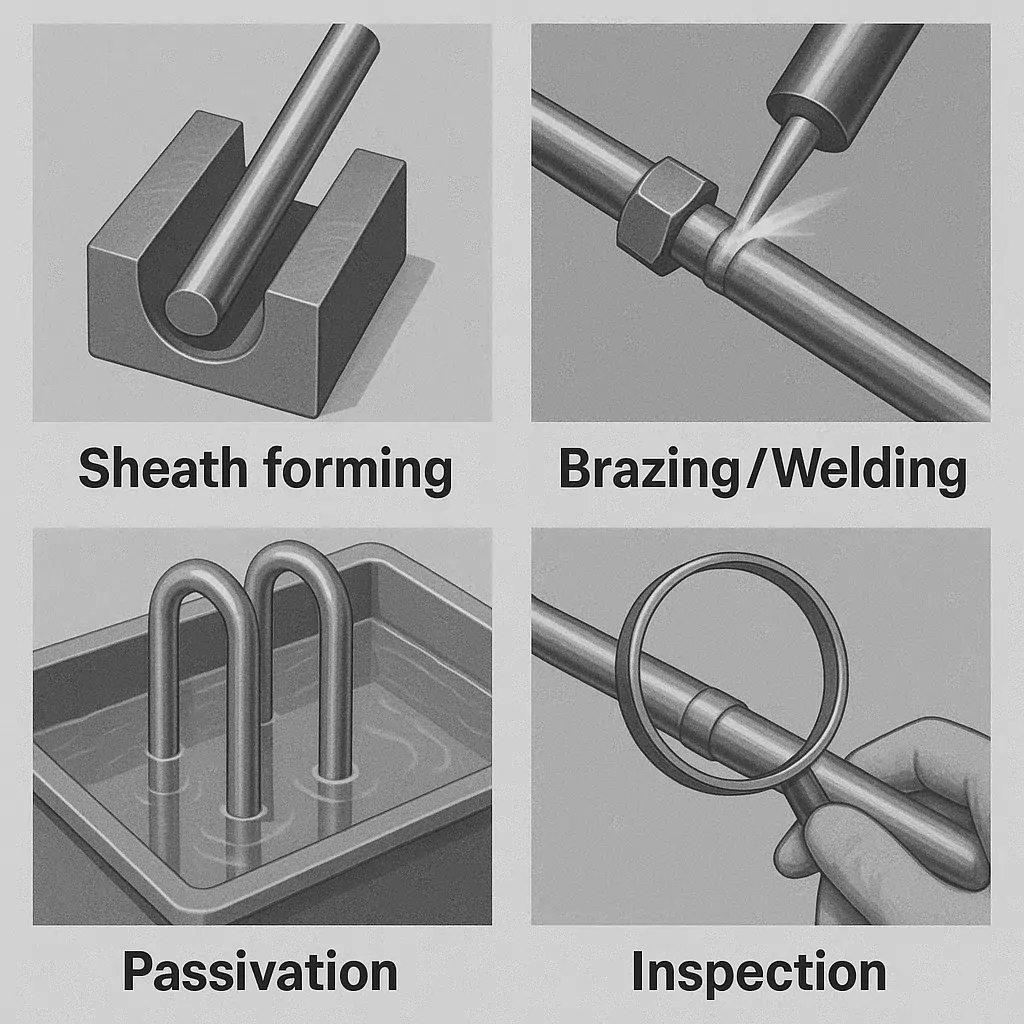
Material Selection & Watt Density Guidelines
| Fluid Family | Typical Sheath | Suggested Watt Density | Notes |
|---|---|---|---|
| Potable/DI Water | 316L SS or Copper | 10–20 W/cm² | Consider low W/cm² for hard water; scale control. |
| Light Oils | Incoloy 800/825 | 2–8 W/cm² | Avoid hot spots; maintain flow across elements. |
| Heavy Oils | Incoloy 825 | 1–3 W/cm² | Preheat & recirculation recommended. |
| Caustic/CIP | 316L or Titanium | 4–12 W/cm² | Verify chloride stress corrosion risk. |
| Glycols/HTF | 316L or Incoloy | 3–12 W/cm² | Respect film temperature limits. |
How to Choose the Right Immersion Heater

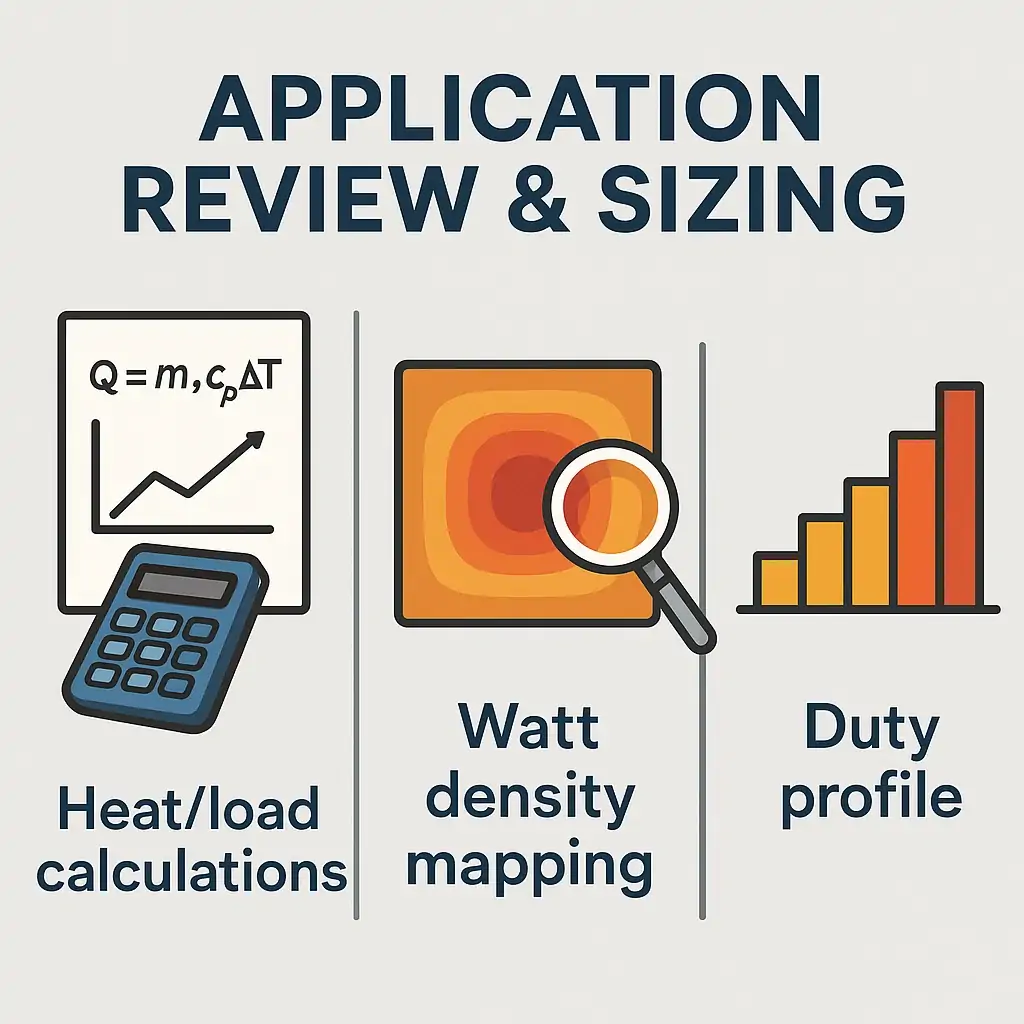
Define the Duty
Heat‑up load: Q = m · Cp · ΔT. Required power: P = (Q / t) / η + losses with η ≈ 0.95–0.99 for immersion.

Set watt Density
Match to fluid film temperature limit; reduce W/cm² if viscosity or fouling is high.

Pick the Mounting
Flanged — high power, pressure‑rated vessels, easy element replacement. Screw‑plug — compact tanks, lower kW. Side‑mount — retrofit, external access, minimal downtime.

Materials & E. Controls
Materials: 316L, Incoloy 800/825, Titanium per corrosion & chlorides. Controls: PID/SCR primary, high‑limit cutout, level interlocks, E‑stop.
Contact Us
Tell us your needs, whether you are a purchaser or an individual buyer, we will arrange professional business people to connect with you.
What Is an Immersion Heater?
An immersion heater is an electric heating element installed directly into a liquid or process tank so heat is transferred at the source. Powered by single- or three-phase supply, sheathed elements convert electrical energy to heat, controlled by thermostats or sensors. Common mountings are flange and screw-plug. Engineers select sheath alloys and watt density to match the fluid, avoid hot spots, and meet safety or hazardous-area requirements.
Immersion Heater Applications
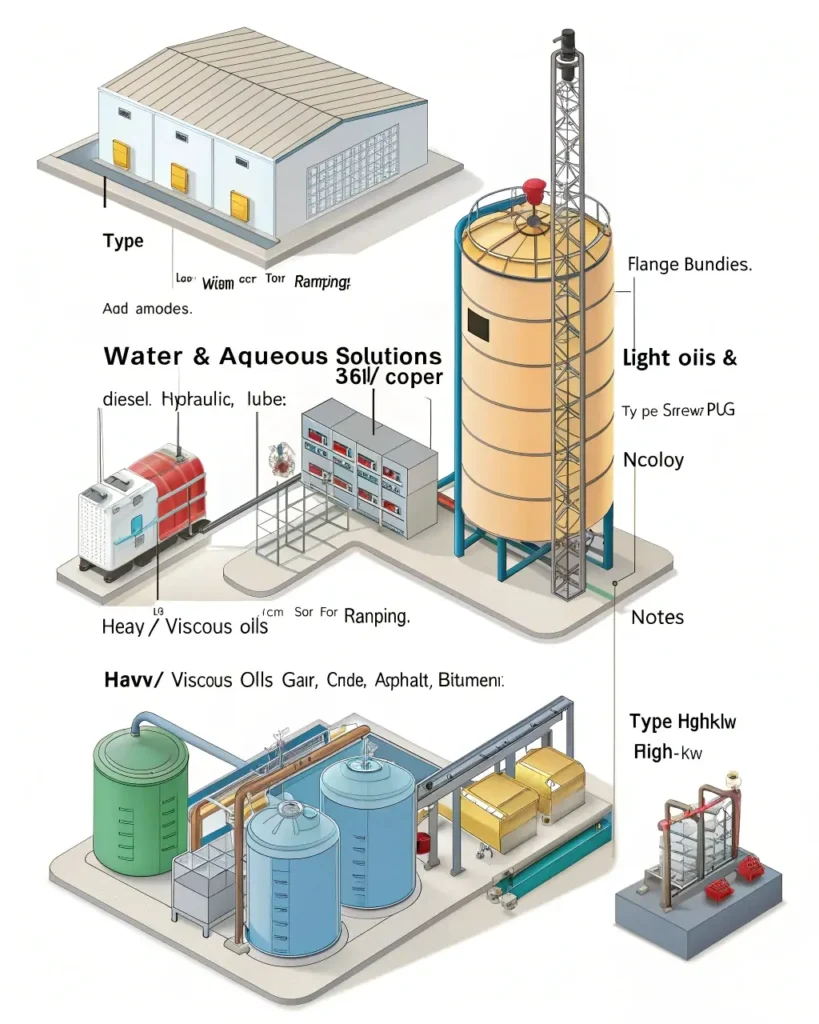
Water & Aqueous Solutions (tanks, rinse baths, DI/RO storage)
Type: flange or screw-plug · Sheath: 316L/copper · Notes: manage scaling; add anodes.Light Oils & Fuels (diesel, hydraulic, lube)
Type: screw-plug or flange · Sheath: Incoloy 800/825 · Notes: low–medium W/cm²; SCR for ramping.Heavy/Viscous Oils (gear, crude, asphalt, bitumen)
Type: high-kW flange bundles · Sheath: Incoloy 825 · Notes: very low W/cm²; recirculation recommended.Chemical Processing (alkalis, caustics, CIP/NaOH, phosphates)
Type: flange/screw-plug · Sheath: 316L or titanium · Notes: verify chloride/SCC; use thermowells.Heat-Transfer Fluids & Glycols (HTF, MEG/TEG)
Type: flange with controls panel · Notes: protect film temperature; add high-limit cutout.Water Treatment (sludge, digesters, sand filters backwash)
Type: side-mount/flange · Notes: corrosion-resistant enclosures; NEMA 4/4X.Food & Beverage (syrups, oils, jacketed tanks, CIP tanks)
Type: sanitary designs · Sheath: 316L · Notes: hygienic seals; tight PID control.Oil & Gas / Hazardous Areas (separators, amine, produced water)
Type: EX d/e assemblies · Notes: ATEX/IECEx/NEC, T-class compliance, instrumentation interlocks.Plating & Surface Finishing (acid/alkaline baths, anodizing)
Type: immersion or side-mount · Sheath: titanium/316L · Notes: chemical compatibility first.Freeze Protection & Maintenance Heat (storage tanks, sumps)
Type: screw-plug/side-mount · Notes: thermostatic control with level/flow interlocks.Power & Utilities (deaerators, condensate, make-up water)
Type: flange · Notes: ASME flanges; redundancy for uptime.
FAQs for Immersion Heaters
Watt density (W/cm²) is power per element surface area; lower values reduce film temperature and protect sensitive fluids.
Yes. ATEX/IECEx/NEC compliant assemblies with EX d/e terminal boxes and T‑class ratings are available.
Match watt density to the fluid, maintain velocity across elements, use PID/SCR control to avoid overshoot, and apply filtration/softening where required.
Yes—UL‑listed panels with PID or SCR, high‑limit safety, level interlocks, alarms, and remote I/O for DCS/PLC.
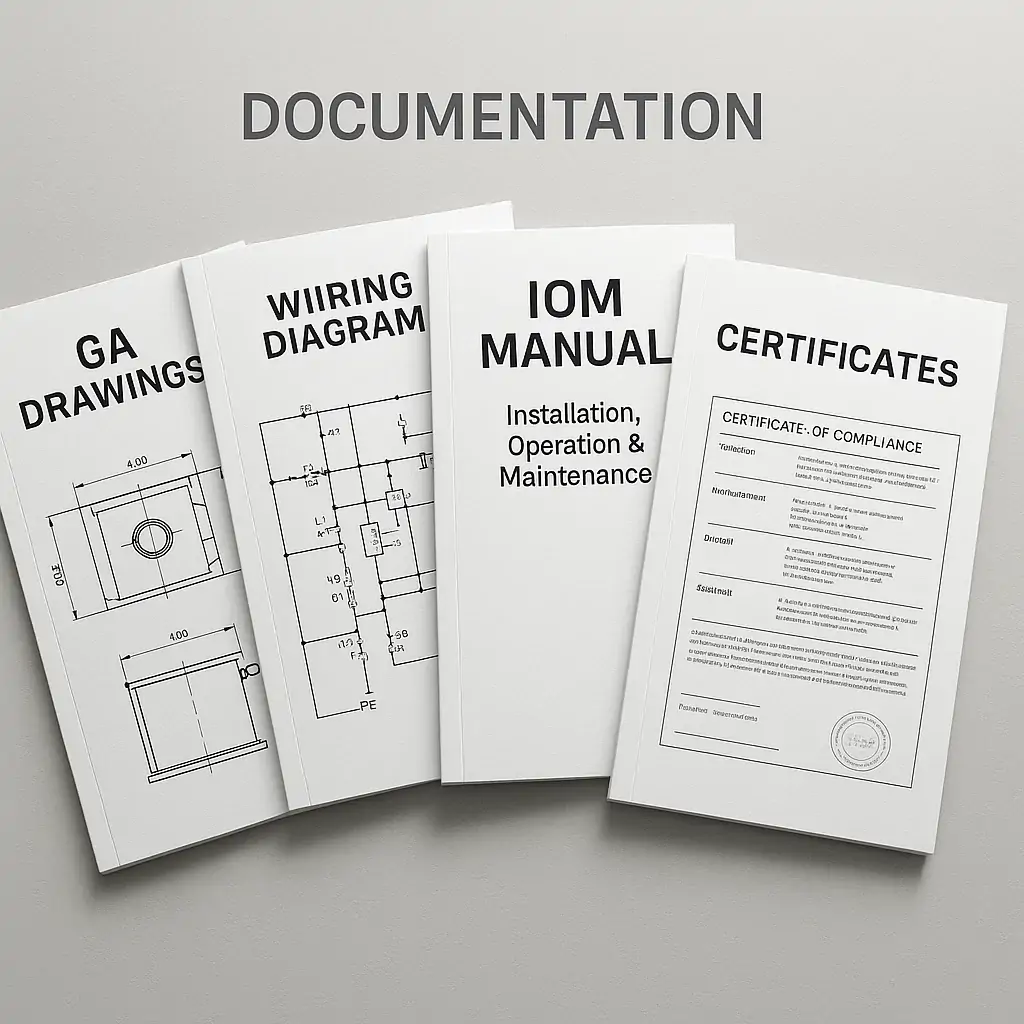
Typical 2–6 weeks depending on configuration. Deliverables include GA drawings, wiring, IOM manual, and test reports.
