 Skip to content
Food Processing Electric Heating Solutions
Precise Temperature Control · Hygienic Design · Energy-Efficient Thermal Systems
Customized electric heating equipment for liquid heating, sterilization, drying, cooking and storage temperature maintenance applications.
Heating Challenges in Food Processing
Food manufacturers require stable heating systems that maintain product quality, reduce energy consumption and meet hygiene requirements.
Temperature Stability
Unstable temperature can affect taste, texture and sterilization performance. Electric heating systems provide PID-controlled temperature regulation with typical accuracy of ±1℃ to ±3℃.
Food Safety Requirements
Heating components use SS304, SS316L and corrosion-resistant alloys for contact with water, oil, beverages and food liquids.
Production Efficiency
Direct electric heating reduces heat transfer losses and enables fast response during batch processing and continuous production.
Why Electric Heating for Food Manufacturing
≥95% Thermal Efficiency
Electric energy is directly converted into heat without combustion losses, exhaust systems or fuel handling equipment.
PID Temperature Control
SSR and SCR power regulation provide accurate heat output adjustment according to actual process requirements.
Clean Heat Source
No combustion gas, smoke or fuel contamination during operation. Suitable for hygienic food production environments.
Food Processing Applications
Liquid Food Heating
Direct immersion heating for milk, juice, syrup, edible oil and sauces.
- Flange immersion heaters
- Circulation heaters
- Tank heating systems
Food Drying Systems
Clean hot air heating for dehydration and drying processes.
- Fruit and vegetable drying
- Meat drying
- Bakery drying
Sterilization Process
Inline electric heating for continuous liquid thermal treatment.
- Milk pasteurization
- Beverage sterilization
- CIP hot water heating
Cooking & Concentration
Uniform heating solutions for sauces, jams and confectionery production.
- Electric jacketed kettles
- Cooking pots
- Thermal oil systems
Food Processing Heating Products
Select the suitable heating equipment according to process temperature, heating medium and installation requirements.
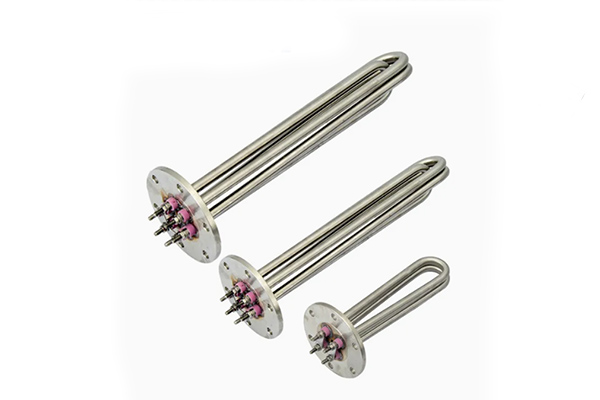
Flange Immersion Heater
9kW – 1000kW
Direct immersion heating solution for storage tanks, reactors and processing vessels.
- Sheath: SS304 / SS316 / Incoloy
- Medium: Water, oil, food liquids
- Control: PID / SCR power regulation
- Installation: Tank flange mounting
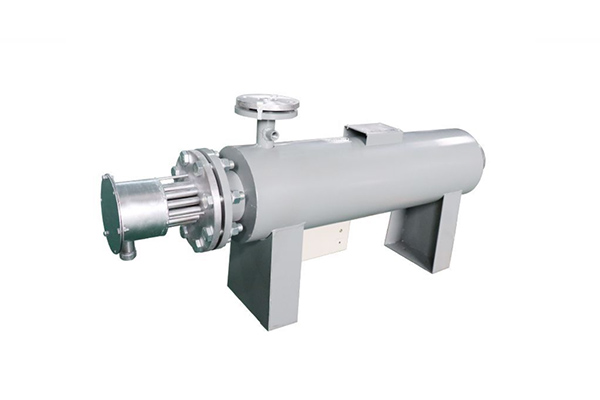
Circulation Heater
3kW – 500kW
Inline heating system designed for continuous liquid processing and sterilization.
- Pipeline installation
- SS304 / SS316L wetted parts
- Temperature up to 300℃
- Suitable for CIP systems

Air Duct Heater
3kW – 500kW
Electric hot air source for food drying ovens and industrial drying chambers.
- Heating tube: SS304 / SS310S
- Air temperature up to 300℃
- Finned tubular heating elements
- PID temperature control

Electric Thermal Oil Heater
9kW – 1000kW
Indirect heating system for processes requiring uniform temperature distribution.
- Working temperature up to 300℃
- Stable heat transfer
- Suitable for high viscosity products

Electric Jacketed Kettle
Food Grade Processing Equipment
Heating equipment for cooking, concentration and mixing processes.
- SS304 / SS316L construction
- Uniform jacket heating
- Suitable for sauces and confectionery
Technical Specification Reference
Engineering parameters commonly required for food processing heater selection.
| Parameter | Specification |
|---|---|
| Heating Power | 1kW - 1000kW customized according to application requirements |
| Operating Temperature | 0℃ - 300℃ standard design |
| Temperature Accuracy | ±1℃ to ±3℃ with PID temperature control system |
| Heating Element Material | SS304 / SS316 / SS321 / Incoloy 800 |
| Insulation Material | High purity MgO powder for excellent insulation and heat transfer performance |
| Resistance Wire | NiCr alloy heating wire with stable electrical performance |
| Control System | PID controller + SSR / SCR power regulation for precise heating control |
| Safety Protection | Over-temperature protection, leakage protection, dry heating protection |
| Customization | Voltage, dimensions, flange size, power rating and material selection according to project requirements |
Food Heating Engineering Cases
Edible Oil Refinery
Challenge:
Steam coil heating caused unstable oil temperature during refining.
Solution:
Installed 240kW flange immersion heaters with independent temperature control.
Result:
Improved temperature stability and reduced steam system maintenance.
Sauce Manufacturing Plant
Challenge:
Plate heat exchanger fouling required frequent cleaning.
Solution:
Installed SS316L circulation electric heater for direct inline heating.
Result:
Reduced fouling problems and improved continuous production capability.
Food Drying Factory
Challenge:
Coal-fired hot air furnace caused temperature fluctuation.
Solution:
Installed electric air heating system with SCR power control.
Result:
Stable drying temperature and eliminated combustion emissions.
Engineering Selection Guide
Provide the following information for accurate heater design and quotation.
1. Heating Medium
Water, oil, milk, juice, syrup, sauce, air or other process materials.
2. Thermal Requirement
Initial temperature, target temperature and required heating time.
3. Equipment Condition
Tank volume, pipeline flow rate, installation space and electrical supply.
4. Material Compatibility
Select SS304, SS316L or special alloys according to corrosion conditions.
5. Safety Requirement
Standard industrial design or explosion-proof configuration for hazardous areas.
6. Control Requirement
ON/OFF control, PID temperature control or automatic power adjustment.
Why Choose ELEKHEAT
Provide the following information for accurate heater design and quotation.
Industrial Manufacturing Capability
Established in 1997 with dedicated production lines for industrial heating elements and customized heating equipment.
Engineering-Based Customization
Design support includes heating calculation, material selection, electrical configuration and installation matching.
Quality Inspection Process
Each heater is inspected through resistance testing, insulation resistance testing, voltage withstand testing and dimensional inspection.
Frequently Asked Questions
Technical answers about food processing electric heaters, material selection, temperature control, maintenance and customization.
The maximum continuous operating temperature depends on the sheath material:
- SUS304 / SUS316L: up to 400°C
- Incoloy800 / SUS310S: up to 850°C
For most food liquid heating applications such as oil, milk and juice, the working range is 60–260°C. Hot air drying applications can reach 450°C. Always specify your process temperature when selecting.
- Water / Pure water: SUS304 or SUS316L
- Milk / Dairy with CIP cleaning: SUS316L electropolished
- Edible oil / Fat: SUS304 or SUS316L
- Acidic juice (pH<4.5): SUS316L or Incoloy825
- Soy sauce / Brine: Incoloy800 or Titanium
- Syrup / Honey: SUS304 with low surface load ≤3 W/cm²
- Hot air: SUS304 finned tube or SUS310S above 400°C
Surface watt density (W/cm²) represents the heating power per surface area. It directly affects product quality, fouling and heater lifetime.
- General liquid heating: ≤4.5 W/cm²
- Viscous or sugar-rich media: ≤3.0 W/cm²
Lower surface density reduces coking, scorching and extends cleaning intervals.
- PID + SSR control: ±1°C steady-state accuracy
- Dynamic load changes: ±3°C
- Cascade control with feedforward compensation available for precision applications
Electric heating provides 90–95% thermal efficiency at point of use, while steam systems often lose energy through generation and distribution.
- No flue gas loss
- No steam traps required
- No long pipeline insulation losses
- Lower maintenance requirements
- GB 16798-2023 food machinery safety
- GB/T 4654-2008
- GB 4706.1
- CE-LVD / CE-EMC
- Optional UL 1030
- Ex d IIB T1-T4 explosion-proof certification
- Edible oil: every 45–60 days
- Milk / Juice: CIP cleaning every 4–6 weeks
- Syrup / Sugar: monthly inspection
Maintenance includes checking electrical connections, insulation resistance and removing deposits with approved cleaners.
- Flange size and pressure rating
- Immersion length up to 3000mm
- U-tube arrangement
- Terminal box type
- Voltage and power from 9–1000kW
- 3D drawings and thermal calculations provided
Yes. Explosion-proof heaters are available for hazardous environments including solvent extraction, oil processing, chemical plants, flour mills and sugar dust areas.
Please provide your Zone classification such as Zone 1 or Zone 2.
- Heating element lifetime: ≥20,000 hours
- Complete unit warranty: 12 months
- Heating element warranty: 24 months
Yes. We provide installation manuals, electrical wiring diagrams, remote technical guidance, and optional engineer commissioning service.
