 Skip to content
A broken flange heater stops your production line instantly. This disruption costs you time, money, and labor. Understanding how to diagnose these "industrial kettles" ensures your facility keeps running smoothly without unexpected delays.
To fix most flange heater failures, you must address scaling on the heating elements, electrical leakage due to moisture, dry firing from low liquid levels, and faulty temperature sensors. Regular maintenance like cleaning mineral deposits, using waterproof junction boxes, and installing low-water cut-off switches can prevent 90% of common heater issues.
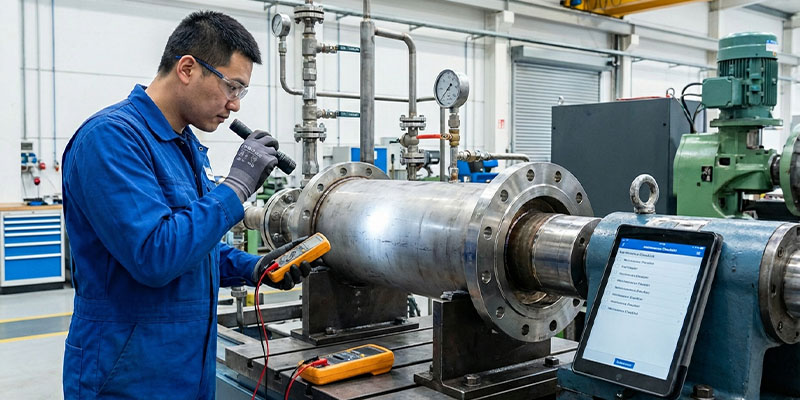
If you know how a kitchen kettle works, you can understand an industrial flange heater. It is essentially a large, powerful immersion rod. Let’s look at why these heaters fail and how we at ELEKHEAT solve these problems.
Why is your flange heater heating slowly or not reaching target temperatures?
Scaling acts like a thick blanket around your heater. This thermal barrier prevents heat from reaching the liquid, forcing the element to work harder while providing less warmth to your process.
The most common cause of slow heating is mineral buildup, often called scale or lime. When minerals in water or heavy oils "bake" onto the heating element sheath, they create an insulating layer. At ELEKHEAT, we have seen heaters with scale so thick the metal sheaths eventually cracked because the heat could not escape. This is exactly like a household kettle that takes forever to boil because the bottom is covered in white crust.
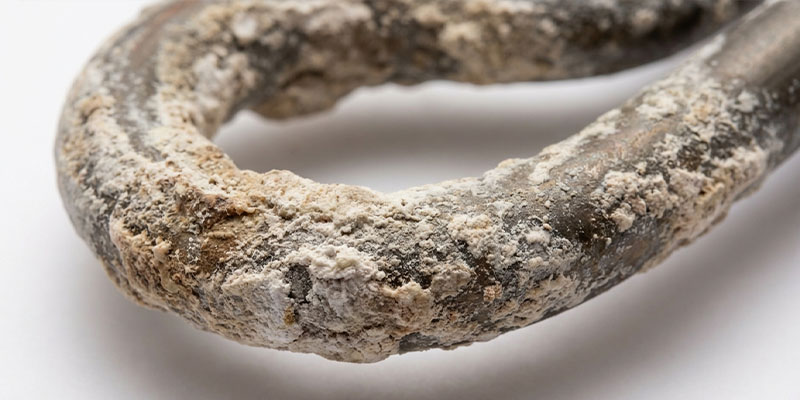
The High Cost of Mineral Insulated Scaling
When scale builds up, your energy bills rise. The heater stays "on" longer to reach the same temperature. In our 25 years of manufacturing, we have found that even 1mm of scale can reduce heating efficiency by up to 10%. This is a silent profit killer for large-scale industrial operations.
Effective Cleaning Strategies
You must physically remove the buildup. We recommend removing the flange heater and using a high-pressure water jet. For stubborn calcium deposits, a citric acid soak works wonders. It dissolves the minerals without eating away at the stainless steel or Incoloy sheath.
Pre-treatment is Better Than Cure
If your facility has "hard" water, the problem will return every month. We advise our clients to install water filtration or softening systems. By removing the minerals before the water hits the heater, you extend the heater's life by years.
Material Selection Table
| Water Quality | Recommended Sheath Material | Scaling Risk | Maintenance Frequency |
|---|---|---|---|
| Deionized/Soft Water | Stainless Steel 304 | Low | Yearly |
| Standard Tap Water | Stainless Steel 316L | Medium | Every 6 Months |
| Hard/Mineral Water | Incoloy 800/840 | High | Every 3 Months |
| Corrosive/Chemical | Titanium or Teflon Coated | Variable | Monthly Inspection |
What causes circuit breakers to trip or leakage in flange heaters?
Electrical failures usually happen when the "barrier" between the electricity and the liquid breaks down. This creates a dangerous path for current, causing your safety systems to trip the power immediately.
Frequent tripping is often a sign of moisture entering the junction box or a breach in the element's outer shell. We often tell our customers to think of the heating wire as a "nerve" inside a "skin" (the metal tube). If the skin breaks, the nerve touches the water, and the electrical system "screams" by tripping the breaker. This is a critical safety feature that prevents electric shocks.
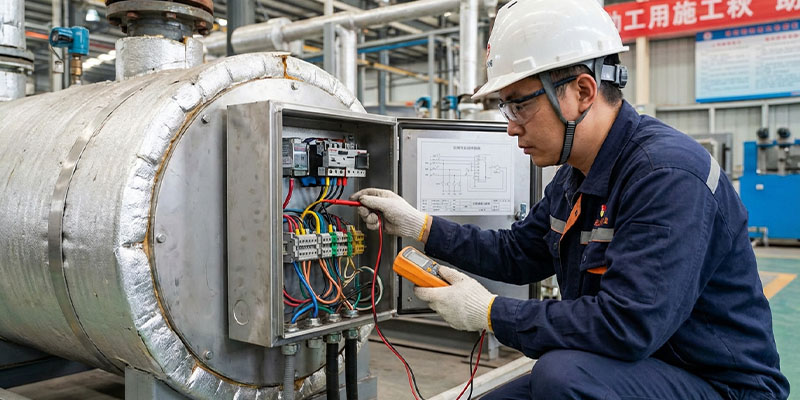
Managing Moisture in Junction Boxes
Many industrial environments are humid or involve wash-down procedures. If the junction box is not sealed correctly, steam or water droplets enter the terminal area. This creates a "bridge" for electricity. We always recommend using junction boxes with at least an IP65 rating for any environment where moisture is present.
Insulation Resistance Breakdown
Inside the heater tube is magnesium oxide (MgO) powder. This powder is a great heat conductor but a poor electricity conductor. However, MgO loves to absorb moisture. If a heater sits idle for a long time in a damp warehouse, the MgO absorbs humidity. When you turn it on, it trips. In these cases, we suggest "baking" the heater in an industrial oven at a low temperature to drive out the moisture before installation.
Gasket and Seal Integrity
The point where the heating element meets the flange is a common failure point. If the epoxy or silicone seal at the end of the rod degrades, moisture creeps in. Our production process at ELEKHEAT uses high-temperature resistant resins to ensure these seals remain airtight for thousands of hours of operation.
Protection Grade Comparison
| Environment | Required IP Rating | Sealant Type | Recommended Feature |
|---|---|---|---|
| Dry Indoor | IP40 | Standard Epoxy | Standard Terminal Box |
| Occasional Splash | IP54 | Silicone Seal | Gasketed Cover |
| Heavy Wash-down | IP65 | High-Temp Resin | Compressed Seals |
| Outdoor/Extreme | IP67 | Specialized Polymer | Explosion Proof Box |
Why is dry firing the most dangerous failure for flange heaters?
Dry firing occurs when the heating element is powered on while not fully submerged in liquid. This causes the internal temperature to skyrocket in seconds, leading to catastrophic element failure.
Dry firing is the "nightmare scenario" for flange heaters. Without liquid to carry the heat away, the metal sheath can reach temperatures over 1000°F almost instantly. This leads to the metal "bleeding" or melting, and then the element bursts. At ELEKHEAT, we emphasize that 95% of "burnt out" heaters we receive for repair are victims of accidental dry firing.
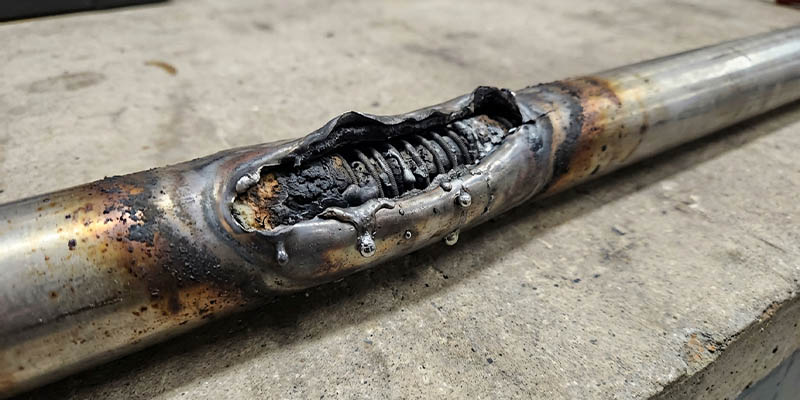
The Role of Automation in Safety
Human error is the main cause of dry firing. Someone might drain a tank for cleaning but forget to turn off the heater. To solve this, we recommend integrated float switches or flow sensors. These small devices act as "dead man switches"—if they don't detect liquid, the power to the heater is cut automatically.
Calibrating the "Brain" (The Thermostat)
Sometimes the heater is fine, but the temperature controller is "confused." A dirty or improperly placed temperature probe (thermocouple) will give false readings. If the probe says the water is 50°C when it is actually 100°C, the heater will keep running until the water boils away. We suggest cleaning your temperature probes monthly to ensure they are reading the "real" temperature.
Proper Flange Sealing
A leaking flange doesn't just waste liquid; it causes the level to drop, leading to dry firing. When installing a flange heater, we always teach the "Cross Method" for tightening bolts. Just like changing a car tire, you tighten opposite bolts in a sequence. This ensures the gasket is compressed evenly, preventing the "drip-drip-drip" that eventually leads to a dry tank.
Dry Fire Prevention Methods
| Method | Complexity | Reliability | Cost |
|---|---|---|---|
| Manual Inspection | Low | Low (Human Error) | $0 |
| Float Level Switch | Medium | High | Low |
| Ultrasonic Sensor | High | Very High | Medium |
| Integrated Thermal Cut-out | Medium | Excellent | Low |
Conclusion
Managing flange heaters is about controlling four factors: Dirt, Dryness, Looseness, and Moisture. Keeping them clean, submerged, tight, and dry ensures your industrial process remains efficient and safe.
At ELEKHEAT, we specialize in custom-engineered heating solutions that withstand the toughest industrial environments. If you are struggling with frequent heater failures, contact our technical team for a material compatibility audit and custom design consultation. Let us help you keep your production lines running hot.```