 Skip to content
Brand: Elekheat | Industrial Heating Solutions
What Is a Thermal Oil Heat Exchanger?
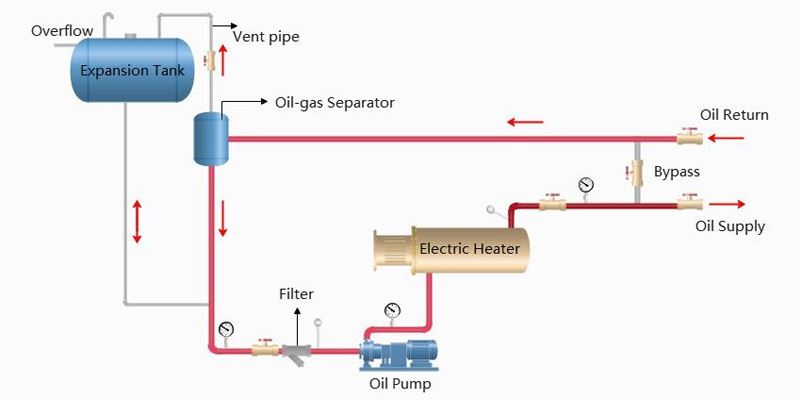
A thermal oil heat exchanger (also known as a thermal oil heating system or heat transfer oil system) is an indirect heating solution used to transfer heat safely and efficiently to a target medium.
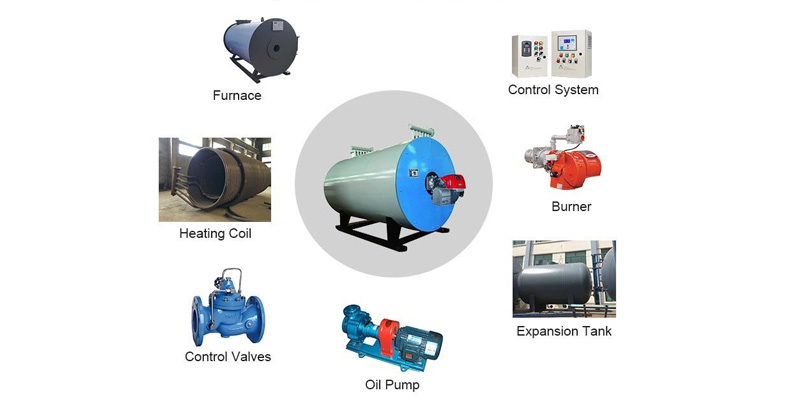
At its core, the system includes:
- Electric heater (or other heat source)
- Thermal oil (heat transfer fluid)
- Coil heat exchanger
- Circulation pump
- Closed-loop piping system
Instead of heating the product directly, the system uses thermal oil as a heat carrier, ensuring:
- Stable temperature
- Uniform heating
- High safety
How a Thermal Oil Coil Heat Exchanger Works
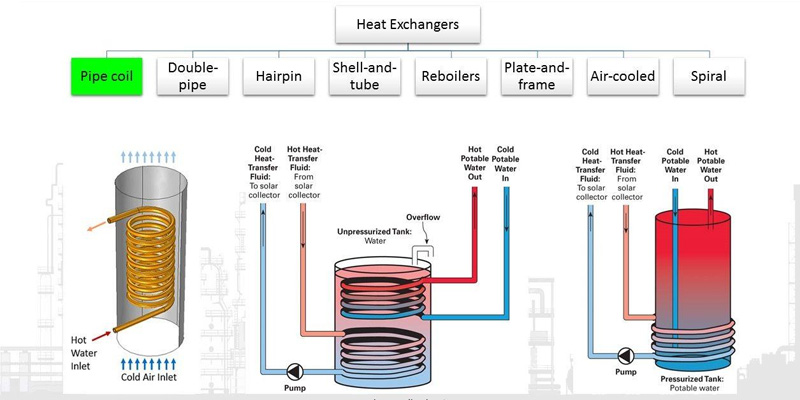
The working process is simple but highly efficient:
Step-by-step process:
-
Heating Phase
The heater raises the temperature of the thermal oil inside the system. -
Circulation Phase
A circulation pump moves the hot oil into the coil heat exchanger. -
Heat Transfer Phase
Hot oil flows inside the coil, while the target medium (liquid, gas, or material) comes into contact with the outer surface of the coil and is thus heated.Heat transfer path:
Heater → Thermal Oil → Coil → Target Medium -
Return Phase
After losing part of its heat, the oil flows back to the heater, forming a continuous closed loop.
Typical Technical Parameters
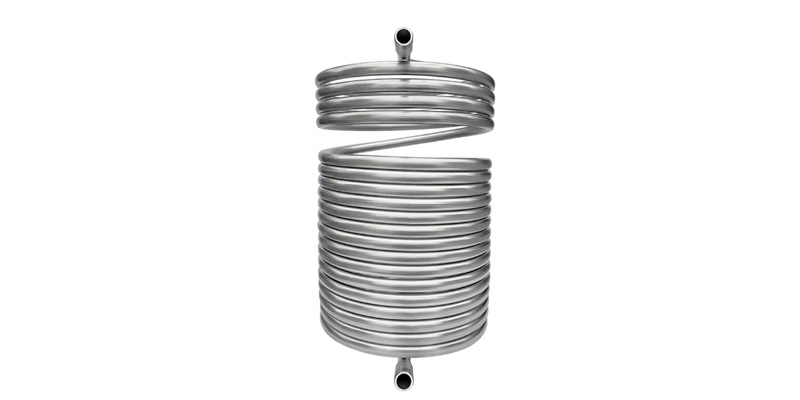
- Temperature Range: 150°C – 350°C
- Heating Power: 5kW – 500kW (customizable)
- Coil Material: SS304 / SS316 / Carbon Steel
- System Pressure: Low pressure (<1 MPa)
- Heating Method: Indirect heating system
These parameters can be customized based on your application requirements.
Key Technical Advantages
1. Uniform and Stable Heating
Thermal oil provides consistent temperature distribution, avoiding hot spots and product damage.
2. High Thermal Efficiency
Continuous circulation ensures minimal energy waste and efficient heat transfer.
3. Indirect Heating = Safer Operation
No direct flame or electrical contact with the medium, making it ideal for flammable or sensitive materials.
4. Wide Temperature Range
Thermal oil systems can operate at high temperatures without high pressure.
5. Flexible Design
Coil size, material, and system layout can be fully customized.
Thermal Oil Heating vs Steam Heating
| Item | Thermal Oil System | Steam System |
|---|---|---|
| Pressure | Low | High |
| Temperature Control | Precise | Less stable |
| Safety | Higher | Lower |
| Maintenance | Lower | Higher |
👉 Thermal oil systems are more suitable for applications requiring stable high-temperature and safe operation.
Typical Applications
Chemical Industry
- Reactor heating
- Resin and polymer processing
Food Industry
- Edible oil heating
- Food processing tanks
Plastics & Rubber
- Mold temperature control
- Extrusion heating
Industrial Manufacturing
- Tank heating
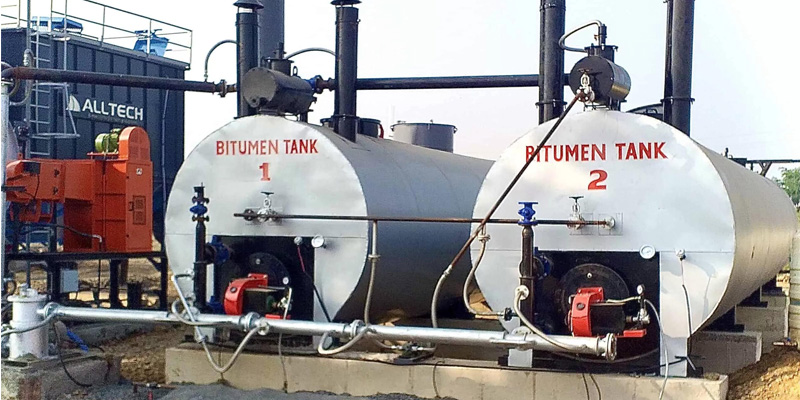
- Bitumen and asphalt heating
Real Project Experience (From Elekheat)
In real industrial projects, we often see customers facing issues such as:
- Incorrect heater sizing → slow heating
- Poor oil circulation → uneven temperature
- Low-quality thermal oil → carbon buildup
At Elekheat, we solve these problems by:
- Accurate heat load calculation
- Optimized pump and pipeline design
- Selecting high-stability thermal oil
This ensures long-term stable operation and higher system efficiency.
System Design Considerations
1. Thermal Oil Selection
Must match operating temperature and provide long-term stability.
2. Flow Rate & Pump Design
Proper circulation is essential for efficient heat transfer.
3. Coil Material Selection
- Stainless steel → corrosion resistance
- Carbon steel → cost-effective
4. Heat Load Calculation
System sizing depends on:
- Required temperature
- Heating time
- Medium properties
Common Problems & Solutions
| Problem | Cause | Solution |
|---|---|---|
| Uneven heating | Poor oil circulation | Optimize pump selection |
| Low efficiency | Coil fouling | Regular cleaning |
| Oil degradation | Overheating | Use high-quality thermal oil |
| Slow heating | Undersized heater | Recalculate heat load |
FAQ
What is a thermal oil heat exchanger used for?
It is used for indirect heating in industrial processes where stable and high temperatures are required.
What temperature can thermal oil reach?
Most systems operate between 150°C and 350°C.
Is thermal oil heating safe?
Yes. It operates under low pressure, making it safer than steam systems.
What industries use thermal oil systems?
Chemical, food processing, plastics, and general manufacturing industries.
Why Choose Elekheat?
At Elekheat, we combine engineering expertise with real manufacturing experience:
- Custom-designed thermal oil heating systems
- High-quality heating elements
- Optimized circulation design
- Reliable long-term performance
We don’t just supply heaters — we deliver complete heating solutions.
Get a Custom Thermal Oil Heating Solution
Tell us your application:
- What material are you heating?
- Required temperature?
- Tank size or system capacity?
👉 Elekheat engineers will provide:
- Free heat load calculation
- Custom system design
- Quotation within 24 hours
Conclusion
A thermal oil heat exchanger system is one of the most efficient and reliable solutions for industrial heating.
With its indirect heating method, closed-loop design, and high temperature capability, it is ideal for applications that require:
- Precision
- Safety
- Energy efficiency
If you are looking for a reliable thermal oil heating system supplier, Elekheat is ready to support your project.