Industrial Flange Heaters: High-Efficiency Immersion Solutions
Direct from Manufacturer. Custom engineered for Oil Tanks, Water Processing, and Corrosive Chemical environments.
- ANSI Flanges 2"-24"
- Incoloy & SS316L Sheath
- 480V/600V 3-Phase
Flange heater product introduction
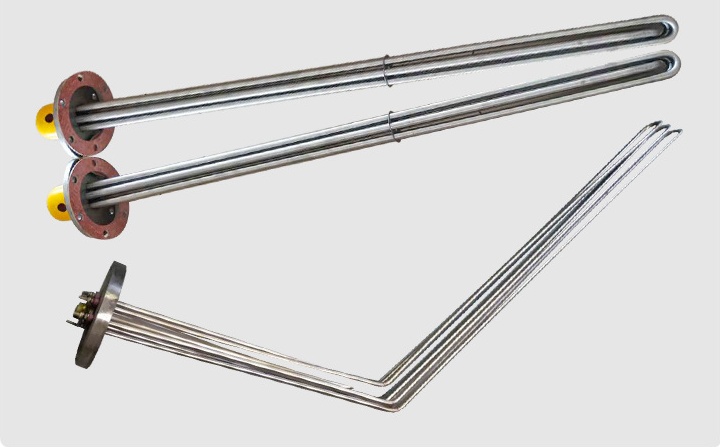
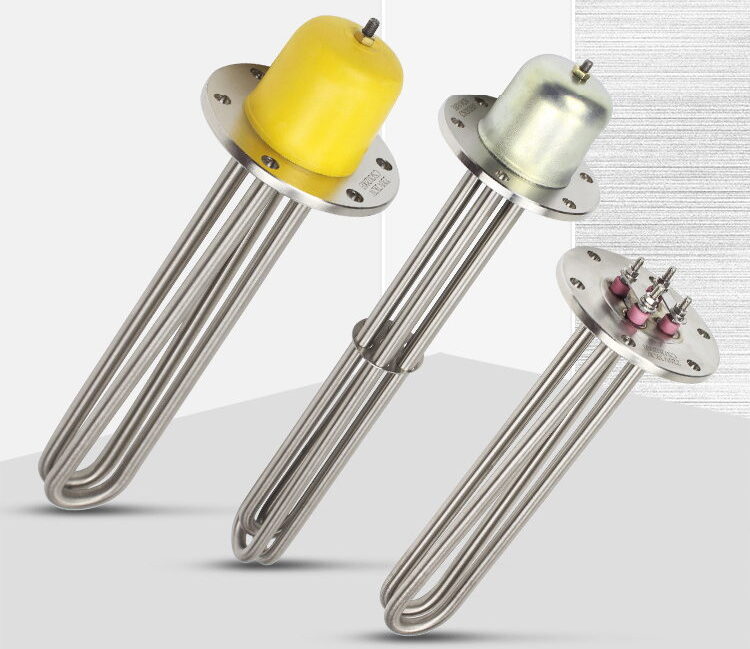
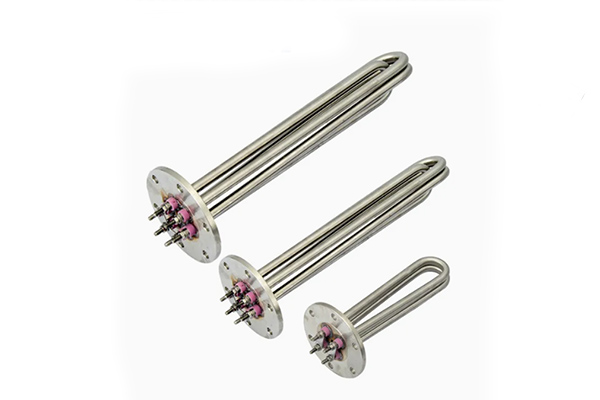
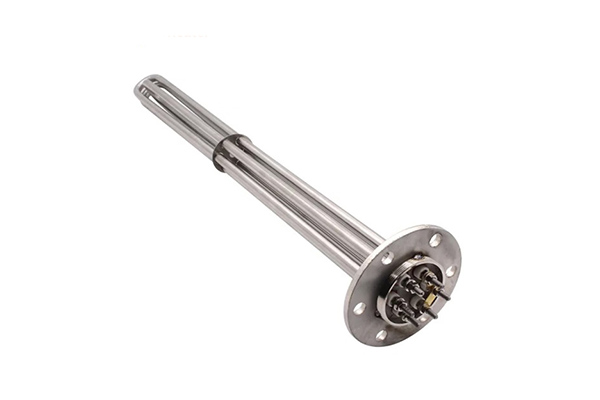
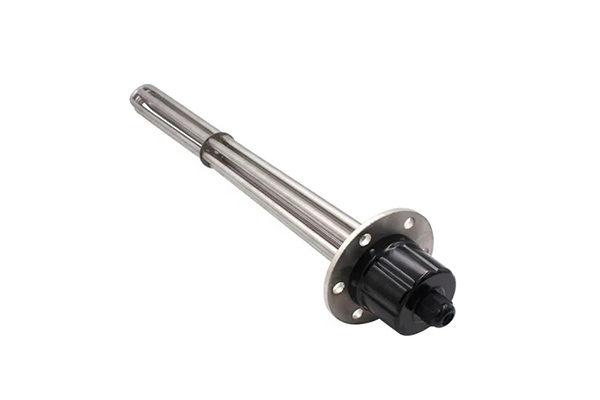
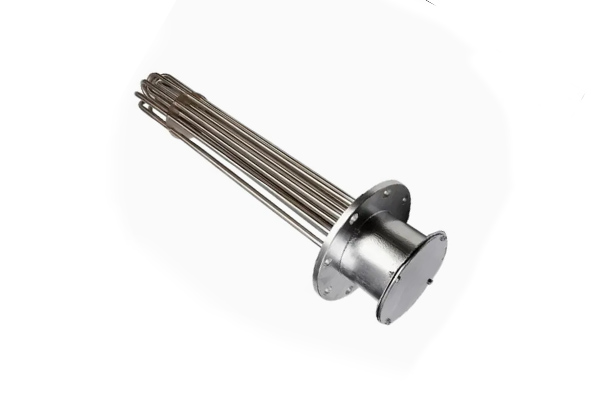
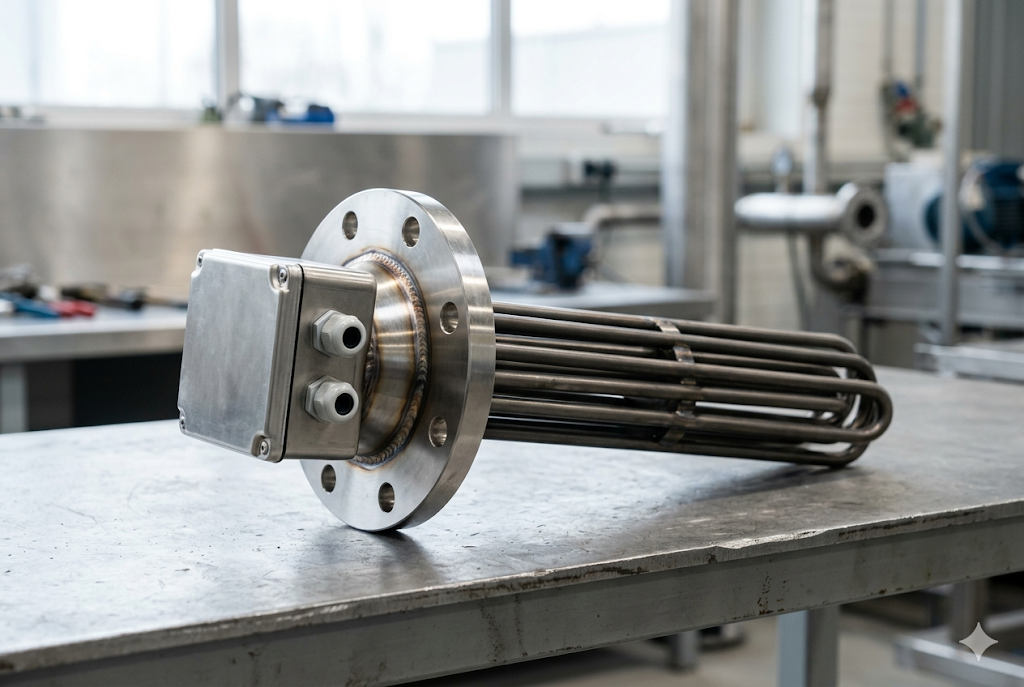
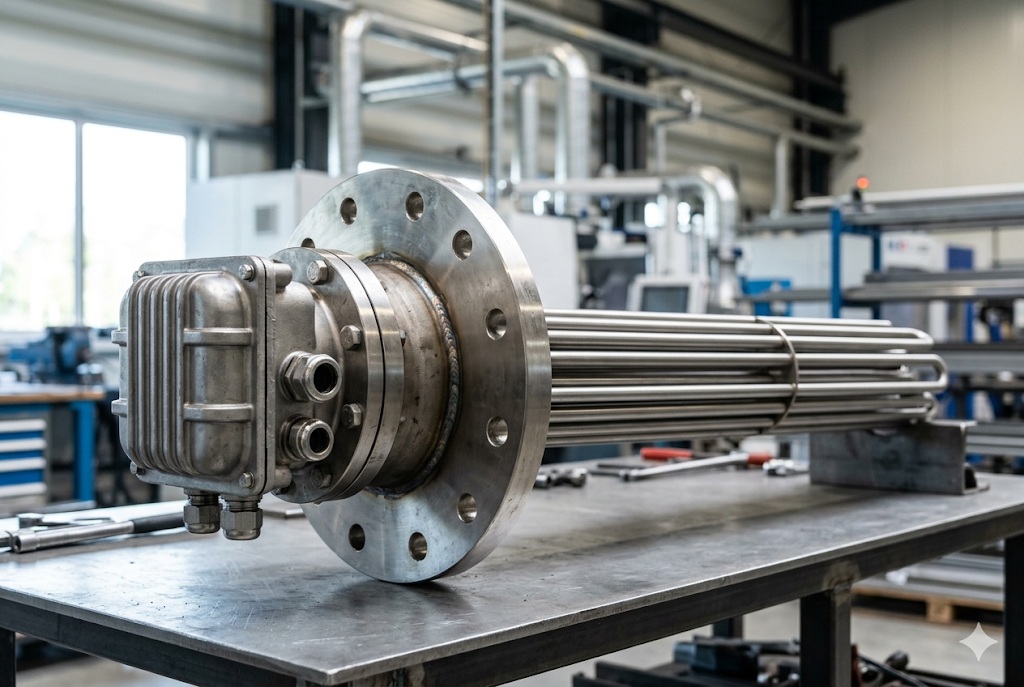
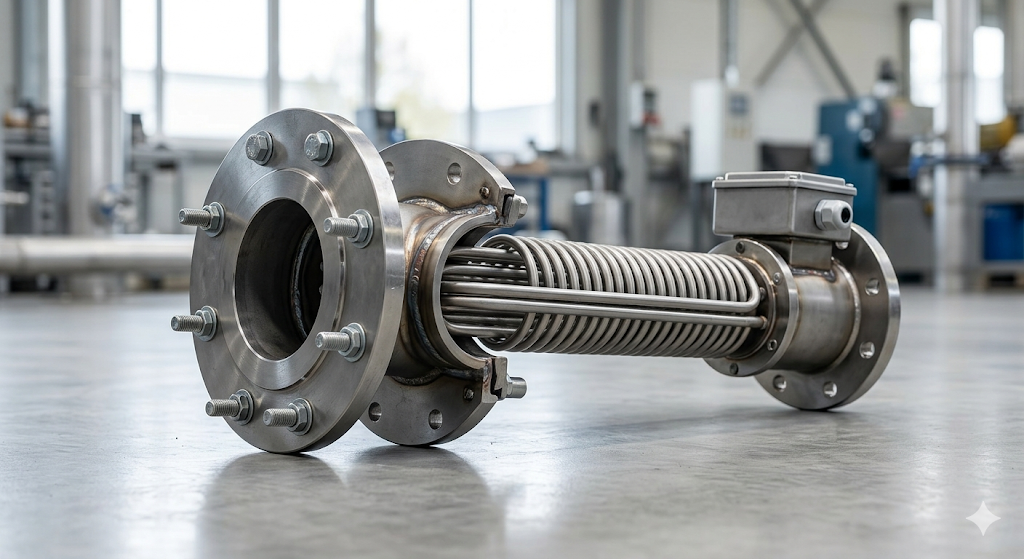
Flange-type electric heating elements/heaters consist of one or more heating elements arranged and welded to a flange seal (commonly including flat flanges, threaded flanges, and quick-connect chucks) according to design requirements. Based on their external structure, they are also known as bundled, insert, or immersion electric heaters. Flange-type electric heating elements feature high overall power load, compact structure, minimal installation space limitations, and convenient installation and replacement.
Flange Heater Engineering Calculator
Calculate required power, watt density, and amperage for your immersion heating application.
Classification by Heating Medium
This is the most critical classification, as the medium determines the watt density ($W/cm^2$) and the sheath material of the heating elements.
Water Heating Flange Heaters
- Characteristics: High watt density (typically $6-10 W/cm^2$).
- Materials: Usually Stainless Steel 304 or 316L.
- Applications: Industrial boilers, cleaning systems, water storage tanks.
Oil Heating Flange Heaters
- Characteristics: Extremely low watt density (usually $1-2.5 W/cm^2$) to prevent oil carbonization caused by localized overheating.
- Materials: Carbon Steel or Stainless Steel.
- Applications: Thermal oil furnaces, hydraulic oil heating, lubricant preheating.
Corrosive Chemical Heating
- Characteristics: High resistance to chemical attack.
- Materials: Incoloy 800/840, Titanium, or PTFE (Teflon) coatings.
- Applications: Electroplating baths, phosphating tanks, strong acid/alkali heating.
Classification by Protection Rating
This relates directly to the design of the Terminal Box, a key focus for engineers during technical reviews.
General Purpose
NEMA 1 rated, suitable for standard indoor industrial environments.
Moisture/Weather Resistant
NEMA 4/4X rated, featuring gaskets to prevent rain or spray from entering the housing.
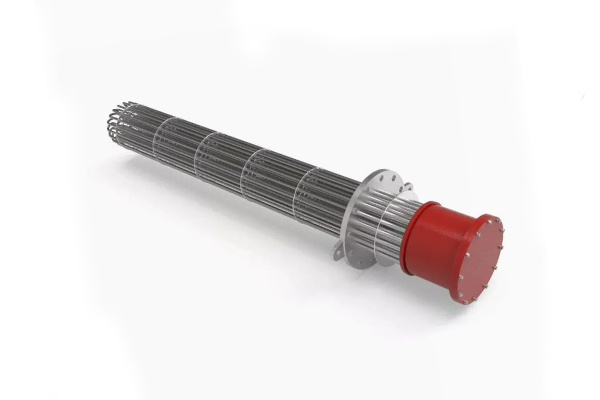
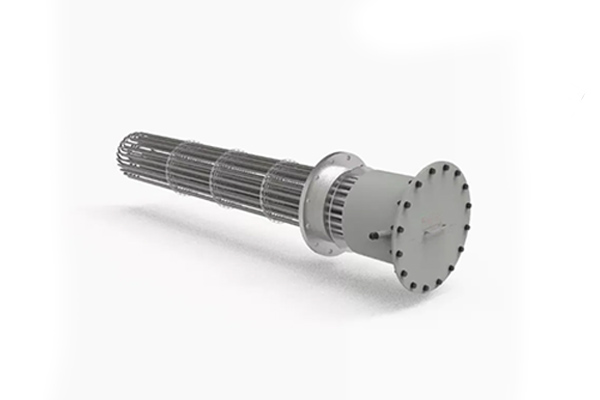
Explosion-Proof
NEMA 7 rated. These feature heavy-duty, flame-proof enclosures designed to contain internal sparks and prevent the ignition of external flammable gases.
Technical Specifications
Voltage & Power
- Voltage Range: 12V – 440V (Customizable)
- Power Range: 20W – 200KW (Customizable)
Engineering Support: Need help calculating power requirements? [View Power Selection & Calculation Guide]
Heating Medium & Temperature Limits
| Medium Type | Application Detail | Max Temperature |
|---|---|---|
| Gas / Air | Normal Air / Inert Gas | Low-Mid: ≤350°C | High: Up to 600°C |
| Special Atmospheres | Customized based on flow rate | |
| Liquid | Water / Cleaning Systems | ≤100°C |
| Thermal Oil / Lubricants | ≤350°C | |
| Corrosive | Acids, Alkalis, Chemical Baths | Low-Temp: ≤60°C | Mid-High: ≤100°C |
Dimensions & Mounting Standards
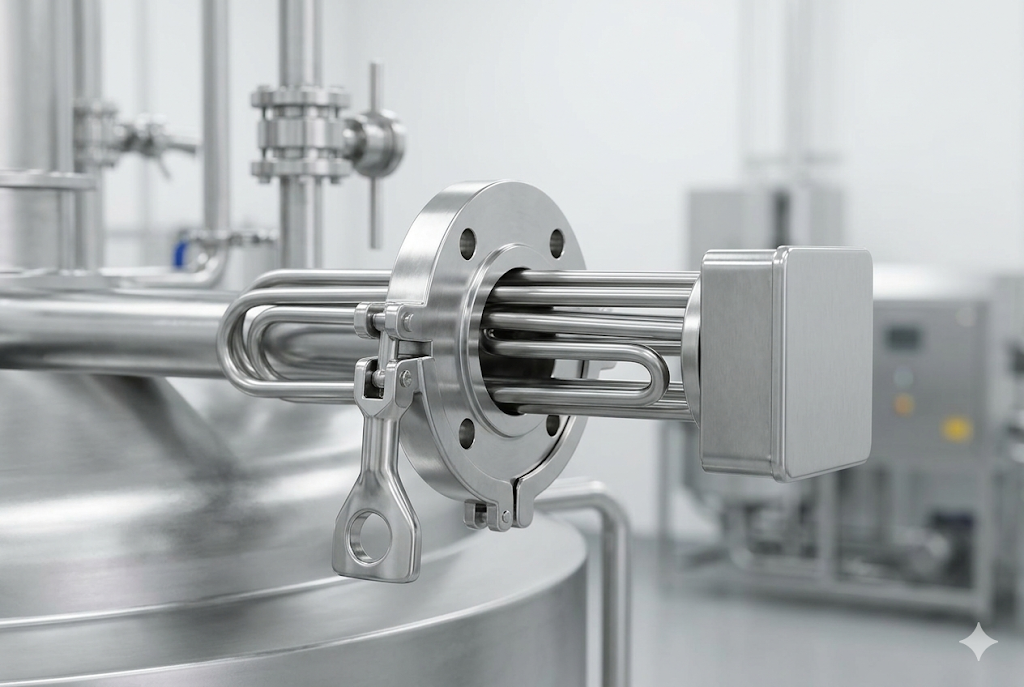
Available Configurations: Flat Flange, Threaded Plug (Screw-in), Tri-clamp (Quick-connect).
- Tube Diameters: φ8mm, φ10mm, φ12mm, φ14mm, φ16mm, φ18mm, φ20mm
- Flange Standards (Flat): ANSI, DIN, JIS (DN25 to DN150+)
- Screw Plug Sizes: 1″, 1.5″, 2″ (NPT/BSP)
- Tri-clamp Sizes: 1.5″, 2″, 2.5″
- Custom Features: Cold zone length, lead wire length, thermowells, insulation layers.
Accessories & Options
Common Structural Types of Flange Heaters
Standard Flanged Structure
- The heater is mounted to the equipment using a bolted flange connection
- Most widely used industrial configuration
- Suitable for high temperature and high pressure applications
Key features: Stable, universal, widely applicable
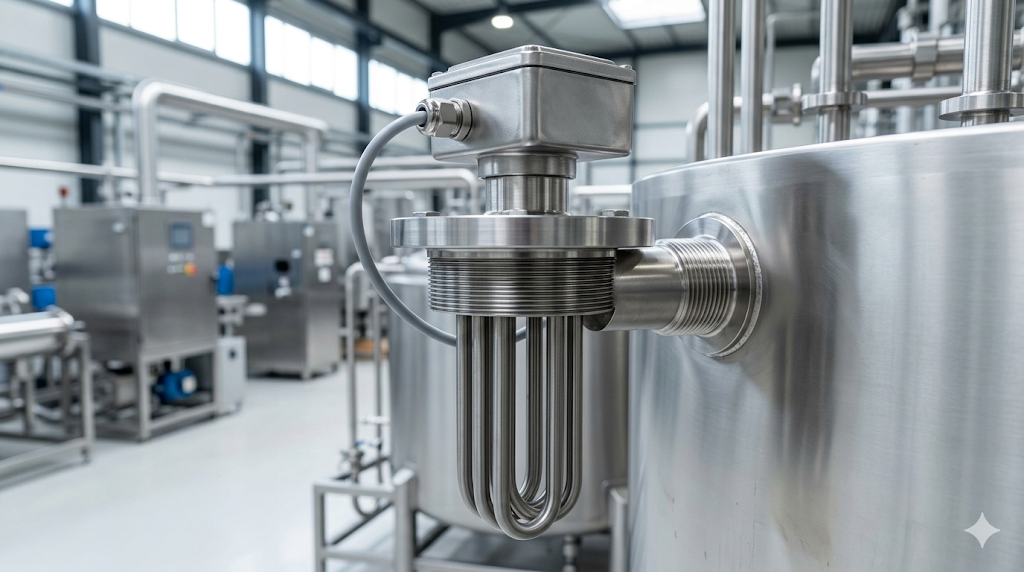
Threaded (Screw-In Flange) Structure
- Installed by directly screwing into a threaded opening (e.g., G thread / NPT)
- Compact design suitable for small to medium power systems
Key features: Easy installation, low cost, flexible usage
Quick-Release Clamp Structure (Sanitary Type)
- Uses tri-clamp or similar sanitary quick-connection system
- Designed for fast installation and removal
- Common in hygienic processing systems
Key features: Fast maintenance, easy cleaning, high hygiene level
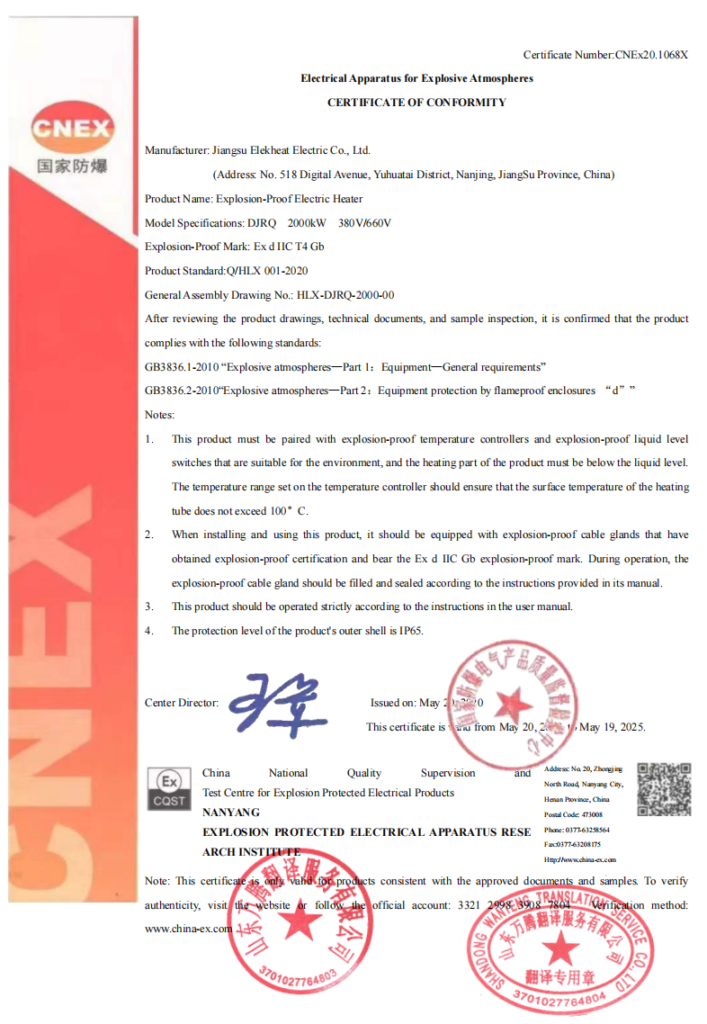
Explosion-Proof Flange Structure
- Equipped with explosion-proof terminal housing and reinforced sealing
- Complies with Ex-rated safety standards (e.g., Ex d / Ex e)
Key features: High safety level, suitable for hazardous environments
Removable / Maintainable Structure
- Heating elements and flange are designed for partial disassembly
- Individual heating tubes can be replaced without replacing the whole unit
Key features: Easy maintenance, lower repair cost, reduced downtime
Selection Process for Electric Heating Elements
Step 1: Confirm the Heating Medium and Operating Temperature
→ Determine the general type, material, and heat load of the electric heating element
Step 2: Calculate the Total Heating Power
→ Determine the structure and required quantity of heating elements
Step 3: Determine the Installation Method
→ Define the installation or sealing structure
Step 4: Define Dimensional Constraints
→ Determine the exact manufacturing dimensions
Step 5: Finalize Voltage and Power per Element
→ Based on the above parameters, define voltage and power for each individual heater
Step 6: Confirm Quantity and Quotation
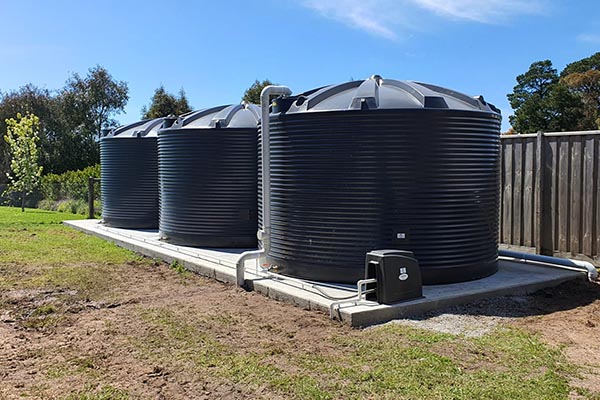
Example: Electric Heating Element Selection for a Water Tank
Project Requirement:Heat an open water tank (3 × 3 × 2 meters) from 20°C to 80°C within 3 hours.
1. First, determine the total power:
Heating 18 tons of water from room temperature (20℃) to 80℃ within 3 hours.
Specific heat capacity of water at room temperature: 4.2 kJ/(kg·℃)
Temperature difference: 80 – 20 = 60℃
Substituting into the formula, the theoretical thermal power is calculated as: 18000 * 60 * 4.2 / 3600 / 3 ≈ 420 kW
Considering the thermal efficiency in actual use, a coefficient of 0.8-0.9 is generally used, resulting in an approximate power of 470-520 kW.
2. Determine Heater Structure and Installation Method
1) For power ranges of 470-520KW, a flange-type electric heating element structure with concentrated power is suitable.
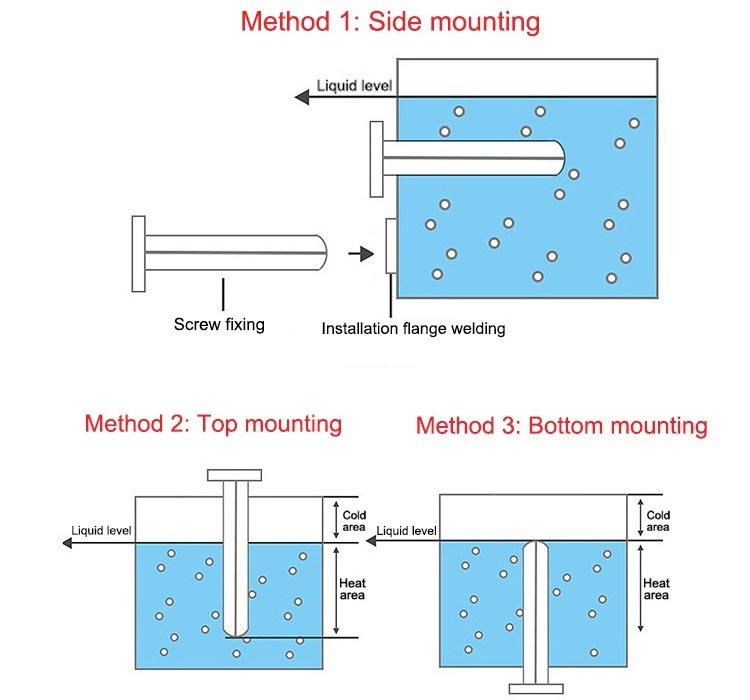
2) Flange-type electric heating elements are commonly used in water tanks for both horizontal side mounting and vertical mounting. The dimensions of the heating element will vary depending on the installation method.
3. Determine the dimensions, material, and power of the electric heating element:
1) Dimensions:
- Tank size: 3 × 3 × 2 meters
- For horizontal installation, the element length must be < 3 meters
→ Recommended length: 2.5–2.7 meters
2) Material Selection:
- Clean water / purified water / softened water → SUS304 stainless steel
- Groundwater / wastewater / sewage → SUS316L stainless steel
3) Power per Element:
Based on size and medium, select an appropriate power rating.
→ Example: 75 kW per flange heater
4. Determine the number and arrangement of electric heating elements
1) Based on the total power (470-520KW) and the power of a single electric heating element (75KW), 6-7 electric heating elements are required.
2) The above installation method is a side-mounted horizontal installation; therefore, 6-7 electric heating elements can be evenly or crosswise distributed on all four sides of the enclosure.
Installation Example
Size confirmation
Before purchasing, confirm whether the flange size, the center distance of themounting holes and the pipe length from the flange to the bottom are appropriate.
For the first installation, you need to purchase the matching flange
For top-mounted installation, pay attention to the length of the cold zone to avoid local hightemperature that may burn the heating tube
Applications
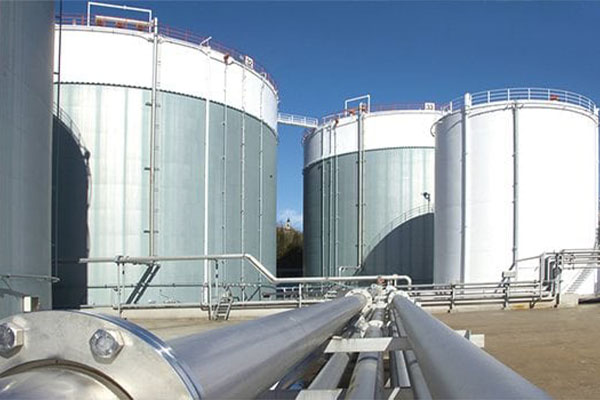
Oil storage tanks
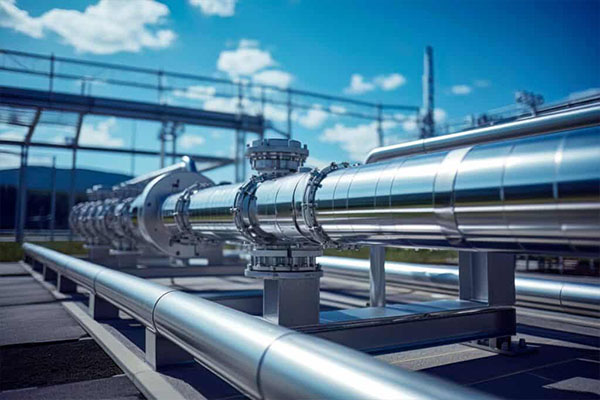
Pipelines
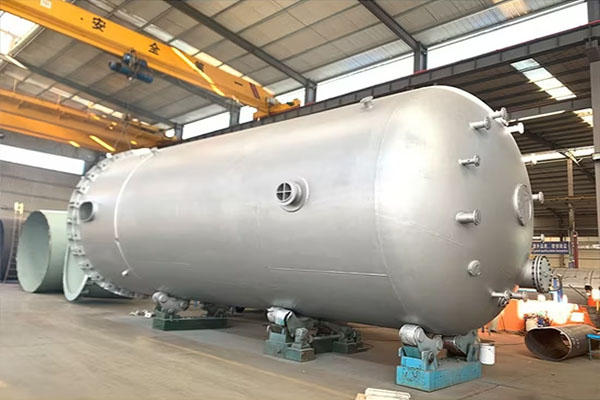
Chemical reactors
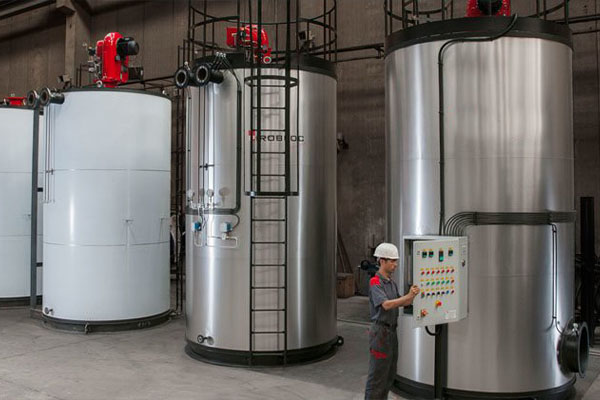
Thermal oil systems
Water tanks
Material Selection & Application Guide
Selecting the right sheath and flange material is critical for the longevity of your heating element. Our engineering team recommends the following configurations:
| Heating Medium | Sheath Material | Flange Material | Recommended Watt Density (W/cm2) |
| Clean Water / Process Water | SS304 / Copper | Carbon Steel | 8 – 10 |
| Deionized / Demineralized Water | SS316L / Incoloy 800 | SS316L | 6 – 8 |
| Light Fuel Oil / Lube Oil | Steel / SS304 | Carbon Steel | 2 – 3 |
| Heavy / Crude Oil | Steel / SS304 | Carbon Steel | 1 – 1.5 |
| Corrosive Chemicals / Acids | Titanium / PTFE Coating | SS316L | 2 – 4 |
| Food Equipment / Sanitary | SS316L (Passivated) | SS316L | 4 – 6 |
Explosion-Proof Option
Explosion-proof flange heaters are designed for hazardous areas with flammable gases or dust.
Explosion-proof enclosure: Ex d / Ex e
Hazardous area: Zone 1 / Zone 2
Temperature class: T3 / T4 / T5
Compliant with ATEX / IECEx standards
Support non-standard customization
It can be customized according to customer requirements and drawings, and we can also provide customers with thoughtful solutions
Why Engineers Choose Elekheat
Built for Performance. Verified for Safety.
Corrosion Resistance
We use premium Incoloy 800/840 and SS316L seamless tubing to withstand harsh chemical environments and high-temperature oxidation.
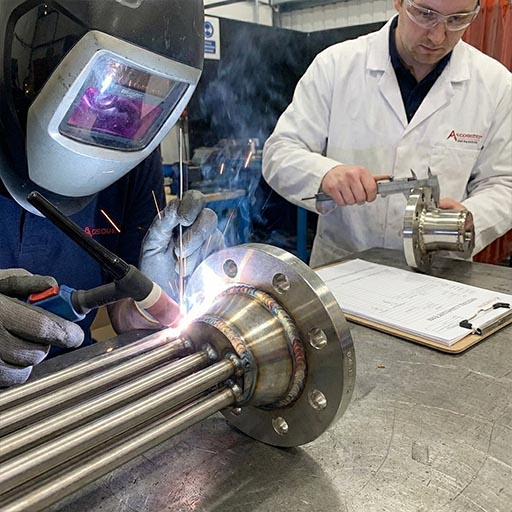
Precision TIG Welding
Every element is TIG-welded to the flange face, ensuring a leak-proof seal capable of withstanding pressures up to 3000 PSI.
Safety Compliance
Available with NEMA 4 (Moisture) and NEMA 7 (Explosion Proof) terminal housings for hazardous locations (Class I, Div 1).
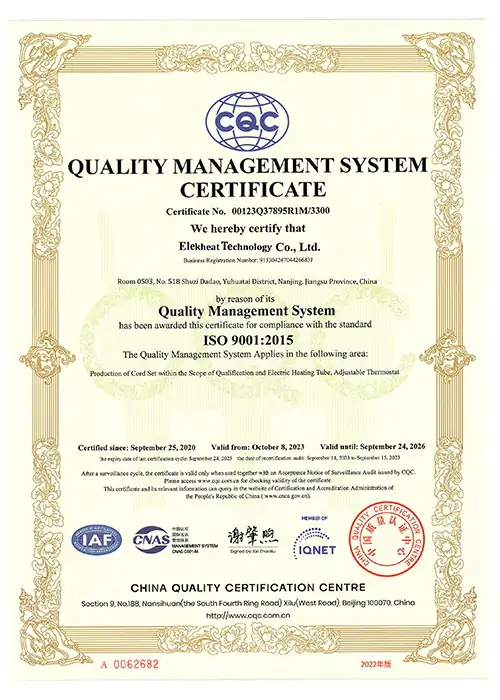
Quality & Manufacturing Capability
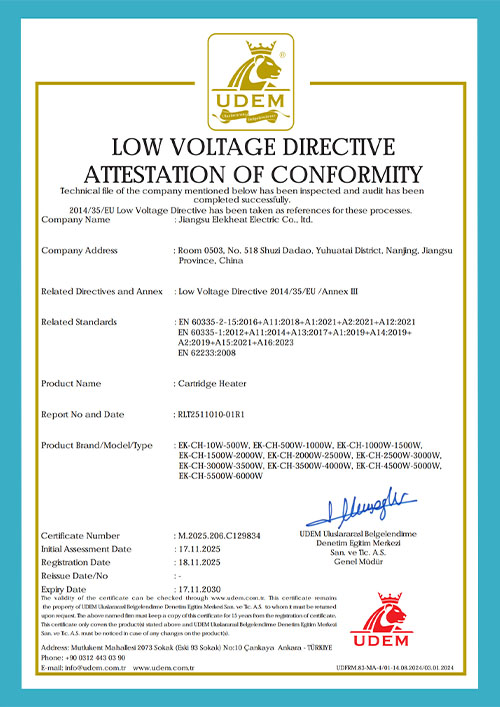
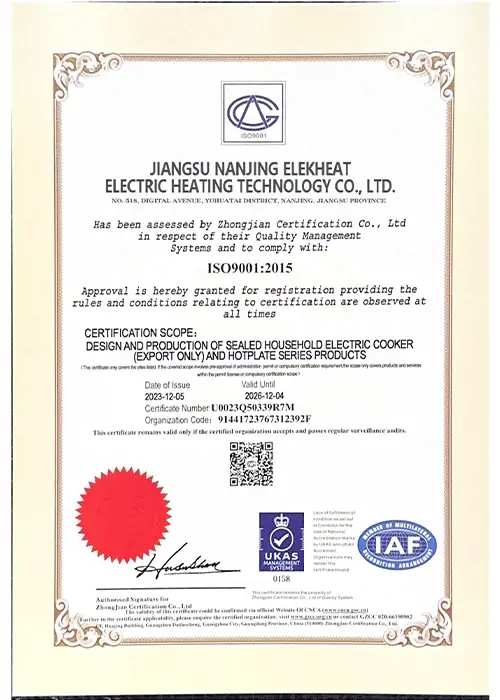
Certified manufacturing, strict quality control, and proven export experience for explosion-proof flange heaters used in hazardous industrial environments.
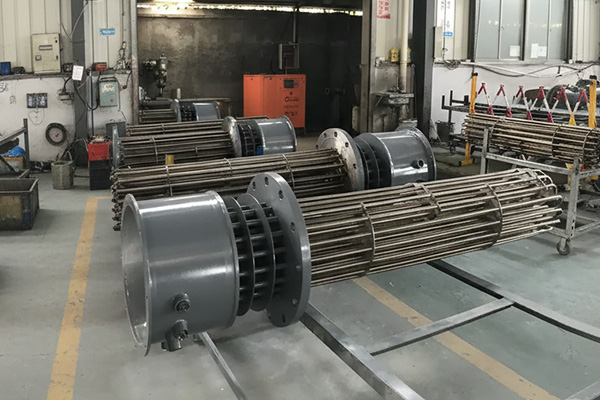
Factory & Workshop
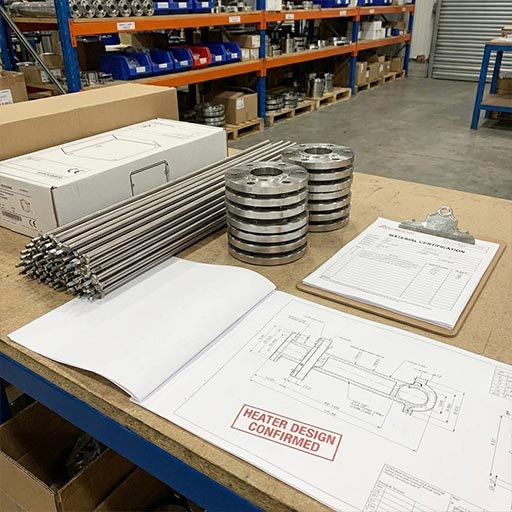
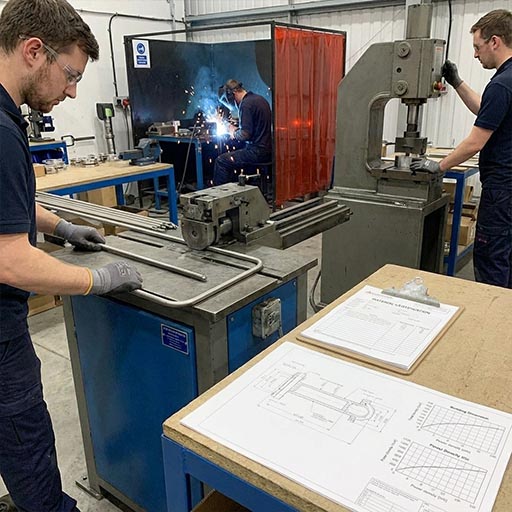
Our flange heaters are manufactured in a dedicated industrial facility with specialized workshops for heating element fabrication, welding, assembly, and explosion-proof enclosure installation.
Quality Control & Testing
100% routine testing before shipment
Incoming Material Control
All incoming materials are inspected and verified to ensure compliance with technical specifications and certification requirements.
In-Process Quality Control
- Welding inspection
- Dimensional and assembly checks
- Electrical wiring verification
Final Testing
| Test Item | Description |
|---|---|
| Insulation Resistance Test | Ensure electrical safety |
| Dielectric Strength Test | High-voltage withstand test |
| Power & Performance Test | Rated power verification |
| Temperature Control Test | Safety temperature limitation |
| Explosion-Proof Inspection | For ATEX / IECEx models |
Compliance & Certification
Stop Production Downtime Caused by Heater Failure
In heavy-duty industrial applications, generic off-the-shelf heaters often fail due to improper watt density or material incompatibility. This leads to carbonization in oil tanks or rapid scaling in water systems.
Elekheat’s Flanged Immersion Heaters are built differently. We calculate specific watt density (W/cm²) based on your exact medium viscosity. Whether you need a replacement for a boiler or a custom solution for a petrochemical tank, our heaters are engineered to last.
Frequently Asked Questions (FAQ)
Price depends on power, material, and customization. Send your requirements for a quotation.
Standard models: 7–15 days
Custom models: 15–30 days
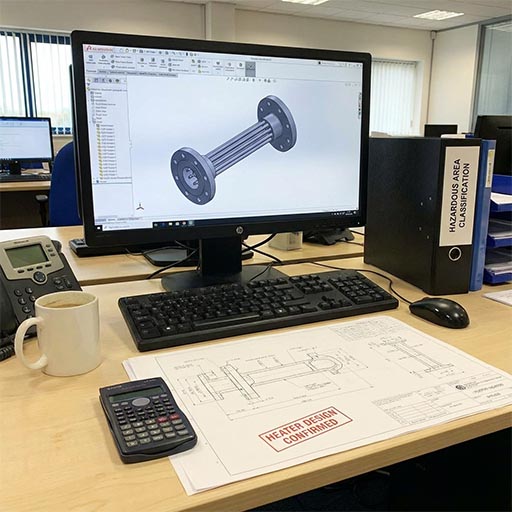
Yes, we provide engineering drawings for approval.
Oil & gas, chemical, water treatment, marine, and industrial manufacturing.
Yes, full OEM/ODM service is available.
At ELEKHEAT, we’re here to provide the answers you need. Whether you’re looking for product information, technical specifications, or need assistance with maintenance, our team of experts is ready to help. Don’t hesitate to reach out—we’re committed to ensuring you get the support you need for the best heating solutions.