 Skip to content
Premium Industrial Oil Heater Elements: Engineered to Eliminate Coking & Maximize MTBF
Engineered for continuous, heavy-duty thermodynamic applications. As a premier custom industrial oil heater manufacturer, we deliver precision-calibrated, low watt density oil heater elements. Our solutions are strictly designed to control boundary layer film temperatures, prevent fluid carbonization (coking), maintain food-grade integrity, and drastically reduce system downtime in extreme industrial environments.
We provide complete solutions for:
- Oil tank heating
- Pipeline heating
- Natural gas heating
- Hazardous area heating
Problems in Oil Heating: The High Cost of Failure
In the Oil & Gas sector, a heating element is not just a component; it is a critical safety barrier. Choosing an off-the-shelf heater without rigorous thermodynamic and hazardous area analysis leads to severe operational risks:
Question
Catastrophic Explosion Risks: Refineries and drilling rigs operate in environments saturated with combustible gases and vapors (Class I Div 1 / ATEX Zone 1). A single electrical spark from a compromised terminal enclosure or a sheath surface exceeding the auto-ignition temperature of the surrounding gas can trigger a catastrophic facility explosion.
Solution
Certified Flameproof Enclosures (Ex d): We utilize heavy-duty cast aluminum or carbon steel NEMA 7/9 terminal boxes. These are hydrostatically tested to contain any internal explosion and cool escaping gases below the ignition temperature of the surrounding atmosphere.
Question
Fluid Carbonization (Coking) & Element Burnout: Crude and heavy fuel oils are highly sensitive to surface temperatures. If the heater’s surface temperature exceeds the oil’s maximum film temperature, asphaltenes precipitate, and the oil bakes onto the element. This carbon crust acts as an insulator, causing the internal wire to overheat and rupture, leading to total heater failure and contaminated tanks.
Solution
Redundant Safety Interlocks: Every heater features integrated dual-sensor arrays. A primary RTD (PT100) controls the process temperature, while a secondary high-limit Type J/K thermocouple is welded directly to the element sheath to instantly cut power if flow stops or carbon buildup begins.
Question
High Viscosity & Pump Cavitation: In cold climates, bitumen, Heavy Fuel Oil (HFO), and crude oil become virtually unpumpable. Inadequate heating leads to pressure drops, pump cavitation, and ultimately, millions of dollars in pipeline shutdown costs.
Solution
Boundary Layer Temperature Control: We prevent coking at the molecular level by engineering ultra-low watt density elements. By keeping the W/in² precisely matched to your fluid’s specific heat and viscosity curve, we ensure the sheath never reaches the carbonization threshold.
Precision Product Types for Critical Infrastructure
We do not just bend tubes; we engineer thermal solutions based on fluid dynamics, tank geometries, and strict industry compliance.
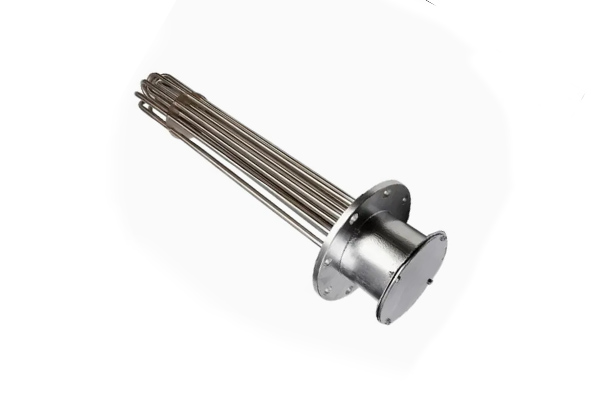
Flange Immersion Heater for Thermal & Petroleum Oils
Engineered for closed-loop heat transfer systems and high-viscosity petroleum storage. These units utilize heavy-duty ANSI B16.5 forged flanges (150# to 2500# pressure classes). Optimized for synthetic thermal fluids (e.g., Dowtherm™) and crude oil processing, our flange immersion heater for thermal oil features calculated baffle spacing to ensure optimal fluid velocity, preventing localized overheating and extending the fluid’s usable life.
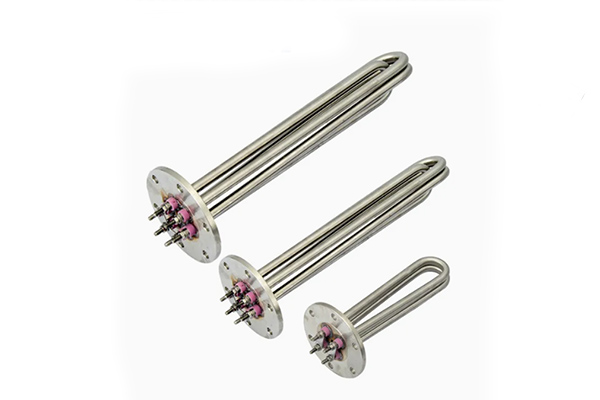
Sanitary Immersion Heaters for Edible Oils
Strictly designed for the Food & Beverage industry. Heating edible oils (palm, sunflower, deep-frying fats) requires preventing scorching and the breakdown of Free Fatty Acids (FFA). These heaters feature 316L stainless steel construction, FDA-compliant Tri-Clamp (sanitary flange) connections, and electropolished sheaths (Ra < 0.4 µm) to eliminate dead legs and prevent bacterial growth or carbon buildup.

Incoloy 800 Screw Plug Oil Heater (Compact Reservoirs)
Machined for precision fit in lube oil consoles and hydraulic power units (HPUs). The Incoloy 800 screw plug oil heater utilizes standard NPT or BSPT threaded hex plugs (1″ to 3″). The high-nickel Incoloy alloy provides superior resistance to oxidation and high-temperature corrosion, making it ideal for aggressive or slightly acidic oil environments.

Replacement Engine Oil Pan Heater Element (OEM Replacements)
Preventing premature engine wear during cold starts requires maintaining optimal kinematic viscosity. Our replacement engine oil pan heater elements are exact OEM-spec replacements for heavy-duty standby generators and locomotive engines, ensuring the lube oil remains flowable without degrading the extreme-pressure (EP) additives.
Applications Across Diverse Sectors

Petroleum Extraction & Refining
Preheating high-viscosity crude oil, bitumen, and heavy fuel oil (HFO) in storage tanks or pipelines to achieve pumpability and atomization viscosity. Equipped with explosion-proof terminal enclosures for ATEX Zone 1/2 hazardous areas.
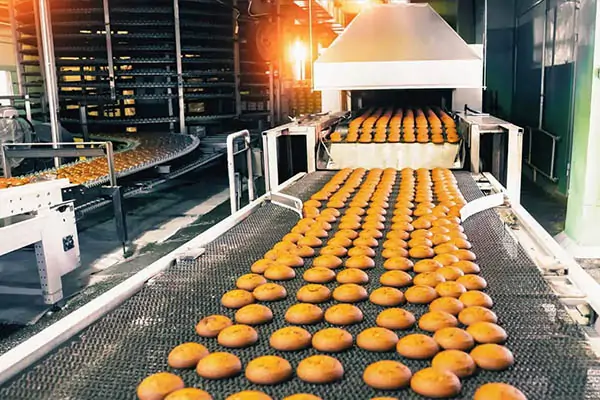
Food Processing & Edible Oils
Gentle, uniform heating for commercial fryers, palm oil storage, and food manufacturing. Strict adherence to food-grade standards prevents oil degradation, scorching, and off-flavors, protecting the oil’s smoke point.

Hydraulic Systems
Maintaining optimal viscosity in cold environments. Whether you need a compact hydraulic tank heater element 120v for mobile equipment or a larger array for industrial presses.

Thermal Fluid Systems
Providing stable, high-temperature heating for chemical processing, plastics manufacturing, and commercial laundering.
Hardcore Technical Specifications & Tolerances
For engineers, precision is everything. Our elements are manufactured to strict international tolerances, ensuring predictable thermodynamic performance.
| Parameter | Engineering Specifications |
| Power Range | 1 kW to 1000+ kW (e.g., standard 3 phase industrial oil immersion heater 10kw) |
| Voltage Limits | 120V up to 690V AC (Single / 3-Phase, Delta/Wye configurations) |
| Sheath Metallurgy | Stainless Steel (304, 316L, 321), Incoloy (800, 840), Inconel 600, Titanium |
| Wattage Tolerance | +5\% / -10\% (per IEC 60335-1 standards) |
| Surface Finish (Edible Oil) | Mechanical Polish or Electropolished (Ra < 0.4 µm) |
| Insulation Resistance | > 1000 MΩ (Cold state, tested at 500V DC) |
| Flange/Plug Standards | ANSI B16.5, ASME Boiler Code, NPT, BSPT, Sanitary Tri-Clamp (3-A Standard) |
Thermodynamic Selection Guide: Sizing Your Heater
Guesswork leads to carbonization. Knowing exactly how to calculate wattage for oil heater systems is the first step in system design. To determine the absolute power required (P), engineers must apply the fundamental sensible heat equation:


Engineering Tip: Use our proprietary Oil Heating Wattage Calculator to input your exact tank dimensions and fluid type for an instant kW recommendation.

Materials & Watt Density: Mastering the Boundary Layer
How to prevent oil coking on heating elements? The answer lies entirely in fluid mechanics and controlling the Watt Density (W/in² or W/cm²).
When heating viscous fluids (like crude oil) or sensitive fluids (like edible oils), a thermal boundary layer forms around the element sheath. If the watt density is too high, the sheath temperature exceeds the maximum film temperature of the specific oil. For petroleum, this causes hydrocarbon chains to crack (asphaltene precipitation). For edible oils, it destroys the molecular structure, ruining the taste and reducing the smoke point.
Recommended Maximum Watt Densities by Fluid:
| Fluid Type | Max Sheath Temp (°C) | Recommended Max Watt Density (W/in²) |
| Crude Oil & Bitumen | 100°C | < 5 – 8 W/in² (Requires ultra-low watt density oil heater element) |
| Hydraulic Oil (ISO VG) | 150°C | < 10 W/in² (What is the best watt density for hydraulic oil heating? Always keep it under 10 to protect anti-wear additives.) |
| Edible Oils (Palm, Frying) | 150°C | 10 – 12 W/in² (Crucial to prevent FFA degradation and scorching) |
| Lube Oils (SAE 30/40) | 200°C | 10 – 15 W/in² |
| Thermal Heat Transfer Fluid | 350°C+ | 15 – 22 W/in² (Highly dependent on pump flow velocity) |
Proven Case Studies in Oil & Gas
We don’t just supply heaters; we engineer solutions for the world’s largest energy producers.

Case Study 1: Offshore Platform Crude Preheating (North Sea)
Challenge: An offshore rig required preheating highly viscous crude oil before separation. Space was strictly limited, and the environment was ATEX Zone 1 (IIC T3). Previous competitor heaters failed within 6 months due to extreme coking.
Solution: We designed a custom 450kW explosion proof heater for crude oil tank with an ultra-low watt density of 6 W/in² and a highly customized baffle arrangement to maximize flow. Housed in an IP67 / Ex d IIC enclosure.
Result: Heater has been in continuous operation for 3+ years with zero coking incidents, reducing maintenance downtime by 85%.
Case Study 2: HFO Pipeline Circulation System (Middle East refineries)
Challenge: A refinery needed to maintain Heavy Fuel Oil at atomization temperature across a 2-mile pipeline during winter months.
Solution: Delivered a skid-mounted 1.2MW circulation heating system comprising three 400kW immersion heater for refinery pipeline units connected in series, complete with a Class I Div 1 thyristor (SCR) control panel.
Result: Achieved ±1°C temperature precision, preventing pump cavitation and eliminating pipeline freezing risks entirely.

Elite Manufacturing Strength & QC
We are not just a wholesale distributor of thermal fluid heater elements; we are a primary manufacturer of heavy fuel oil heater elements, equipped with advanced metallurgical and electrical testing capabilities.

X-Ray & Dye Penetrant Testing
All welded flanges undergo rigorous NDT (Non-Destructive Testing) to ensure zero porosity in high-pressure petrochemical applications.

Helium Leak Detection
Ensuring absolute hermetic seals on all screw plugs and welded joints.

High-Purity MgO
We utilize premium-grade, highly compacted Magnesium Oxide dielectric powder to maximize thermal conductivity while maintaining superior electrical insulation.
FAQ & Engineering Support
Absolutely. Our Engineering Portal offers downloadable PDF manuals detailing Delta, Wye (Star), and multi-circuit wiring diagrams. We also provide native 3D CAD files (STEP, IGES) for seamless integration into your SolidWorks or AutoCAD assemblies.
Yes. Common failures include sheath rupture (due to extreme coking in crude oil applications), moisture ingress at the terminals, or dielectric breakdown. Send us photos of the failed unit or the megger test results, and our engineers will perform a free root-cause analysis before designing a more resilient replacement.
Yes. Our sanitary heating elements use exclusively 316L stainless steel, feature FDA-compliant Tri-Clamp fittings, and are electropolished to meet rigorous food safety and 3-A sanitary standards.
Yes, we are a leading CE certified oil immersion heater bulk manufacturer. Our products comply with the Low Voltage Directive (LVD) and Electromagnetic Compatibility (EMC) standards.
We thrive on customization. From non-standard flange sizes and custom immersion lengths to specific cold zone requirements and integrated baffling, our engineering team can go from concept to approved CAD drawings in 48 hours.