Tubular Heaters
Custom Round & Pressed Elements for Air, Liquid & Surface Heating
Tubular Heaters
Custom Round & Pressed Elements for Air, Liquid & Surface Heating
ELEKHEAT offers high-quality cartridge tubular heaters engineered for efficient and reliable heat transfer, catering to diverse industrial and commercial heating applications.
Tubular heating elements use resistive wire encased in materials like stainless steel, Incoloy, or copper for durability and uniform heating. Customizable in size, shape, and wattage, they suit applications like HVAC systems, process heating, and industrial equipment.
ELEKHEAT Tubular Heater Product Line
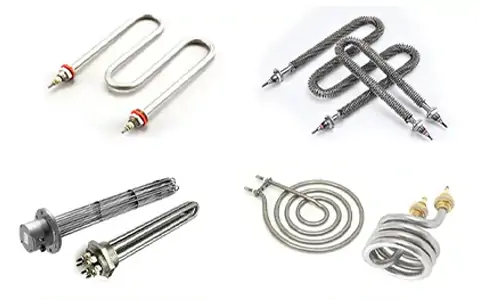
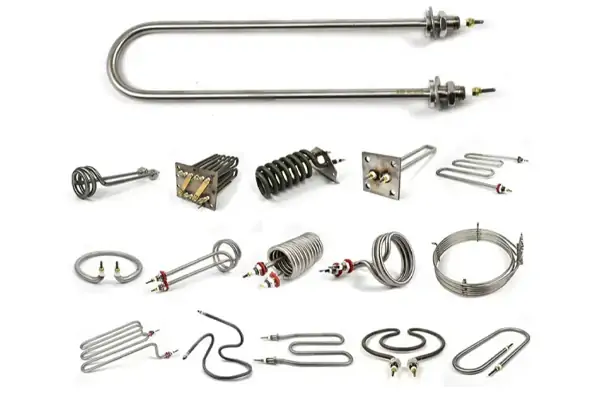
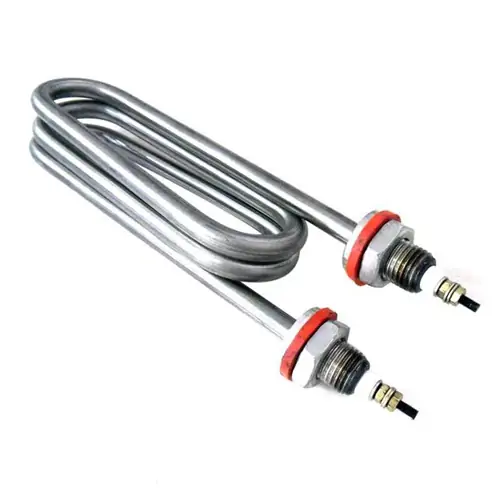
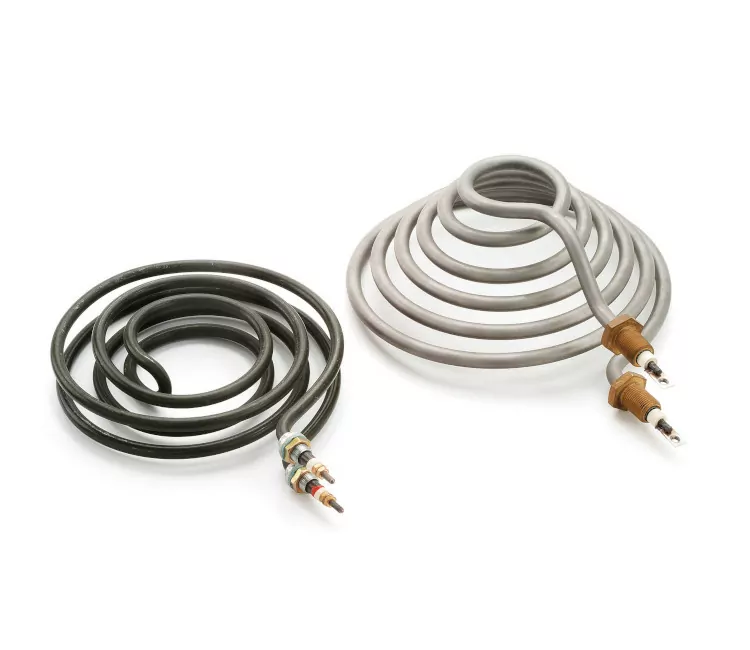
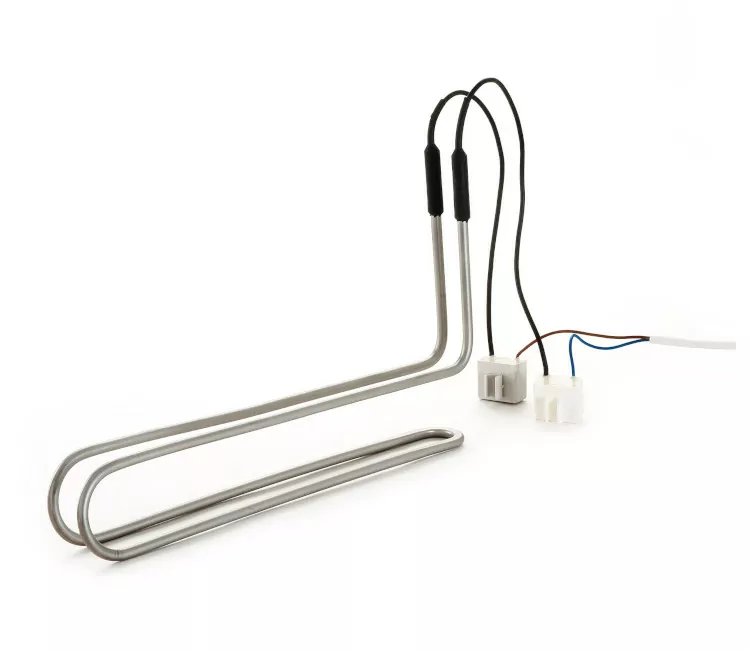
Round Tubular Elements (Straight or Formed)
For immersion, air, and surface heating, configurable in common diameters from 0.260″ to 0.625″ with multiple sheath alloys and termination styles.
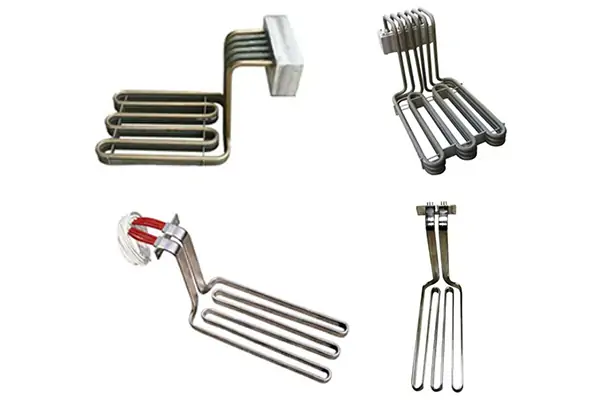
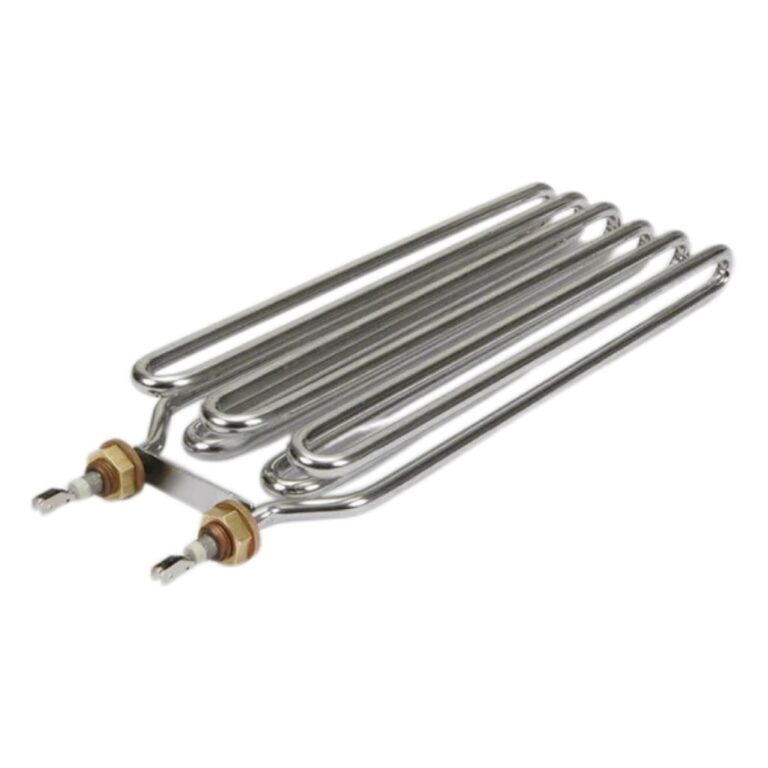
Pressed / Flat-Blade Tubular Elements
Flattened cross-section for more surface area per unit length; ideal where compact footprints and lower film temperatures are needed (e.g., ovens, ducts)
Finned Tubular Elements
Integral fins boost convective heat transfer in forced or natural air systems.
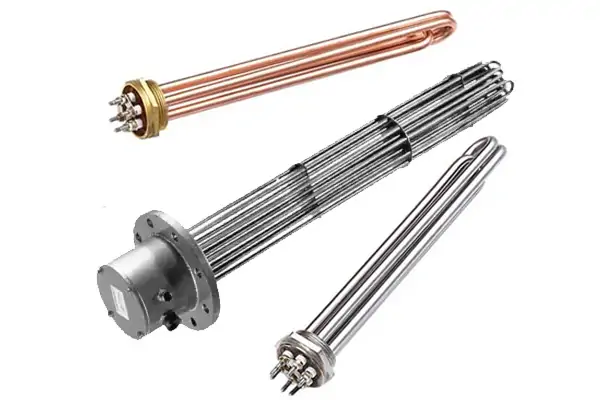
Round Tubular Elements (Straight or Formed)
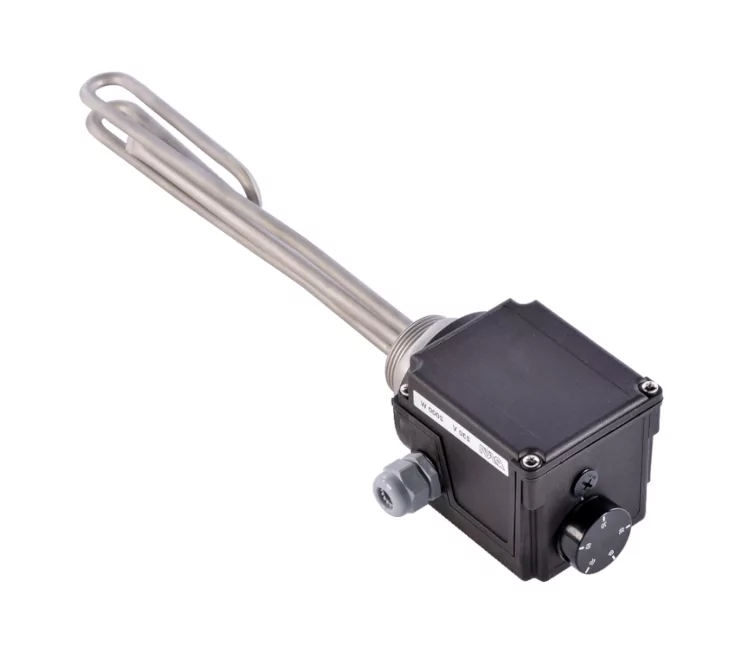
Screw-plug, flanged, and over-the-side assemblies built around Elekheat tubular elements for water, oils, and chemicals.
Standard options at a glance
Diameters: 0.260″, 0.315″, 0.375″, 0.430″, 0.475″, 0.625″.
Sheaths: Copper, steel, 304/316/321 stainless, Incoloy® 800/840, and others.
Voltages: Designs available up to 600 V depending on diameter and application.
Terminations: Plain pins, screw/flag/spade terminals, bulkhead fittings, flexible high-temp leads, and moisture seals.
Why Choose ELEKHEAT Tubular Heaters?

Higher power in less space
Flat-blade (pressed) elements pack more power in shorter assemblies—great for tight spaces and faster heat-up—while keeping sheath temperatures lower due to increased surface area.

Material science matched to your medium
We recommend sheath alloys and watt density based on your fluid/air/solid—e.g., Incoloy for higher temperature air, 316SS for DI water, copper for potable water. See our selection tables below.

Engineered watt density
We size watt density to the heat transfer regime and flow (still air vs. 500 fpm airflow; clamped vs. free), extending life and avoiding hotspots.

Manufacturability & repeatability
Swaged, MgO-compacted construction for high dielectric strength, vibration resistance, and excellent heat transfer.

Integration-ready
Sensors (TC/RTD), fittings (NPT/BSPP), brackets, and harnessing to drop into your build.
How We Manufacture


Customization Menu (Build-To-Spec)
Geometry
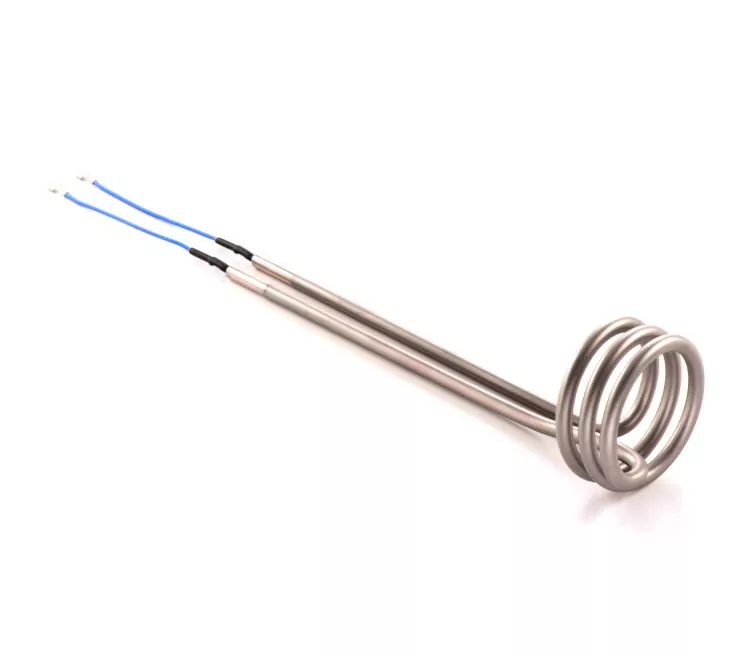
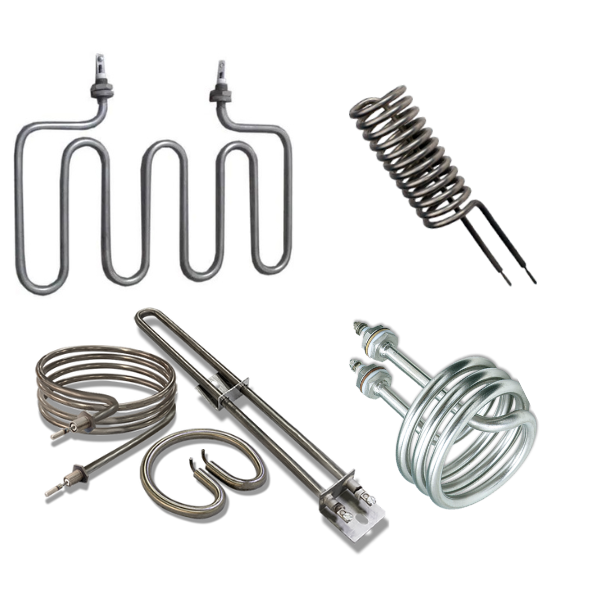
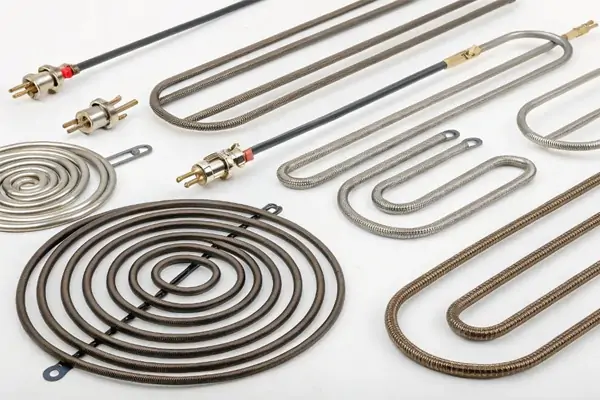
Straight, multi-bend, serpentine, spiral, formed rings/ovals; pressed (flat-blade); finned.
Power & Voltage
Specify W and V; we compute coil design and cold sections to hit target watt density.
Terminations
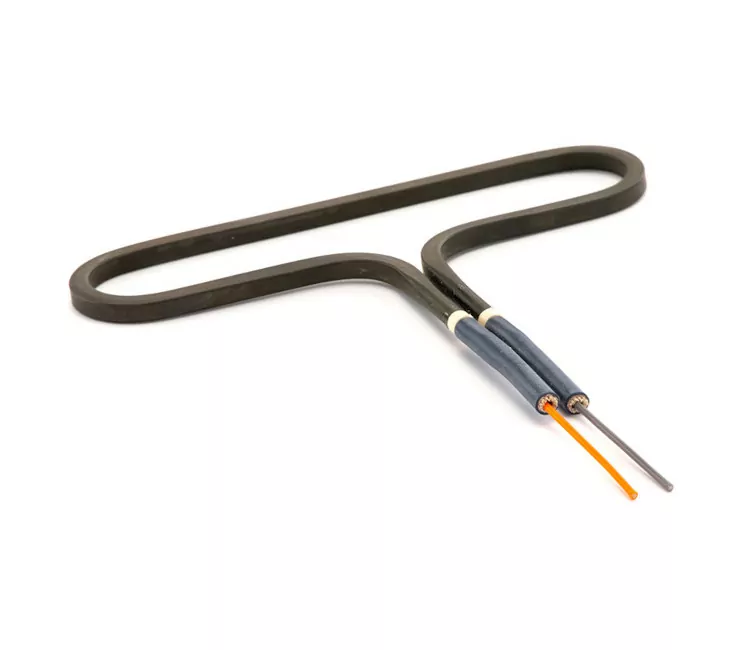
Pins, spade/flag/screw terminals, threaded studs, bulkhead fittings, flexible leads, armored leads.
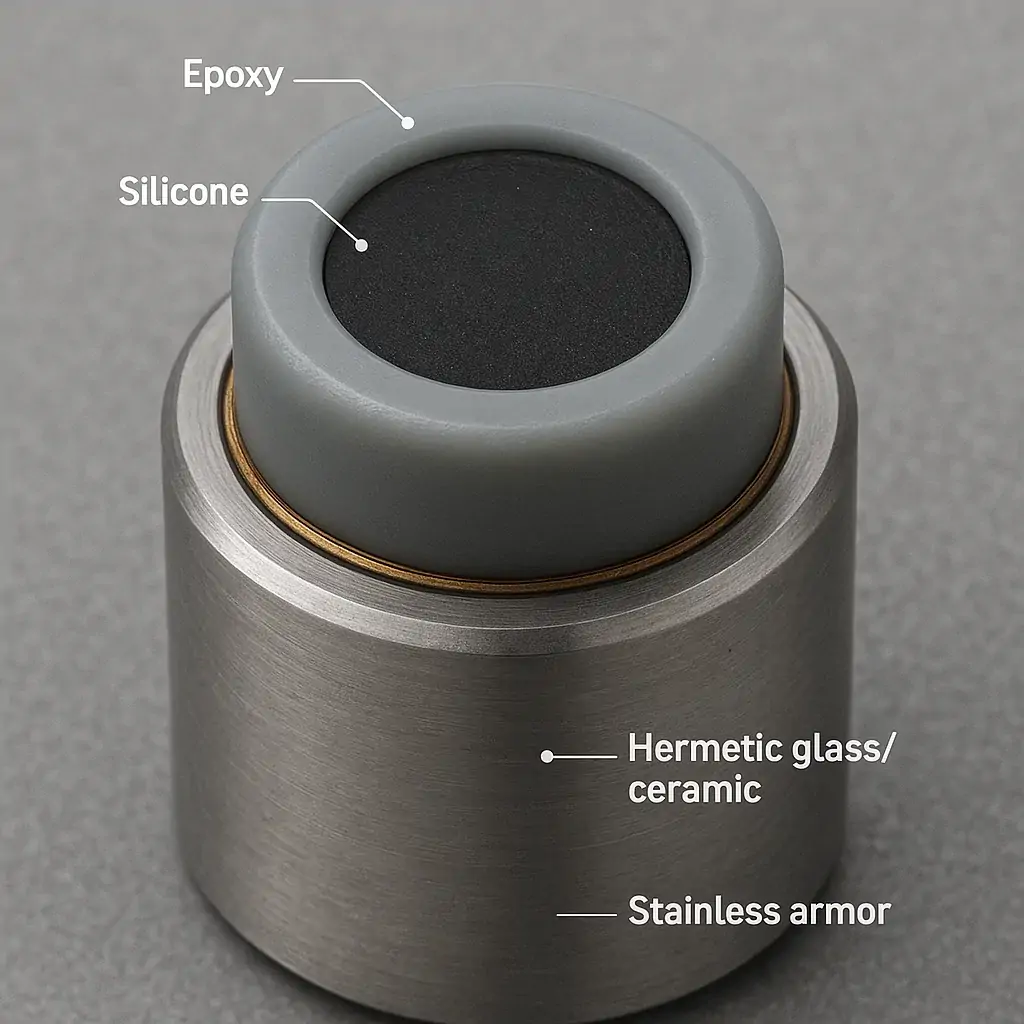
Seals & Passivation
Epoxy, silicone, hermetic glass/ceramic, stainless armor.
Forming Guidelines
We follow conservative bend radii and avoid bends within ~1" of a cold-end junction to protect insulation integrity. (If you plan to bend in-house, we’ll supply diameter-specific limits.)
Material Selection (What to Use & When)
Maximum recommended sheath temperatures in air & typical uses (guide values; final selection depends on medium/chemistry/flow):
| Sheath Material | Max Sheath Temp in Air | Where it shines |
|---|---|---|
| Copper | 350°F (175°C) | Clean, potable water immersion (not for high-temp air) |
| Steel | 750°F (400°C) | Oils/glycols, non-corrosives |
| 304/316 SS | 1200°F (650°C) | Corrosion resistance, DI water (316) |
| Incoloy® 800/840 | 1600°F (870°C) | High-temp air, corrosives |
| Inconel® 600 | 1800°F (980°C) | Aggressive media at elevated temp |
Source data for limits & use-cases: Durex published guidelines.
Finned air heating note: Steel-finned elements operate up to ~750°F sheath; stainless-finned up to 1200°F sheath (UL limit often 1000°F).
Contact Us
Tell us your needs, whether you are a purchaser or an individual buyer, we will arrange professional business people to connect with you.
What Is a Tubular Heater?
Tubular heaters are metal-sheathed, magnesium-oxide insulated, resistance elements that deliver heat by conduction, convection, or radiation. They can be straight or precision-formed into complex shapes and used for air, gas, liquid, and surface heating across countless industrial applications.
Tubular Heater Fundamentals (Principle & Applications)
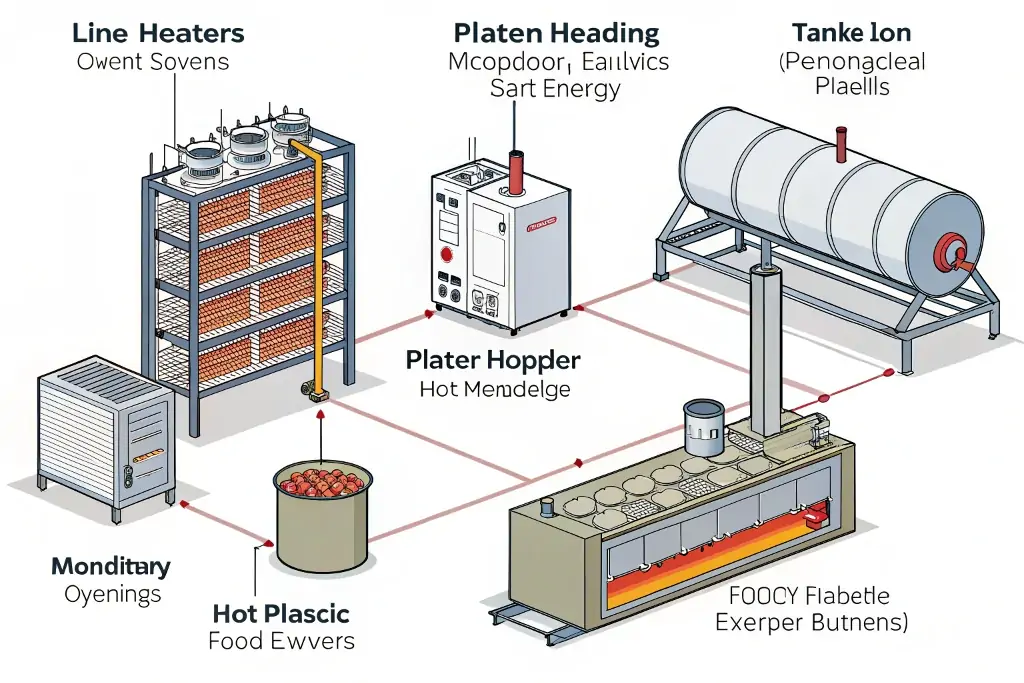
Tubulars convert electrical energy into heat inside a metal sheath; heat flows outward through the compacted MgO to the sheath, then into your liquid/air/solid by conduction, convection, or radiation. Typical systems include duct heaters, ovens, tanks, platen tooling, hopper heaters, hot runner manifolds, and more across plastics, packaging, HVAC, food equipment, and energy.
Specifications by Type (Typical Build Ranges)
Values below are typical industry ranges to help you specify. Your Elekheat design may exceed or differ based on validation.
| Type | Common Diameters | Typical Sheaths | Typical Watt Density Guidance | Where It’s Used |
|---|---|---|---|---|
| Round Tubular (straight/formed) | 0.260–0.625″ | Copper, Steel, 304/316 SS, Incoloy 800/840 | Liquids: 30–90 W/in² (clean water), Oils: 6–23 W/in², Air: 10–30 W/in² depending on flow | Immersion, ovens, platens, tanks. |
| Pressed / Flat-Blade | Formed from round (e.g., .375″ class) | 304/316 SS, Incoloy | Higher power in shorter length due to increased surface area; lowers film temp | Ovens, ducts, bake systems, compact tooling. |
| Finned Tubular | Typically .315–.475″ core with fins | Steel (to ~750°F sheath), SS fins (to ~1200°F sheath; often UL 1000°F) | Air systems sized by airflow/∆T; watt density set to avoid fin scorching | Duct heaters, forced-air tunnels, space heating. |
| Immersion Assemblies (screw-plug/flange/OTS) | 0.260–0.496″+ elements; assembly-specific | Copper, 304/316 SS, Incoloy | Follow liquid guidance; keep surface loading within medium limits | Kettles, CIP tanks, oils, process water. |
Frequently Asked Questions
Pressed/flat elements offer more surface area per unit length, enabling more power in shorter assemblies and lower film temperatures vs. round; ideal where space is tight or where surface temperature margins matter.
Common industry diameters include 0.260, 0.315, 0.375, 0.430, 0.475, and 0.625 inch; we’ll recommend based on watt density and bend geometry.
Match sheath to medium and temperature: Copper (potable water), 316SS (DI water), Incoloy (higher-temp air/corrosives). See the selection table and ask our engineers.
As a guide, steel-finned units operate up to ~750°F sheath, stainless-finned up to 1200°F sheath (UL often 1000°F). Air exit temperature depends on airflow.
We commonly design up to 600 V depending on diameter and current.
Avoid tight radii that compromise compaction; do not bend within ~1 inch of a cold-end junction. We’ll provide diameter-specific bend radii with your drawing.
Yes—TC/RTD, NPT/BSPP screw plugs, flanges, bulkhead fittings, brackets, armored leads, and seals are available.
Contact ELEKHEAT today by dialing 008615996326879 or using our contact form. We are happy to answer any questions. Elekheat is your best partner for heating element solutions!