 Skip to content
In high-temperature industrial processes, maintaining consistent, efficient, and precise thermal control is critical to minimizing downtime and ensuring product quality. For engineers and B2B buyers evaluating heating elements for cylindrical surfaces, one question frequently arises: What are ceramic band heaters, and are they the right choice for my equipment?
If your operations suffer from frequent heater burnouts, excessive energy consumption, or poor temperature uniformity—particularly in plastics processing—standard heating solutions might be holding you back. This guide dives deep into the engineering behind ceramic band heaters, their core applications, and how to choose the right specifications for your facility.
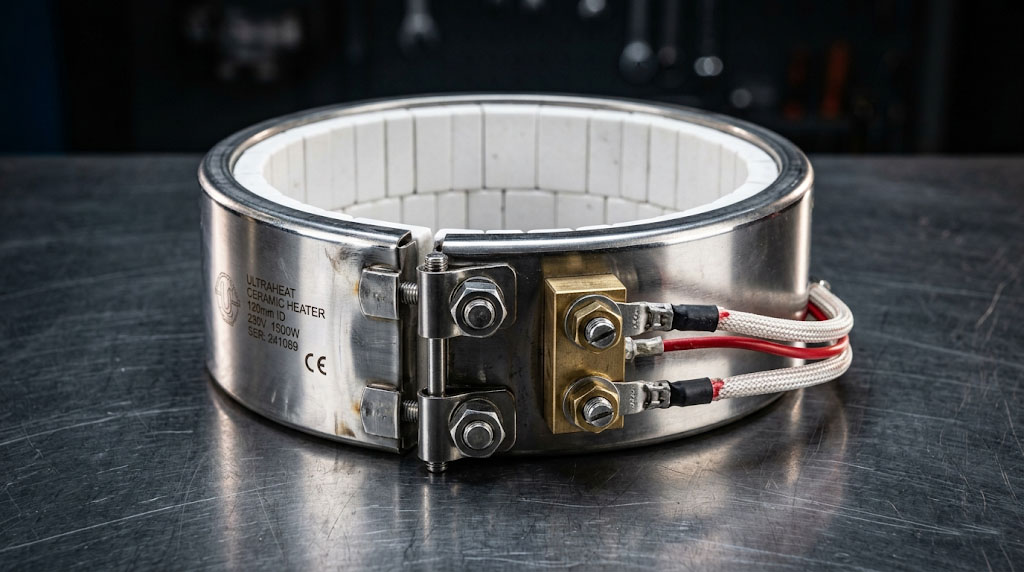
Understanding the Basics: What are Ceramic Band Heaters?
Ceramic band heaters are rugged, high-temperature industrial heating elements designed to wrap around pipes, tubes, barrels, and other cylindrical surfaces. Unlike standard heaters that rely solely on physical contact to transfer heat, ceramic band heaters utilize a combination of conductive and radiant heat transfer.
How Do They Work?
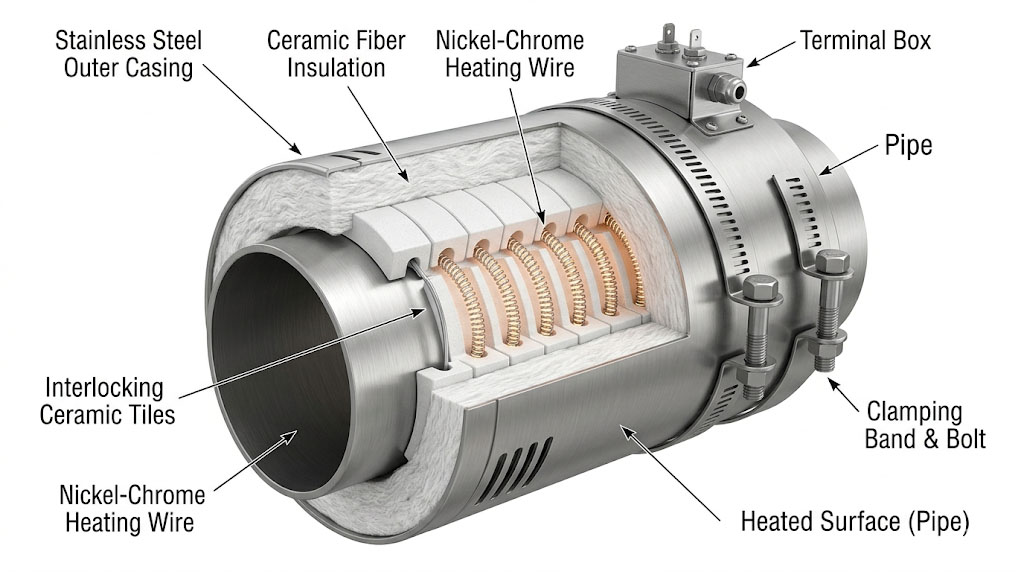
The internal structure of a ceramic band heater is what sets it apart. It consists of a resistance heating wire (typically high-grade Nickel-Chrome) threaded through interlocking steatite ceramic tiles. This flexible ceramic "mat" is then covered by a durable stainless steel outer sheath.
Most importantly, a layer of ceramic fiber insulation is usually placed between the ceramic tiles and the outer metal sheath. When an electrical current is applied, the resistance wire heats up, transferring thermal energy to the ceramic tiles. Because the outer insulation prevents heat from escaping into the ambient air, the ceramic tiles radiate heat directly and intensely inward toward the target surface.
Ceramic vs. Mica Band Heaters: A Comparative Analysis
When sourcing band heaters, engineers often weigh ceramic options against traditional mica band heaters. The table below outlines the critical differences to help you make an informed procurement decision.
| Feature / Dimension | Ceramic Band Heaters | Mica Band Heaters |
|---|---|---|
| Max Operating Temperature | Up to 1400°F (760°C) | Up to 900°F (480°C) |
| Heat Transfer Method | Radiant and Conductive | Conductive only (requires perfect surface contact) |
| Energy Efficiency | High (Built-in insulation reduces heat loss by up to 20-30%) | Moderate (No built-in insulation, higher ambient heat loss) |
| Flexibility | High (Interlocking tiles allow for easy installation over large barrels) | Rigid/Semi-rigid (Can be difficult to install on large cylinders) |
| Watt Density | Can handle up to 40-45 W/in² | Usually limited to 25-35 W/in² |
| Best Used For | High-temp plastics, Injection Mold Heating, extrusion, blow molding | Low-to-medium temp packaging, sealing, and standard plastic processing |
Core Application Scenarios: Where Do They Excel?
Because of their high heat tolerance and energy-saving design, ceramic band heaters are the undisputed workhorses of the plastics manufacturing industry.
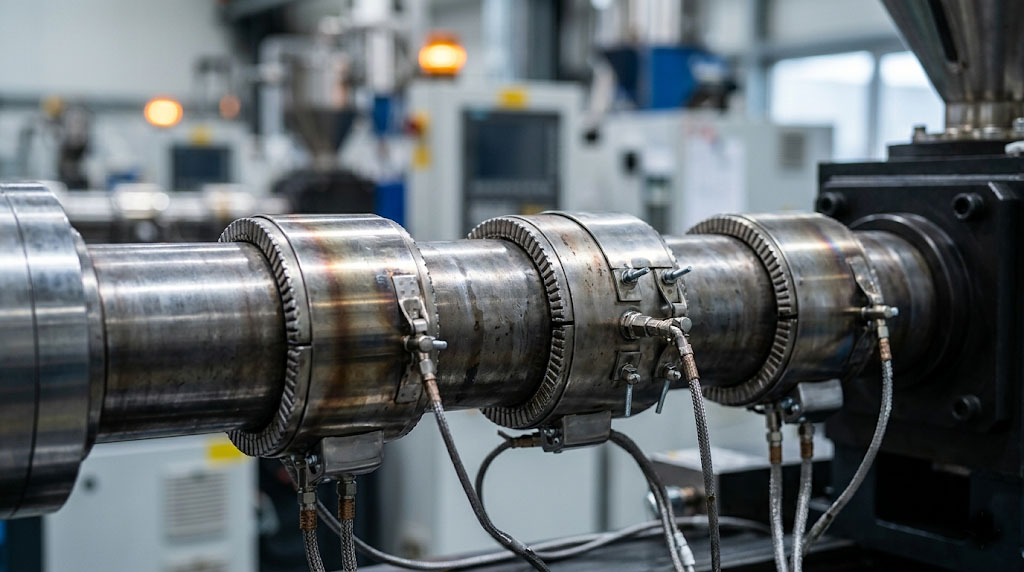
1. Injection Mold Heating
In plastic injection molding, the machine's barrel must melt solid plastic pellets uniformly before injecting them into the mold. Ceramic band heaters wrap around the injection barrel, delivering consistent, high-temperature radiant heat. This ensures that the plastic melt remains at an exact viscosity, preventing defects like short shots or burn marks.
2. Plastic Extrusion Processes
Extruders run continuously, pushing molten plastic through a die to create pipes, tubes, or films. Any temperature fluctuation can ruin meters of product. The built-in insulation of ceramic band heaters provides unmatched thermal stability along the extrusion barrel, ensuring a flawless continuous output.
3. Blow Molding Equipment
Blow molding requires rapid and precise heating to form hollow plastic parts like bottles and containers. The rapid heat-up times and high watt density capabilities of ceramic heaters make them ideal for these high-cycle environments.
Sizing and Procurement Guide for Engineers
Selecting the correct ceramic band heater is vital for equipment safety and longevity. Consider these key factors when requesting a quote:
- Determine the Correct Watt Density: Calculate your required wattage based on the specific heat of the material being processed. Ceramic heaters can handle high watt densities (up to 45 W/in²), but over-specifying can lead to premature failure.
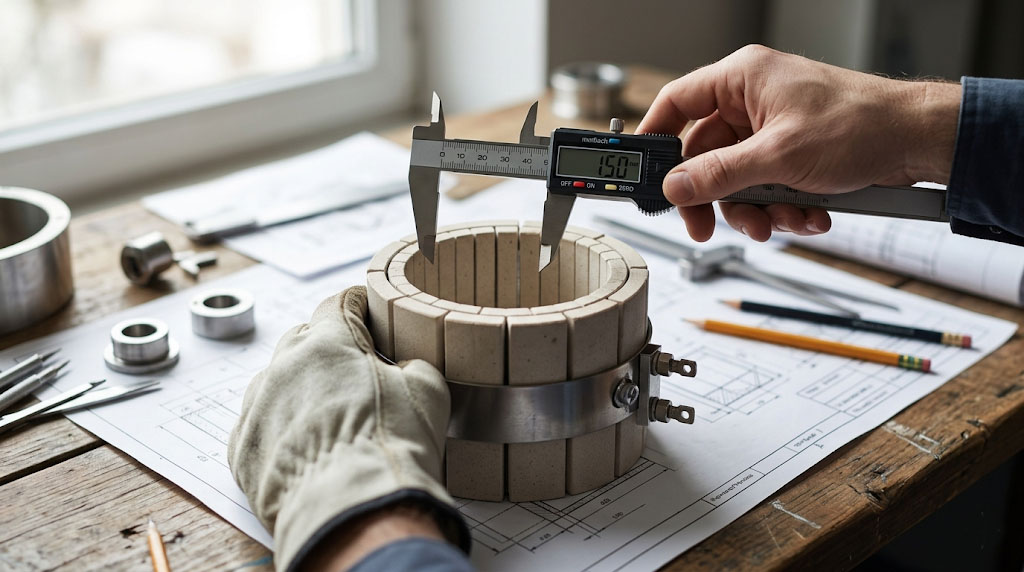
- Exact Dimensional Sizing: Measure the Inside Diameter (ID) and the Width of the cylinder. While ceramic heaters are more forgiving of slight surface irregularities due to radiant heating, a proper fit maximizes efficiency.
- Termination Styles: Choose the right electrical connections for your environment. Options include standard post terminals, fiberglass lead wires, protective terminal boxes, or standard Euro plugs for quick disconnection.
- Custom Cutouts and Holes: If your barrel has thermocouple sensors, mounting brackets, or extrusion ports, specify customized cutouts so the heater fits seamlessly around your existing hardware.
Maintenance and Care for Maximum Lifespan
Even the most robust heating elements require basic maintenance to protect your investment:
- Keep it Clean: Prevent molten plastic, oil, and moisture from seeping into the heater. Contaminants can degrade the internal resistance wire and cause electrical shorts.
- Check Terminal Connections: Thermal cycling can cause electrical connections to loosen over time. Regularly inspect and tighten terminal nuts to prevent arcing and localized overheating.
- Ensure Proper Installation: While they rely heavily on radiant heat, ensuring the heater is firmly strapped and clamped to the barrel will maximize conductive heat transfer and prevent the heater housing from warping.
Frequently Asked Questions (People Also Ask)
How hot can a ceramic band heater get?
Ceramic band heaters are designed for high-temperature applications and can safely operate at sheath temperatures up to 1400°F (760°C), making them ideal for high-heat resins and polymers.
Are ceramic band heaters more energy-efficient?
Yes. Thanks to the thick layer of internal ceramic fiber insulation, they direct heat into the barrel rather than the surrounding environment. This can reduce energy consumption by 20% to 30% compared to uninsulated heaters.
Does a ceramic band heater need to be clamped tightly?
While mica heaters require a perfectly tight fit to conduct heat, ceramic band heaters transmit heat via radiation. They do not need perfectly flat contact, but they should still be securely clamped to prevent movement and maximize efficiency.
How do I measure a band heater for a replacement order?
You need four critical specifications: The Inside Diameter (ID) (measure the outside of the barrel it wraps around), the Width of the heater, the operating Voltage (V), and the required Wattage (W).
Ready to Upgrade Your Thermal Processing System?
Choosing the right heating element directly impacts your production efficiency, energy bills, and machine uptime. At elekheat, we are a specialized manufacturer of premium industrial heating elements, providing robust solutions for injection molding, extrusion, and custom industrial applications globally.
Whether you need a direct replacement for an existing machine or require custom-engineered ceramic band heaters with specific cutouts, wattages, and terminal configurations, our engineering team is ready to help.
Stop losing money to inefficient heating and machine downtime. 👉 Contact the elekheat team today for a technical consultation and a customized quotation for your heating element needs.