Skip to content
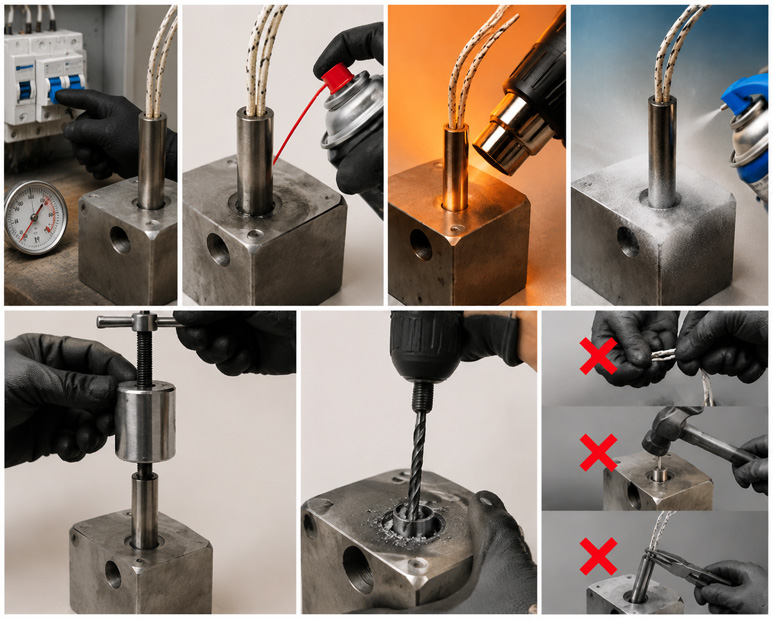
Quick Answer If a cartridge heater is stuck inside the bore, the safest removal method is to:
- Disconnect power and allow the tooling to cool.
- Apply a high-quality penetrating oil.
- Use thermal cycling by heating the surrounding block and cooling the exposed heater.
- Pull the heater straight out using a slide hammer or threaded puller.
- If the heater breaks, carefully drill out the core while protecting the bore.
Avoid twisting the lead wires, hammering directly on the sheath, or pulling at an angle. These mistakes often cause more damage than the original seizure.
Why Do Cartridge Heaters Get Stuck?
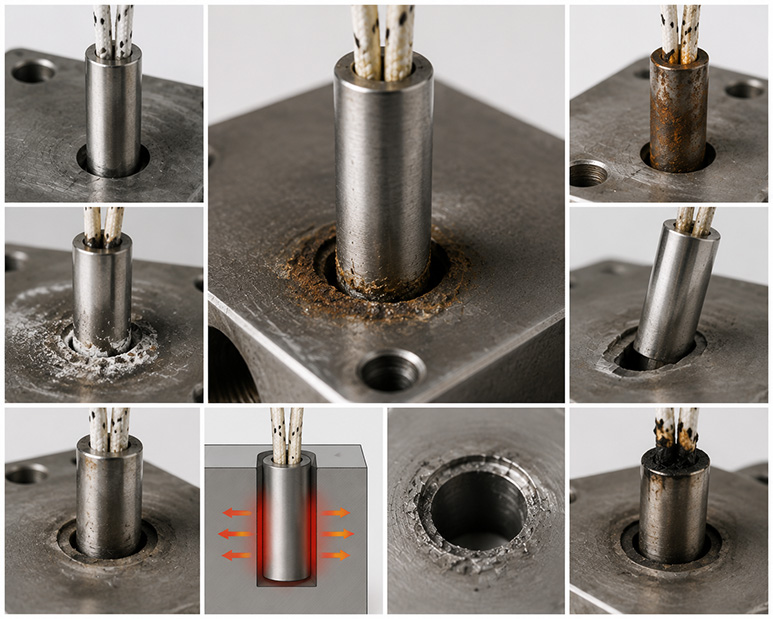
Many technicians assume a seized cartridge heater is caused by rust. In reality, several different mechanisms can lock the heater into the bore.
High-Temperature Oxidation
During thousands of heating and cooling cycles, the stainless steel sheath develops oxidation layers that bond to the surrounding metal.
Applications operating above 650°C (1200°F) are especially vulnerable because oxidation accelerates significantly at elevated temperatures.
Plastic Residue and Carbon Deposits
In injection molding and hot-runner systems, degraded resin vapors can enter the clearance gap between the heater and the bore.
Over time, these vapors carbonize and form a hard deposit that behaves almost like an adhesive.
Bore Wear and Out-of-Round Conditions
Repeated heater replacements can gradually enlarge the entrance of the bore.
This condition, often called bell-mouthing, allows slight heater movement during operation, causing galling and localized seizure.
Excessive Installation Force
Over-tightening retaining hardware or forcing a heater into an undersized bore can deform the sheath and create a permanent interference fit.
Signs That a Cartridge Heater Is Likely to Seize
Experienced maintenance teams often notice warning signs before complete seizure occurs:
- Increased removal force during preventive maintenance
- Visible discoloration around the lead end
- Uneven heater temperatures
- Oxidation around the bore entrance
- Burnt plastic residue near the heater opening
Removing the heater during this stage is significantly easier than waiting for failure.
Safety Precautions Before Removal
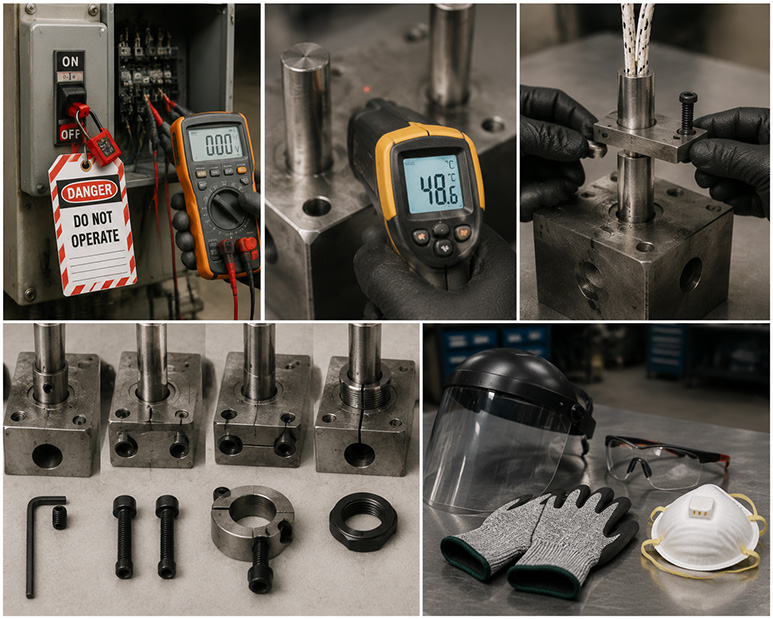
Before attempting extraction:
Lockout/Tagout (LOTO)
Disconnect all electrical power following standard Lockout/Tagout (LOTO) procedures and verify zero voltage.
Allow Controlled Cooling
Reduce tooling temperature to approximately 40–50°C (104–122°F).
Cooling often creates slight contraction that can help loosen the heater.
Remove Retainers
Check for:
- Set screws
- Retaining plates
- Split clamps
- Threaded locking devices
Many "stuck" heaters are simply being held by forgotten retention hardware.
Wear Appropriate PPE
Recommended protection includes:
- Safety glasses
- Cut-resistant gloves
- Face shield when using slide hammers
- Respiratory protection if damaged magnesium oxide insulation may be exposed
Step-by-Step Cartridge Heater Removal Procedure
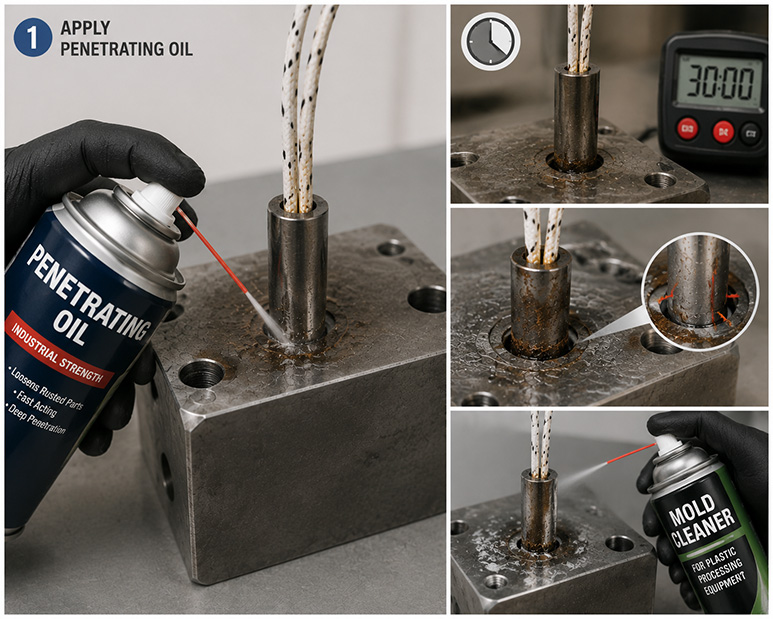
Step 1: Apply Penetrating Oil
Use a high-quality penetrating oil designed for industrial maintenance.
Allow sufficient soak time so the fluid can migrate into microscopic gaps around the heater.
For applications involving plastic processing, a specialized mold cleaner may perform better than standard penetrants.
Step 2: Use Thermal Cycling
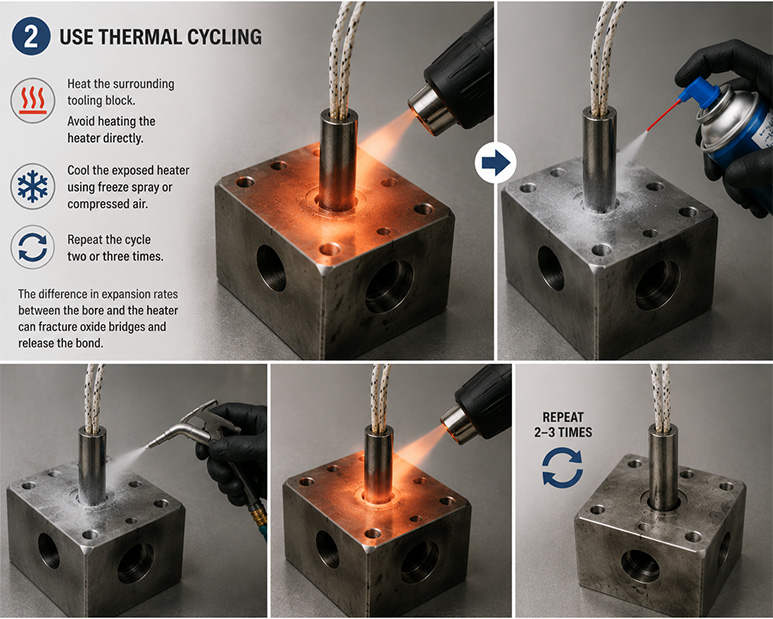
Thermal cycling is often the most effective method for breaking oxidation bonds in seized cartridge heaters by utilizing the principles of thermal expansion.
Procedure
- Heat the surrounding tooling block.
- Avoid heating the heater directly.
- Cool the exposed heater using freeze spray or compressed air.
- Repeat the cycle two or three times.
The difference in expansion rates between the bore and the heater can fracture oxide bridges and release the bond.
Step 3: Extract Using a Slide Hammer or Threaded Puller
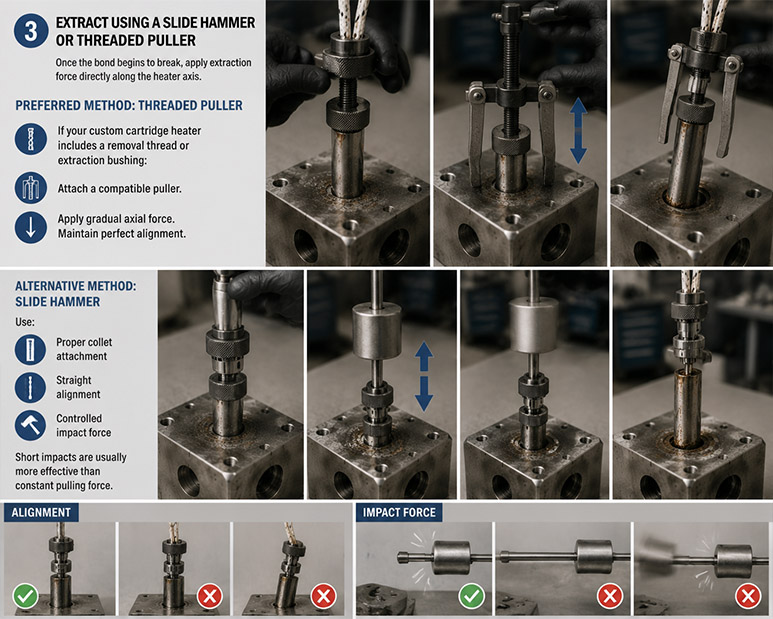
Once the bond begins to break, apply extraction force directly along the heater axis.
Preferred Method: Threaded Puller
If your custom cartridge heater includes a removal thread or extraction bushing:
- Attach a compatible puller.
- Apply gradual axial force.
- Maintain perfect alignment.
Alternative Method: Slide Hammer
Use:
- Proper collet attachment
- Straight alignment
- Controlled impact force
Short impacts are usually more effective than constant pulling force.
Step 4: Core Drilling (Last Resort)
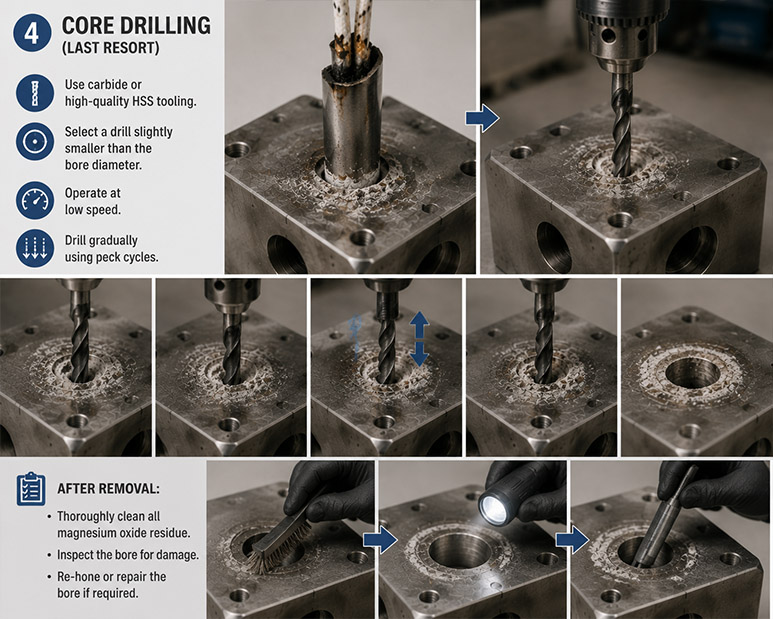
If the sheath breaks during extraction, drilling may become necessary.
Best Practices
- Use carbide or high-quality HSS tooling.
- Select a drill slightly smaller than the bore diameter.
- Operate at low speed.
- Drill gradually using peck cycles.
After removal:
- Thoroughly clean all magnesium oxide residue.
- Inspect the bore for damage.
- Re-hone or repair the bore if required.
Common Mistakes That Damage Tooling
Twisting the Lead Wires
Lead wires are not designed to transmit extraction force. Twisting often breaks internal connections while leaving the heater stuck.
Hammering the Heater Sheath
Direct impacts can mushroom the sheath and permanently lock it into the bore.
Pulling at an Angle
Side loading causes galling and dramatically increases extraction difficulty.
Heating Everything Equally
The goal is differential expansion. If the heater and tooling expand together, the seizure remains unchanged.
Using Adhesives to Attach Pulling Hardware
Attempts to glue bolts onto broken heaters rarely succeed and usually contaminate the bore.
How to Prevent Cartridge Heater Seizure
Prevention is significantly easier than removal.
Maintain Proper Bore Tolerances
For most applications:
| Heater Diameter | Recommended Bore Tolerance |
|---|---|
| 8–20 mm | H7 Engineering Tolerance Range |
Always verify bore dimensions using precision measuring instruments rather than calipers.
Apply Anti-Seize Compound
A thin layer of nickel-based anti-seize:
- Reduces oxidation bonding
- Improves future removability
- Enhances thermal contact
Avoid excessive application.
Select Appropriate Watt Density
Excessive watt density raises sheath temperature and accelerates oxidation.
Choose heater watt density based on:
- Tool material
- Bore fit
- Operating temperature
- Application environment
Use Heaters with Removal Features
Modern cartridge heaters are available with:
- Threaded removal bushings
- Extraction shoulders
- Service-friendly end designs
These features can dramatically reduce future maintenance time.
Schedule Preventive Replacement
Waiting until heater failure often results in severe oxidation and seizure. Many maintenance teams replace heaters during scheduled tooling service intervals rather than after failure.
When Should You Stop Trying to Pull It?
Further extraction attempts may not be worthwhile when:
- The bore is already damaged.
- The heater has broken below the surface.
- Tooling value greatly exceeds heater value.
- Electrical discharge machining (EDM) removal is available.
In these situations, controlled drilling or EDM removal may be the safest option.
Frequently Asked Questions
Can a cartridge heater be reused after removal?
Generally no. Even if electrical resistance appears normal, internal damage may exist. It is highly recommended to replace it with a new high-performance cartridge heater.
What is the best penetrating oil for a stuck cartridge heater?
Industrial creep-action penetrants are typically more effective than general-purpose lubricants.
Why does thermal cycling work?
It creates differential expansion and contraction between the heater and the surrounding tooling, breaking the mechanical and chemical bonds.
Can I drill out a cartridge heater?
Yes, but drilling should be performed carefully to avoid damaging the bore.
What causes cartridge heaters to seize repeatedly?
Common causes include:
- Incorrect bore tolerance
- Excessive watt density
- Lack of anti-seize compound
- Carbon contamination
- Delayed preventive maintenance
What bore tolerance is recommended for cartridge heaters?
Most manufacturers recommend an H7-class bore tolerance, though exact requirements vary by heater size and application.
Final Thoughts
A seized cartridge heater does not automatically mean damaged tooling.
In many cases, a combination of penetrating oil, thermal cycling, and properly aligned extraction tools can remove the heater without affecting the bore.
The most effective long-term strategy is prevention: maintain proper bore tolerances, apply anti-seize during installation, select the correct watt density, and partner with a reliable manufacturer like Elekheat for cartridge heaters designed with specific removal features. These small improvements can significantly reduce maintenance downtime and extend tooling life.