Skip to content
Choosing a thermocouple is not simply a matter of finding a type whose published range includes your target temperature. Two thermocouples may both measure 800°C, yet only one may survive the atmosphere, deliver the required stability or fit the installation.
The eight standard letter-designated thermocouple types are K, J, T, E, N, R, S and B. Types K, J, T, E and N use base-metal alloys and cover most industrial applications. Types R, S and B use platinum-rhodium alloys and are normally selected for clean, high-temperature processes where their additional cost is justified.
This guide compares their temperature capabilities, strengths, limitations and typical applications, then provides a practical selection process.
Thermocouple Types at a Glance
| Type | Conductor combination | Broad reference range* | Best known for | Important limitation |
|---|---|---|---|---|
| K | Nickel-chromium / nickel-aluminum | -270 to 1372°C | General-purpose industrial measurement and wide range | Can drift in reducing, low-oxygen or sulfur-containing environments |
| J | Iron / copper-nickel | -210 to 1200°C | General-purpose use at moderate temperatures | Iron conductor oxidizes, especially at elevated temperature |
| T | Copper / copper-nickel | -270 to 400°C | Low-temperature and cryogenic measurement | Low upper-temperature capability |
| E | Nickel-chromium / copper-nickel | -270 to 1000°C | Highest EMF output among standard types | Not preferred for vacuum or partially oxidizing conditions |
| N | Nickel-chromium-silicon / nickel-silicon-magnesium | -270 to 1300°C | Improved high-temperature stability versus Type K | Less widely stocked and often more expensive than Type K |
| R | Platinum-13% rhodium / platinum | -50 to 1768°C | Clean, high-temperature processes | High cost and sensitivity to contamination |
| S | Platinum-10% rhodium / platinum | -50 to 1768°C | High-temperature measurement and reference work | Low output and high cost |
| B | Platinum-30% rhodium / platinum-6% rhodium | 0 to 1820°C | The highest-temperature standard noble-metal type | Poor sensitivity at low temperatures and high cost |
*These are broad standardized EMF reference-function ranges, not universal continuous-use ratings for finished probes. The allowable range of a real assembly may be much narrower.
Quick selection
- Choose Type K for a robust, economical, general-purpose sensor in a suitable oxidizing or inert environment.
- Choose Type J for moderate temperatures in vacuum, inert or reducing service when oxidation of the iron leg can be controlled.
- Choose Type T for low-temperature, refrigerated or cryogenic applications.
- Choose Type E when high signal output or low-temperature sensitivity is valuable.
- Choose Type N for improved stability at high temperatures or where Type K is vulnerable to drift.
- Choose Type R or S for clean, oxidizing, high-temperature service requiring a noble-metal sensor.
- Choose Type B for the highest temperature range among the standard letter-designated types.
What Makes One Thermocouple Type Different From Another?
A thermocouple uses two dissimilar conductors joined at a measuring junction. A temperature difference between that junction and the reference junction produces a small thermoelectric voltage. The instrument converts that voltage into temperature using the reference relationship for the selected thermocouple type.
Changing the conductor alloys changes:
- the temperature-to-voltage curve;
- sensitivity, expressed in microvolts per degree;
- usable temperature range;
- resistance to oxidation, reduction and chemical attack;
- long-term drift and stability;
- material cost.
The type letter identifies the alloy pair and its standardized voltage relationship. It does not define the complete sensor. Junction style, wire diameter, insulation, sheath material, probe diameter and installation can be equally important.
Type K Thermocouple
Type K is the most widely used general-purpose thermocouple. Its nickel-based conductors provide a broad temperature range, useful corrosion resistance and an attractive balance of cost, availability and durability.
Advantages
- Broad operating capability
- Widely available in many probe and cable constructions
- Suitable for many clean oxidizing and inert environments
- Lower cost than noble-metal thermocouples
- Commonly supported by meters, controllers and data-acquisition equipment
Limitations
Type K is not automatically suitable for every high-temperature process. It can suffer calibration changes in reducing or low-oxygen environments and can be attacked by sulfur. Exposure to unsuitable atmospheres, thermal cycling and prolonged high temperatures can produce drift before the probe physically fails.
Typical applications
- Industrial ovens and furnaces
- Heat-treatment equipment
- Engines and exhaust systems
- Plastics processing
- General process equipment
Choose Type K when: you need an economical, readily available thermocouple across a wide range and the atmosphere is compatible.
Consider another type when: long-term stability above approximately 1000°C is critical, sulfur is present, or the environment alternates between oxidizing and reducing conditions.
Learn more: [Type K Thermocouple Guide]
Type J Thermocouple
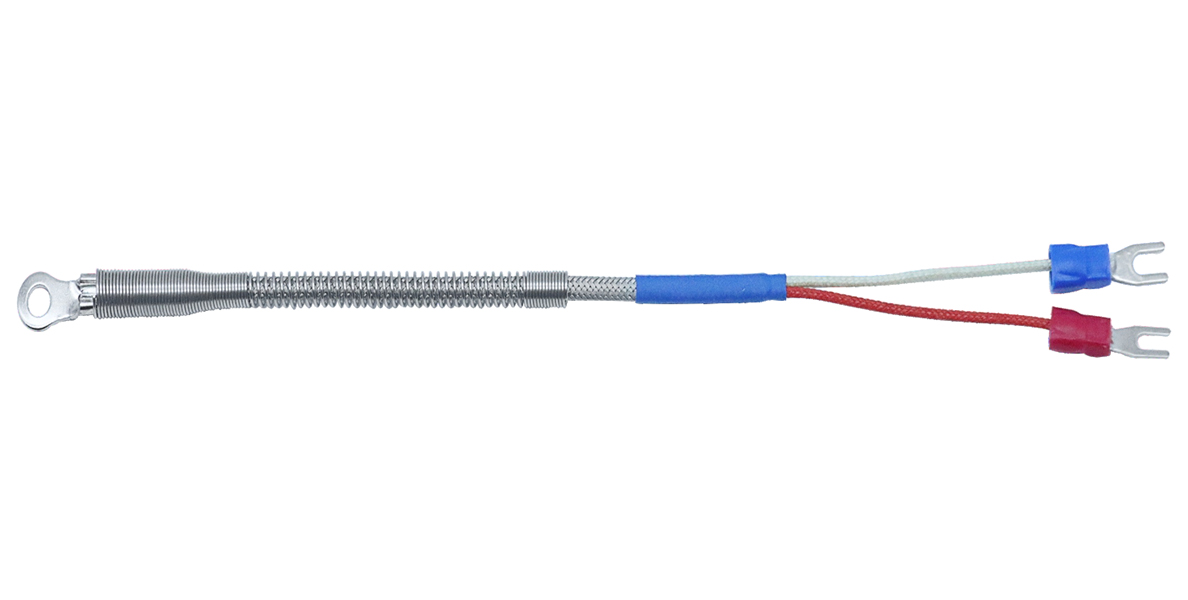
Type J combines an iron positive conductor with a copper-nickel negative conductor. It is common in older industrial equipment and moderate-temperature applications.
Advantages
- Economical and widely recognized
- Useful output at moderate temperatures
- Can be used in vacuum, inert and reducing atmospheres when the construction is suitable
- Common in plastics machinery and legacy industrial systems
Limitations
The iron conductor oxidizes readily. Moisture and high-temperature oxidation can shorten service life, particularly with small-diameter wire. Type J also has a lower practical upper-temperature capability than Type K or Type N.
Typical applications
- Injection molding and plastics equipment
- Industrial machinery
- Dry ovens
- Older temperature-control systems
Choose Type J when: the equipment is designed for Type J, the temperature is moderate and the environment will not rapidly oxidize the iron conductor.
Consider another type when: moisture, high-temperature oxidation or a wider temperature range is expected.
Learn more: [Type J vs Type K Thermocouples]
Type T Thermocouple
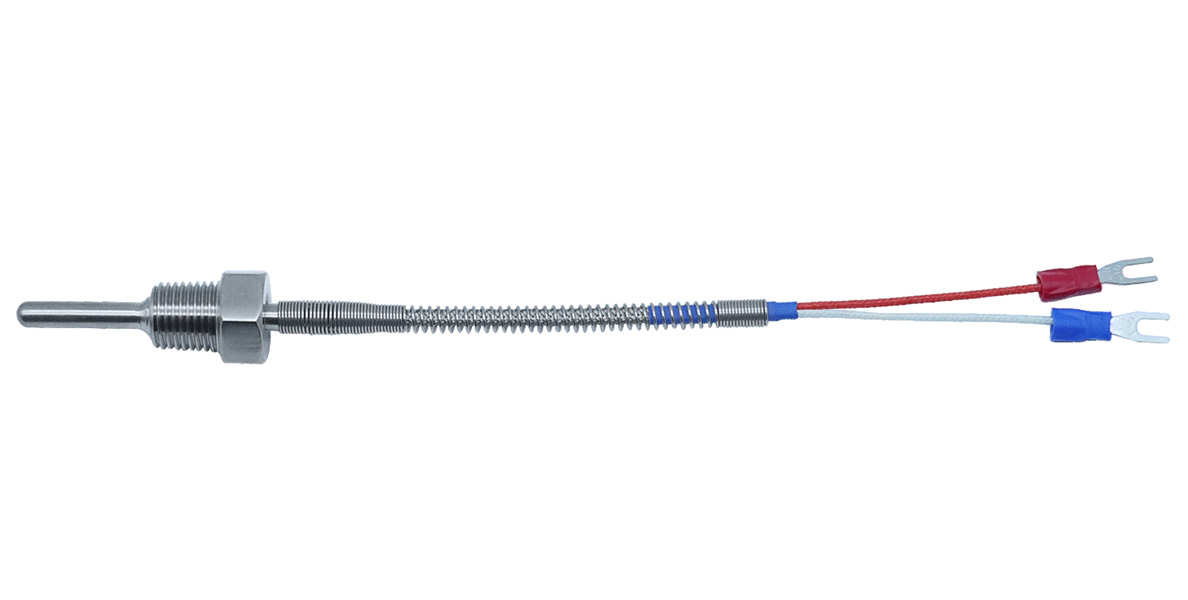
Type T uses copper and copper-nickel conductors. It is valued for stability at low temperatures and is frequently selected for refrigerated, laboratory and cryogenic work.
Advantages
- Strong choice for low-temperature measurement
- Good stability within its intended range
- Performs in oxidizing, reducing and inert environments when construction materials are compatible
- Copper conductor simplifies identification and can be useful in controlled installations
Limitations
Its main limitation is the relatively low upper-temperature ceiling. The copper conductor oxidizes rapidly when used too hot in air.
Typical applications
- Freezers and refrigeration
- Cryogenic systems
- Food processing
- Laboratory temperature mapping
- Environmental chambers
Choose Type T when: low-temperature performance and stability matter more than high-temperature capability.
Type E Thermocouple
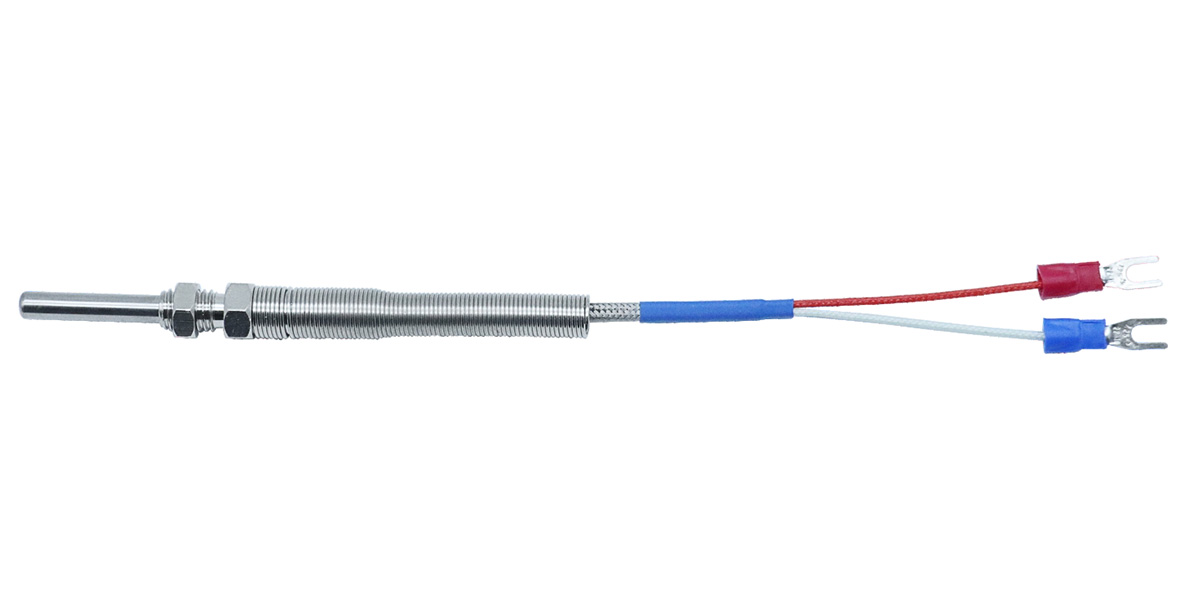
Type E produces the highest thermoelectric output per degree among the standard letter-designated thermocouples. The stronger signal can be useful where sensitivity is important.
Advantages
- High EMF output
- Useful at low temperatures
- Non-magnetic conductor combination
- Good performance in clean oxidizing or inert conditions
Limitations
Type E is generally avoided in vacuum, partially oxidizing environments and applications involving repeated transitions between oxidizing and reducing conditions unless the assembly is specifically designed for them.
Typical applications
- Low-temperature research
- Temperature measurements requiring higher signal output
- Clean oxidizing industrial environments
Choose Type E when: signal output and sensitivity are priorities and the process atmosphere is compatible.
Type N Thermocouple
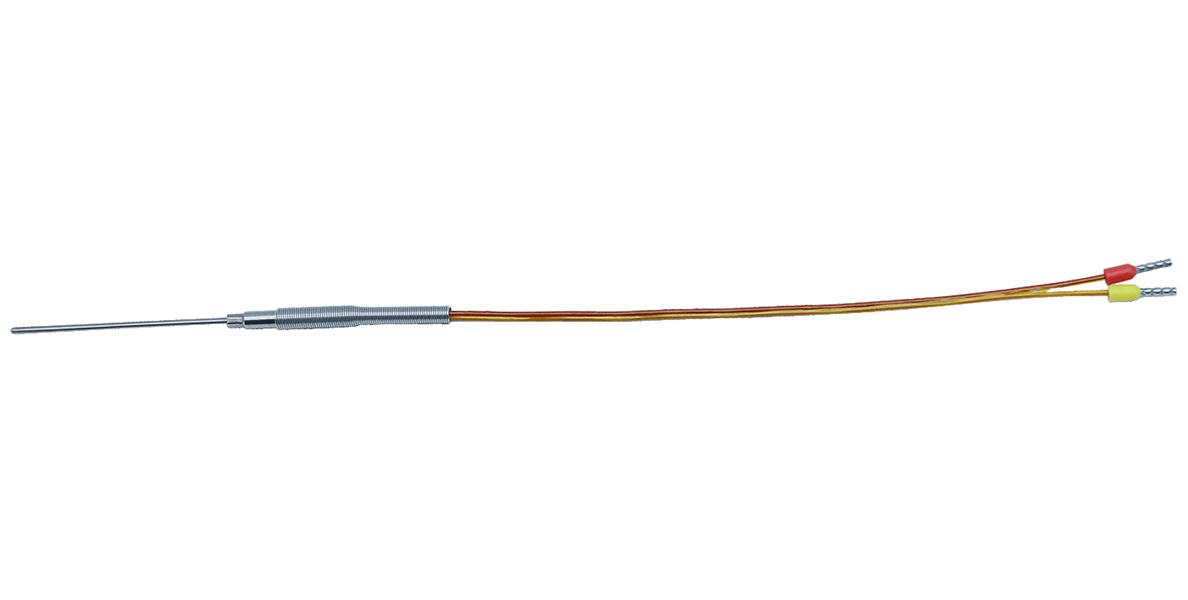
Type N was developed to improve the thermoelectric stability of nickel-based thermocouples at elevated temperatures. It is often considered when Type K does not provide adequate long-term stability.
Advantages
- Better resistance to high-temperature drift than Type K in many applications
- Improved resistance to certain oxidation-related instabilities
- Base-metal alternative for demanding high-temperature measurement
- Useful upper-temperature capability without the cost of platinum-rhodium types
Limitations
Type N may cost more and be less readily available than Type K. It is not immune to contamination or installation errors, and its benefits can be lost if unsuitable sheath, insulation or extension materials are used.
Typical applications
- High-temperature furnaces
- Heat treatment
- Aerospace and power-generation equipment
- Processes where Type K stability is insufficient
Choose Type N when: you need a base-metal thermocouple with stronger high-temperature stability than Type K.
Learn more: [Type K vs Type N Thermocouples]
Type R Thermocouple
Type R uses platinum and platinum-13% rhodium. It is a noble-metal thermocouple intended for high-temperature measurement in clean, controlled environments.
Advantages
- High-temperature capability
- Good stability when properly protected
- Suitable for clean oxidizing atmospheres
Limitations
- Much more expensive than base-metal types
- Lower signal output than Types K, J, T or E
- Easily contaminated by metallic vapors and some reducing conditions
- Usually requires high-purity ceramic protection
Typical applications
- Laboratory furnaces
- Glass production
- High-temperature process measurement
- Controlled industrial furnaces
Type S Thermocouple
Type S uses platinum and platinum-10% rhodium. Its behavior and application range are similar to Type R, and it has a long history in high-temperature metrology and industrial measurement.
Advantages
- Stable high-temperature performance in suitable environments
- Strong history in reference and calibration applications
- Appropriate for clean oxidizing service with correct protection
Limitations
Like Type R, Type S is expensive, has relatively low output and is vulnerable to contamination. Selection of ceramic insulation and protection tubes is critical.
Typical applications
- Calibration and reference work
- Pharmaceutical and laboratory furnaces
- Semiconductor processing
- High-temperature industrial processes
Learn more: [Type R vs Type S Thermocouples]
Type B Thermocouple
Type B uses platinum-rhodium alloys in both conductors and has the highest upper-temperature capability of the eight standard types.
Advantages
- Extremely high-temperature capability
- Suitable for clean oxidizing atmospheres when correctly protected
- Good high-temperature stability
Limitations
- High material cost
- Low thermoelectric output
- Poor sensitivity near room temperature
- Vulnerable to contamination
- Requires appropriate high-purity ceramic protection
Typical applications
- Very high-temperature furnaces
- Ceramics and glass production
- Metallurgical processes
- High-temperature laboratory work
Choose Type B when: the process temperature exceeds the practical capability of Types R and S and the atmosphere and protection system are appropriate.
How to Choose the Right Thermocouple Type
Use the following sequence. Do not choose by maximum temperature alone.
1. Define the real operating temperature
Record the normal temperature, startup and shutdown temperatures, foreseeable excursions and the required service life. A published maximum may describe a short-term reference limit rather than a recommended continuous operating temperature.
Ask:
- What is the normal process temperature?
- How long will the sensor remain at that temperature?
- Are rapid thermal cycles expected?
- What is the maximum upset temperature?
2. Identify the process atmosphere
Determine whether the sensor is exposed to:
- clean air or another oxidizing atmosphere;
- vacuum;
- inert gas;
- a reducing atmosphere;
- sulfur, carbon or hydrogen;
- molten metal, salt, glass or corrosive chemicals;
- moisture or steam.
The same thermocouple type can have a long life in one atmosphere and drift rapidly in another. A compatible protection tube or sheath may expand the usable options, but it also changes response time.
3. Set the accuracy and stability requirement
Initial tolerance is only one part of measurement quality. Also consider:
- drift during service;
- extension-wire error;
- cold-junction compensation;
- instrument accuracy;
- thermal gradients;
- installation and immersion error;
- calibration interval.
If very tight accuracy and long-term stability at moderate temperatures are more important than ruggedness or range, an RTD may be a better choice. See [RTD vs Thermocouple].
4. Choose the junction construction
- Exposed junction: fastest response, least protection
- Grounded junction: fast response, but electrically connected to the sheath
- Ungrounded junction: better electrical isolation, usually slower
The best junction depends on response time, electrical noise, grounding and process exposure—not just temperature.
5. Choose sheath and insulation materials
Stainless steel, nickel alloys and ceramics tolerate different combinations of temperature, corrosion and mechanical stress. A thermocouple alloy may theoretically tolerate the temperature while its sheath or insulation cannot.
6. Check the entire measurement loop
The sensor, extension cable, connector and instrument must all match the thermocouple type and polarity. A controller configured for Type J will not correctly interpret a Type K signal. Ordinary copper cable cannot always replace the specified thermocouple or extension cable without introducing additional junctions and errors.
7. Verify the finished probe rating
Finally, check the manufacturer's specification for the actual assembly:
- probe diameter and wire gauge;
- continuous and short-term temperature limits;
- pressure rating;
- bend radius;
- response time;
- junction style;
- sheath compatibility;
- approvals and calibration documentation.
Why Thermocouple Temperature Charts Disagree
It is common to find different temperature limits for the same thermocouple type. The figures may describe different things:
- Reference-function range: the standardized temperature-to-EMF relationship.
- Recommended bare-wire range: affected by alloy and wire diameter.
- Protected-wire range: affected by the protection tube and atmosphere.
- Finished-probe rating: limited by sheath, insulation, seals, cable and connector.
- Continuous versus short-term use: a probe may tolerate an excursion that would cause unacceptable drift during prolonged exposure.
For this reason, a thermocouple chart is a screening tool—not a substitute for checking the complete assembly.
Base-Metal vs Noble-Metal Thermocouples
Base-metal types: K, J, T, E and N
Base-metal thermocouples are normally:
- less expensive;
- available in more constructions;
- higher in output;
- suitable for most industrial measurements;
- more vulnerable to drift at prolonged high temperatures.
Noble-metal types: R, S and B
Noble-metal thermocouples are normally:
- used at higher temperatures;
- more expensive;
- lower in output;
- dependent on clean environments and high-purity protection;
- selected for specialized furnace, laboratory and process applications.
Do not assume a noble-metal thermocouple is automatically more accurate in the installed system. Contamination, wiring, reference-junction error and poor installation can dominate the uncertainty.
Common Thermocouple Selection Mistakes
Selecting only by the highest published temperature
The stated upper limit may not apply to your wire diameter, atmosphere or required life.
Ignoring the atmosphere
Oxidizing, reducing, vacuum and sulfur-containing environments affect alloys differently.
Treating Type K as universal
Type K is popular, not invulnerable. Type N or a protected noble-metal sensor may be more reliable in some high-temperature processes.
Mixing wire, connectors or instrument settings
Every part of the measurement loop must be compatible with the thermocouple type.
Confusing initial accuracy with long-term performance
A new sensor can meet tolerance and still drift beyond the required accuracy after exposure.
Ignoring installation error
Insufficient immersion, heat conduction along the probe, poor contact and electrical noise can create errors larger than the thermocouple's specified tolerance.
Thermocouple Type FAQ
What is the most common thermocouple type?
Type K is the most common general-purpose thermocouple because it combines a broad range, moderate cost and wide availability. It is not the best option for every atmosphere or accuracy requirement.
Which thermocouple type measures the highest temperature?
Among the eight standard letter-designated types, Type B has the highest reference upper limit. Specialized tungsten-rhenium thermocouples can operate at still higher temperatures in vacuum, hydrogen or inert environments, but they are not among the eight standard types covered here.
Which thermocouple is best for low temperatures?
Type T is widely selected for low-temperature and cryogenic measurement because of its stability in that region. Type E is another candidate when higher output is important. The complete probe and calibration must be specified for subzero use.
Is Type J or Type K better?
Type K offers a wider range and is generally preferred for clean oxidizing service. Type J can be useful at moderate temperatures in vacuum, inert or reducing environments, but its iron conductor is vulnerable to oxidation. The better option depends on temperature, atmosphere and installed equipment.
Is Type N better than Type K?
Type N often provides better high-temperature stability and resistance to certain drift mechanisms. Type K remains less expensive, more widely available and entirely suitable for many general-purpose applications.
What is the most accurate thermocouple type?
There is no universally most accurate type. Initial tolerance, temperature, calibration, stability, construction and installation all matter. For many moderate-temperature applications requiring high accuracy and stability, an RTD may outperform a standard industrial thermocouple.
Can I replace one thermocouple type with another?
Not without checking the application and reconfiguring the measuring instrument. Different types produce different voltage-temperature relationships, use different extension materials and tolerate different environments.
Does wire color always identify the thermocouple type?
Only when the applicable color-code standard and wiring condition are known. ANSI, IEC and other standards use different colors. Heat, contamination and previous repairs can also make visual identification unreliable.
Final Selection Checklist
Before specifying a thermocouple, confirm:
- [ ] Normal, maximum and minimum temperatures
- [ ] Continuous exposure time and thermal cycling
- [ ] Oxidizing, reducing, vacuum, inert or corrosive atmosphere
- [ ] Required accuracy, stability and calibration interval
- [ ] Junction style
- [ ] Probe and wire diameter
- [ ] Sheath and insulation materials
- [ ] Response-time requirement
- [ ] Cable, connector and instrument compatibility
- [ ] Installation length and immersion depth
- [ ] Relevant standard, certification and documentation
Need Help Selecting a Thermocouple?
Provide your temperature range, process atmosphere, probe dimensions, connection, required accuracy and expected service life. Our engineering team can recommend an appropriate thermocouple type and probe construction.