 Skip to content
Explosion-Proof Electric Heaters
Engineered electric heating solutions for hazardous areas involving flammable gases, vapors, liquids, and combustible environments. Custom-designed for tanks, pipelines, process equipment, air ducts, and industrial heating systems.
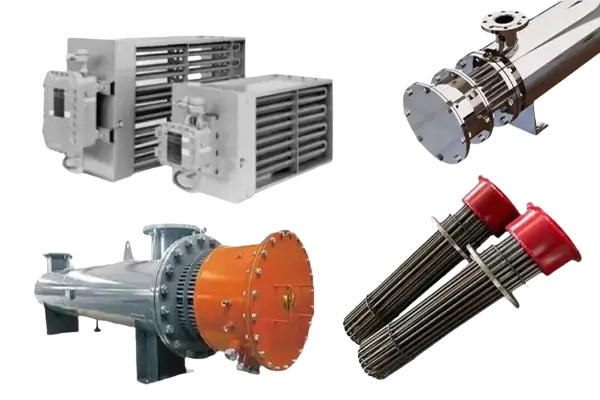
Designed for Demanding Hazardous Environments
ELEKHEAT designs and manufactures explosion-proof electric heaters for industrial applications where controlled heating and hazardous area requirements must be considered together.
- Custom power, voltage, dimensions, and mounting
- Designed according to hazardous-area requirements
- ATEX and IECEx certification options
- Zone 1 and Zone 2 applications
- Ex d / Ex de protection configurations
- Stainless steel, Incoloy, and other sheath materials
- OEM and project-specific engineering support
Heating Configurations for Different Applications
Choose the heater configuration according to the heating medium, installation method, pressure, temperature, and hazardous-area classification.

Explosion-Proof Flange Heaters
Flange-mounted immersion heaters for direct heating of liquids in tanks, vessels, and process equipment.

Explosion-Proof Circulation Heaters
Pressure-rated process heaters for heating liquids or gases as they flow through a heating chamber.

Explosion-Proof Duct Heaters
Electric duct heaters for controlled heating of air and gases in hazardous industrial environments.

Custom Explosion-Proof Heaters
Application-specific heating systems designed around your medium, temperature, pressure, installation, and certification.
Hazardous Area Design
Heater configurations developed according to classified-area requirements.
Custom Engineering
Power, dimensions, materials, connections, and controls can be customized.
Industrial Materials
SS304, SS316L, SS321, Incoloy, and other materials available.
Project Support
OEM, EPC, system integrator, and industrial project support.

Engineered for Hazardous Area Requirements
Explosion-proof heating equipment must be designed according to the hazardous-area classification and the properties of the surrounding atmosphere.
Explosion-Proof Heater Specifications
| Parameter | Typical Options |
|---|---|
| Hazardous Area | Zone 1 / Zone 2 |
| Protection Type | Ex d / Ex de / Ex eb |
| Gas Group | IIA / IIB / IIC |
| Temperature Class | T1–T6 |
| Certification | ATEX / IECEx |
| Ingress Protection | IP65 / IP66 / IP67 |
| Voltage | 110–690 V / Custom |
| Phase | Single Phase / Three Phase |
| Frequency | 50 / 60 Hz |
| Power Rating | Application dependent |
| Sheath Materials | SS304 / SS316L / SS321 / Incoloy |
| Temperature Sensor | RTD / Thermocouple |
Explosion-Proof Heating Across Industries
Custom heating systems for industrial environments where flammable gases, vapors, liquids, or combustible materials may be present.

Oil & Gas
Crude oil, fuel oil, pipelines, storage tanks and process fluids.

Chemical Processing
Chemical tanks, reactors, solvents and process fluids.

Petrochemical
Hydrocarbon heating, fuel systems and refinery equipment.

Mining
Process tanks, oil heating, air heating and freeze protection.

Pharmaceutical
Controlled process heating and specialized equipment.

Choose the Right Explosion-Proof Heater
The correct heater configuration depends on the heating medium, installation method, flow conditions, pressure, temperature, and hazardous-area classification.

Built Around Your Process Requirements
Standard heaters are not suitable for every hazardous-area application. ELEKHEAT develops custom heating systems according to the actual operating conditions of each project.
Electrical Requirements
Voltage, power, phase, frequency, wiring and terminal configuration.
Mechanical Design
Dimensions, insertion length, flange, thread and mounting configuration.
Material Selection
SS304, SS316L, SS321, Incoloy, titanium and other materials.
Process Conditions
Medium, temperature, flow rate, pressure and ambient conditions.
Explosion Protection
Hazardous zone, gas group, temperature class and protection concept.
Temperature Control
RTD, thermocouple, thermostat and external control integration.
From Engineering Design to Final Testing
Each heater is manufactured according to the approved electrical, mechanical, thermal, and hazardous-area requirements.
Requirement Review
Review voltage, power, medium, temperature, pressure and hazardous-area requirements.
Engineering Design
Determine structure, materials, heating element configuration and protection requirements.
Prototype & Validation
Validate the heater design and make engineering adjustments where required.
Production & QC
Manufacturing followed by electrical, mechanical and dimensional inspection.
Delivery & Documentation
Provide required technical documents, inspection records and shipment support.

Documentation for Industrial Projects
Certification and documentation requirements can be incorporated into the heater design according to the project and hazardous-area classification.
An Engineering Partner for Industrial Heating
Custom Engineering
Heating systems designed around your electrical, mechanical, thermal and hazardous-area requirements.
Industrial Manufacturing
Manufacturing capabilities for tubular elements and complete industrial heating systems.
Material Options
Multiple sheath and construction materials for water, oil, chemical, gas and industrial media.
OEM & Project Support
Support for OEMs, EPC contractors, system integrators and industrial maintenance projects.
Explosion-Proof Heater Questions
Common technical questions from engineers, OEMs and industrial project buyers.
What is an explosion-proof electric heater?
An explosion-proof electric heater is designed for use in hazardous areas where flammable gases, vapors, liquids, or combustible materials may be present. Its construction and electrical protection are selected to reduce the risk of ignition under specified operating conditions.
Where are explosion-proof heaters used?
They are commonly used in oil and gas facilities, petrochemical plants, chemical processing facilities, mining operations, storage tanks, pipelines, process vessels and other classified industrial areas.
What is the difference between Zone 1 and Zone 2?
Zone classification describes the likelihood and duration of an explosive atmosphere being present. The heater's protection method and certification must be suitable for the specific hazardous-area classification.
Can you provide ATEX or IECEx explosion-proof heaters?
ATEX and IECEx requirements can be incorporated into the heater design according to the hazardous-area classification and project specifications.
Can the heater be customized for a specific tank or pipeline?
Yes. Power, voltage, insertion length, flange dimensions, materials, heating element configuration, temperature sensors and terminal enclosure can be customized.
How do I calculate the required heater power?
Required power depends on the medium mass or flow rate, specific
heat capacity, temperature increase, heating time, heat losses and
system efficiency.
For a batch heating process:
P = m × Cp × ΔT / (3600 × t)
A suitable safety margin should then be added to compensate for
heat loss and operating conditions.
What information is required for a custom heater?
Please provide the heating medium, required temperature, heating power or heating time, voltage, phase, tank or pipeline dimensions, operating pressure, hazardous-area classification, required certification and installation method.
Have a Hazardous-Area Heating Requirement?
Send us your operating conditions, electrical requirements and hazardous-area classification. Our engineering team can recommend a suitable heater configuration for your application.
Information to Include
- Heating medium
- Required temperature
- Heating power or heating time
- Voltage and phase
- Tank / pipeline dimensions
- Operating pressure
- Hazardous-area classification
- ATEX / IECEx requirements
- Required quantity
