Skip to content
Choosing the optimal heat transfer mechanism for your industrial facility is a critical engineering decision governed by thermodynamics, infrastructure, and total cost of ownership (TCO). For decades, plant managers and engineers have debated the merits of Electric vs Steam Heating.
While steam has historically dominated large-scale plants due to raw energy capacity, modern advancements in electric heating elements are rapidly shifting the paradigm toward electrification. This comprehensive guide combines thermodynamic facts with practical B2B procurement insights to help you evaluate which system aligns best with your specific industrial applications.
What Are Electric and Steam Heating Systems?
To objectively compare these technologies, we must first understand how they generate and transfer thermal energy.
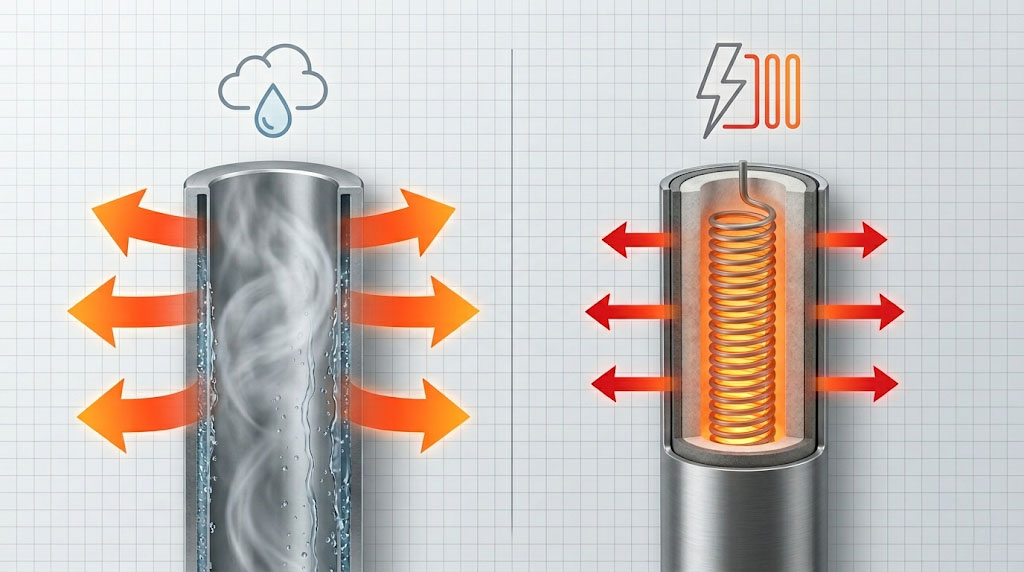
Steam Heating: Latent Heat Transfer
Steam heating operates on the principle of phase change. A centralized boiler (typically fired by natural gas or oil) vaporizes water into steam, which is transported through pressurized piping. When the steam contacts a cooler surface, it condenses back into water, releasing its massive latent heat of vaporization.
- The Reality: Steam holds exceptional energy density per unit of mass, making it highly effective for the rapid, continuous bulk heating of massive volumes.
Electric Heating: Direct Joule Heating
Electric heating relies on Joule heating (resistive heating). When an electrical current passes through a high-resistance conductive alloy—such as those engineered inside elekheat tubular and immersion heaters—kinetic energy is directly converted into thermal energy.
- The Reality: Electric heating provides localized heat transfer via conduction or convection without relying on a transport medium. Because there is no phase change or exhaust flue at the point of use, the local energy conversion efficiency approaches 100%.
Objective Comparative Analysis: Electric vs Steam Heating
When engineers evaluate these systems, they look beyond the raw cost of fuel. The decision hinges on Capital Expenditures (CAPEX), Operational Expenditures (OPEX), precision, and maintenance.
| Evaluation Dimension | Electric Heating | Steam Heating |
|---|---|---|
| Energy Efficiency | ~95-100% at the point of use. Zero transport heat loss. | ~50-80% overall. Subject to boiler blowdown, pipe radiation, and steam trap losses. |
| Temperature Control | Highly precise (±1°C) using direct thermocouple feedback and SCR controllers. | Moderate precision. Control relies on modulating steam pressure; prone to thermal lag. |
| Infrastructure (CAPEX) | Lower initial footprint. Requires adequate electrical supply, wiring, and contactors. | High initial footprint. Requires boiler rooms, water softeners, extensive piping, and traps. |
| Maintenance Needs | Minimal. Routine inspection of terminals, megger testing, and element cleaning. | Extensive. Requires dedicated operators, water treatment, and mechanical trap replacements. |
| Safety & Environment | Clean & Safe. Zero onsite Scope 1 emissions, no high-pressure explosive risks. | Hazardous. High pressure vessel compliance (ASME), burn risks, and fossil fuel emissions. |
Core Industrial Application Scenarios
The optimal choice is heavily dictated by your specific process requirements. Here is how the two technologies perform in real-world B2B applications.
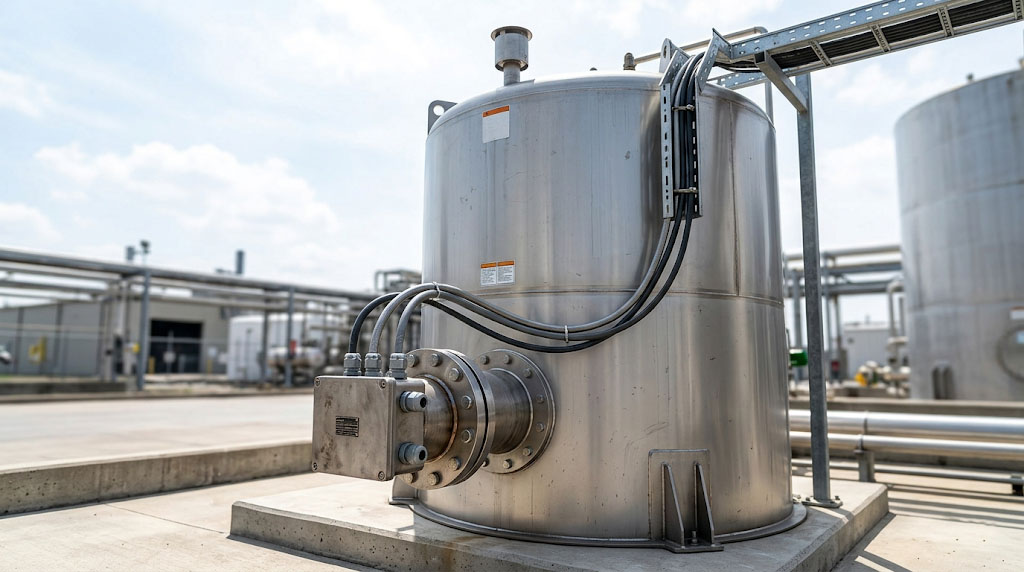
1. Storage Tank Heating (Viscosity Maintenance)
Maintaining the flowability of heavy oils, asphalt, or sensitive chemicals in isolated storage tanks is a common industrial challenge.
- The Steam Approach: Steam coils inside tanks are effective but prone to pipe corrosion and leaking. A water leak into a chemical tank can ruin entire product batches. It also requires running expensive, insulated steam lines to remote tanks.
- The Electric Solution: Electric flanged immersion heaters provide localized, leak-proof heating. They can be engineered with specific watt densities to ensure viscous fluids are heated uniformly without scorching or carbonization (coking).
2. Injection Mold and Die Heating
In plastic injection molding, rubber curing, or metal extrusion, thermal profiles must be tightly controlled across highly specific geometric areas to ensure product quality.
- Why Electric Wins: Steam cannot practically navigate the micro-channels of a solid mold block. Electric cartridge heaters and tubular heaters are the absolute industry standard here. They are physically embedded into the metal platens, offering the instantaneous, micro-precision heat required for defect-free manufacturing.
3. Large-Scale Chemical Bulk Heating
To remain objective, it is important to note where steam excels. For massive petrochemical facilities covering hundreds of acres that require continuous bulk heating across multiple large reactors, steam remains the most economical choice if a central boiler infrastructure already exists.
Procurement Guide: Key Factors for Choosing Electric Heating
If you are an engineer designing a new system or transitioning from steam to electric, specifying the right components is crucial for longevity and safety:
- Watt Density (W/in² or W/cm²): This is the most critical factor for heater lifespan. High-viscosity fluids (like heavy oil) require low watt density to prevent localized overheating. Clean water can absorb heat rapidly and allows for higher watt densities.
- Sheath Metallurgy: Match the physical barrier of the heater to the chemical medium:
- Copper: For clean, non-corrosive water.
- 304/316 Stainless Steel: For mildly corrosive environments, food processing, and degreasing solutions.
- Incoloy® or Titanium: For harsh, highly corrosive chemical baths.
- Customization: Industrial setups require exact fitment. Ensure your manufacturer can customize flange sizes, active immersion lengths, unheated "cold zones," and voltage specifications to match your exact tank dimensions.
Maintenance and Care for Maximum Lifespan
One of the greatest OPEX advantages of electric heating is the drastic reduction in maintenance labor compared to boiler systems. However, electric elements still require professional care:
- Prevent Scale Buildup: Periodically clean the element sheaths. Mineral scale acts as a thermal insulator, forcing the internal resistance wire to run hotter, which leads to premature element fracture.
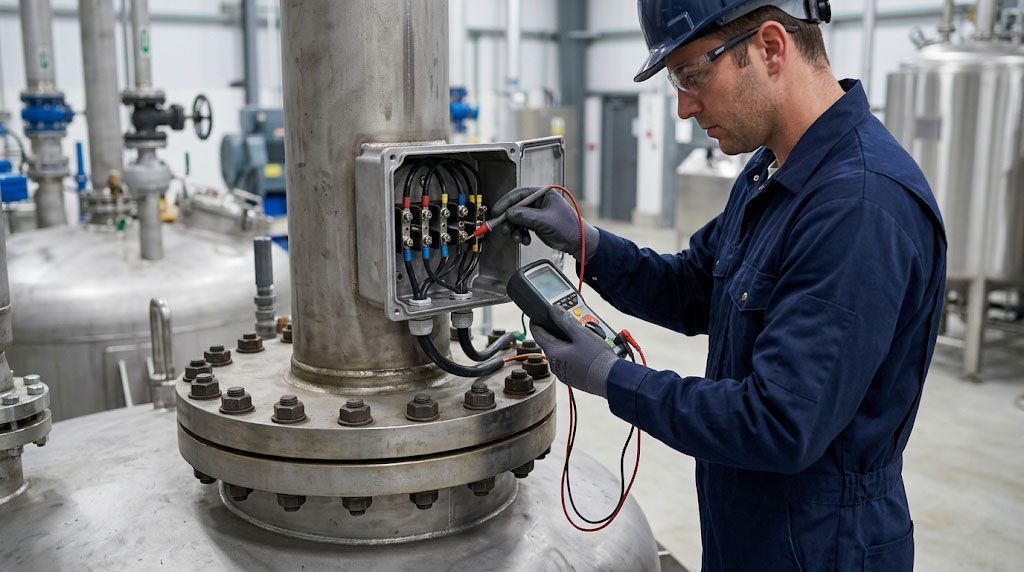
- Inspect Electrical Connections: Routinely check terminal boxes to ensure connections remain tight and are perfectly sealed against moisture ingress.
- Annual Megger Testing: Conduct insulation resistance (megger) testing to monitor the integrity of the internal magnesium oxide (MgO) insulation.
Frequently Asked Questions (FAQ)
Q1: Is it cheaper to run an electric heater or a steam boiler?
From a raw fuel perspective, natural gas (for steam) is historically cheaper per BTU than electricity. However, because electric heaters operate at ~100% local efficiency and eliminate massive infrastructure heat losses and boiler maintenance, the Total Cost of Ownership (TCO) for electric heating is often lower for decentralized or highly precise applications.
Q2: Can I convert an existing steam heating system to electric?
Yes. Driven by decarbonization goals, many facilities are replacing steam coils in tanks or process lines with electric circulation heaters or direct flanged immersion heaters. This is a standard retrofit.
Q3: Can electric heating be used safely in explosive or hazardous environments?
Absolutely. Electric heaters can be manufactured with heavy-duty, explosion-proof terminal enclosures (e.g., NEMA 7 / ATEX certified) designed to contain internal sparks, making them fully compliant for petrochemical and oil & gas environments.
Q4: What is the primary cause of failure in electric immersion heaters?
The most common failures are caused by dry firing (operating the heater in air without liquid coverage) and scale buildup, both of which cause the internal resistance wire to overheat and melt.
Ready to Upgrade Your Industrial Heating Solutions?
The engineering consensus on Electric vs Steam Heating is increasingly favoring electrification. Driven by the demand for higher energy efficiency, micro-precision temperature control, reduced maintenance overhead, and strict environmental compliance, electric heating elements are the future of process heating.
At elekheat, we specialize in the engineering and manufacturing of premium, industrial-grade electric heating elements. Whether you require robust flanged immersion heaters for heavy oil tanks, precise cartridge heaters for injection molds, or custom tubular elements for complex machinery, our factory has the technical capabilities to deliver.
Stop losing energy to inefficient steam pipelines. Contact the elekheat engineering team today with your process parameters for a customized thermal evaluation and a competitive quote on your next industrial heating project.