 Skip to content
1. What Exactly Is it?
Simply put, a cartridge heater is a metal tube that gets hot when electricity passes through it.
Nickname:
It’s also called a “single-end heater” because both lead wires usually come out from the same end of the tube (unlike household fluorescent tubes that have wires on both ends).
Function:
You insert it into a hole inside a metal block to heat the block from the inside.
Appearance:
It’s normally a cylindrical metal rod—similar to a finger or a stick—with a stainless-steel outer shell.
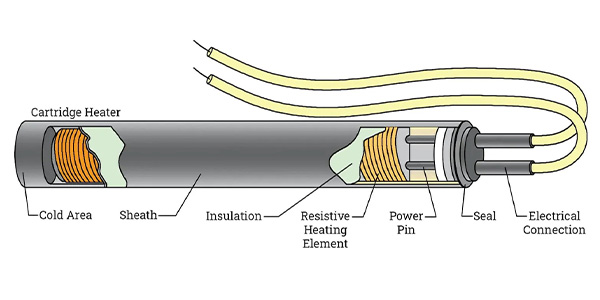
What’s Inside the Tube? (A quick anatomy view)
Think of it as a three-layer sandwich:
-
Core (heat source):
A coil-shaped resistance wire made from NiCr alloy. This is the part that glows and generates heat. -
Middle layer (heat-conducting but electrically insulating):
The inside is filled with white magnesium oxide (MgO) powder.
MgO transfers heat to the shell while keeping the electricity insulated for safety. -
Outer shell (armor):
A stainless-steel or alloy tube that protects the internal structure and transfers heat outward.
2. Where Is it Mainly Used?
Cartridge heaters are used anywhere high heat is required within a very small space.
Common applications:
-
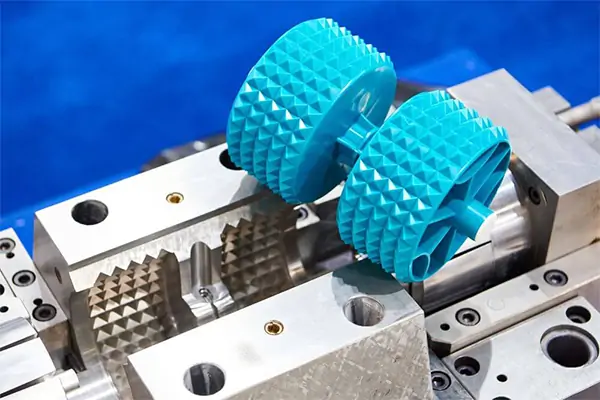
Mold heating:
Used in plastic injection molds for products like bowls or phone cases. The heater warms the mold for proper forming. -
3D printers:
The hotend (the part that melts the filament) contains a mini cartridge heater. -
Packaging machines:
The “hot knife” for sealing plastic bags is usually heated by cartridge heaters. -
Liquid heating:
With waterproofing, they can also heat water or oil.
3. The Most Important Rule (remember this!)
If you only remember one thing, remember this:
“Tight! It must be tight!”
This is the key difference between cartridge heaters and ordinary tubular heaters.
Why?
Cartridge heaters transfer heat through direct contact.
The big mistake: leaving air gaps
Example:
If the hole is 10 mm, but the heater is 8 mm, the empty space traps heat inside the heater.
Result:
- Poor heat dissipation
- Internal overheating
- Burnout within minutes
- Possible tube melting
Golden installation rule:
The hole size must match the heater diameter very closely.
Recommended tolerance:
0.05 mm – 0.1 mm
When inserting the heater, it should feel snug or slightly tight.

4. How to Choose The Right Heater? (Key parameters)
When purchasing, provide the manufacturer with these four specifications:
-
Voltage:
220V, 380V, 12V, or 24V.
Wrong voltage → no heat or instant failure. -
Wattage:
Higher wattage heats faster but may reduce lifespan. -
Diameter:
The most critical parameter.
Must match the hole size precisely (e.g., 10.0 mm vs. 9.8 mm). -
Length:
The physical length of the heater.
5. Why do Cartridge Heaters Fail? (Common causes)
They are consumable items, but most failures are preventable:
1. Air gaps (most common)
Hole too large → heat cannot escape → internal burnout.
2. Moisture absorption
MgO powder absorbs moisture if stored too long → short circuit when powered on.
3. Lead wire breakage
Frequent bending near the exit point can break the wires.
Choose internal lead construction for moving equipment.
4. Carbon or oil buildup
In oil applications, residue builds up and blocks heat transfer → heater burns out.
Summary
A cartridge heater is an industrial heating rod.
To use it properly:
- Install it tight, without air gaps.
- Match the heater diameter accurately to the hole.
- Always use a temperature controller — cartridge heaters do not stop heating by themselves.