Skip to content
1. Comparison of Core Heating Methods
Flue gas direct heating is the optimal solution for single-well crude oil storage tanks, outperforming hot water, steam and heat pipe heating:
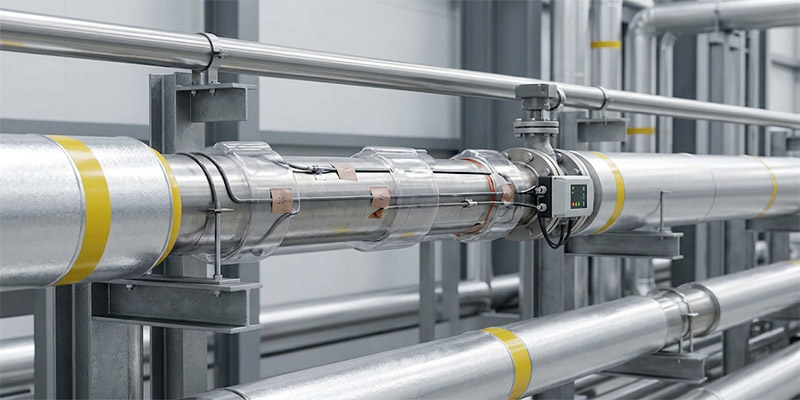
- Flue gas direct heating: Boasts the largest heat transfer temperature difference (several times that of steam/hot water), simplest system structure (only 2 folded flue pipes), minimal steel consumption and no high-pressure pipe burst risks.
- Hot water/steam heating: Indirect systems requiring small-diameter tube bundles, headers, circulating pumps and boiler heat exchangers. They have high steel consumption, high operating pressure (several MPa) with pipe burst hazards, and increased flue gas resistance that may cause boiler positive pressure and flameout. Steam heating is superior to hot water heating, especially at low working medium temperatures.
- Heat pipe heating: An overhyped indirect system involving two heat exchangers (evaporation section in boilers, condensation section in tanks). It has extremely high steel consumption due to poor heat transfer performance of flue gas and crude oil, and suffers from complex maintenance and frequent dry-burning failures.
2. Traditional Outdated Heating Methods
These methods are only used in remote oil wells without electricity or natural gas:
- Fire-core storage tanks: Manual crude oil combustion with incomplete burning, low efficiency and severe environmental pollution.
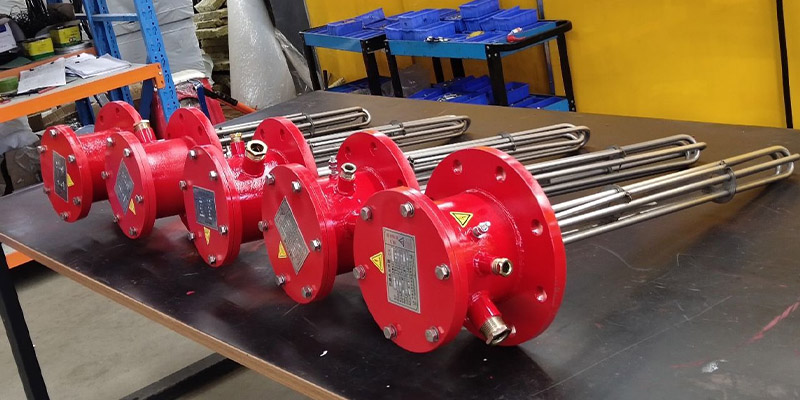
- Electric heating tube, gas lift, and coal heating: High energy consumption, poor safety or high labor intensity, gradually being phased out.
3. Advanced Burners and Heating Devices
Using self-produced crude oil as fuel is the core research direction for single-well tank heating.
3.1 Existing Burner Types
- Diesel burners: Available in various power ranges (kW to MW). The flameless diesel burner (30-150kW) has excellent safety but slow heating speed.
- Heavy oil burners: Compatible with crude oil, heavy oil and residual oil, but have open flames and severe carbon deposition; imported models are expensive.
3.2 Crude Oil-Fired Burner
A breakthrough technology adaptable to crude oils with vastly different viscosities and ignition properties:
- Working principle: Crude oil is heated to 50-60℃, filtered, pressurized to 2-2.5MPa, atomized by high-alloy nozzles and ignited. A control system regulates air intake, fuel injection and flame length for precise temperature control.
- Safety advantage: Closed connection with heating pipes confines flames inside pipelines, eliminating fire risks even with small amounts of associated gas leakage (which instead aids combustion).
3.3 Heating Device Configurations
- Retrofit on existing tanks: Saves initial investment but has high installation difficulty and suboptimal thermal efficiency.
- New integrated heating tanks: Fully automated, with remote control, anti-theft and explosion-proof functions. Successfully applied in Shengli Oilfield and gradually replacing circular tanks.
3.4 Development Trend
Rectangular crude oil storage tanks (easy to transport and maintain) equipped with crude oil burners will become the industry standard, offering comprehensive economic benefits, reduced labor and on-demand heating.
3.5 New Local Rapid Oil Tank Heater
Adopts vortex thermal film heat exchangers installed radially at the tank bottom (steam as heat medium):
- Enhanced heat transfer: Fluid oscillation and scouring thin the thermal boundary layer, eliminating local overheating and coking.
- Performance: 1.5× the heat exchange area and 2-3× the thermal efficiency of conventional shell-and-tube exchangers, with automatic temperature control via steam flow valves.
4. Solar Heating System for Single-Well Tanks
A fully automated, unattended system consisting of solar collectors, integrated energy storage/heat exchangers and controllers.
4.1 Core Advantages
- Energy saving: Mainly uses solar energy, with electric auxiliary heating only in bad weather; reduces annual electricity costs by ~76% compared to traditional electric heating.
- Safety: Water circulation heat exchange with explosion-proof electrical design eliminates explosion hazards.
- High efficiency: Continuous heating during daylight hours; maintains stable oil temperature.
- Eco-friendly: Zero emissions from solar energy utilization.
4.2 Typical Application
For a 40m³ tank maintaining 45℃ crude oil temperature: 4 sets of TMQRZ15-18P metal superconducting vacuum heat pipe collectors (12m² total area) with 18kW electric auxiliary heating. It ensures ≥55℃ oil temperature in sunny days and ≥50℃ in cloudy days.
5. Electromagnetic Induction Heating Technology
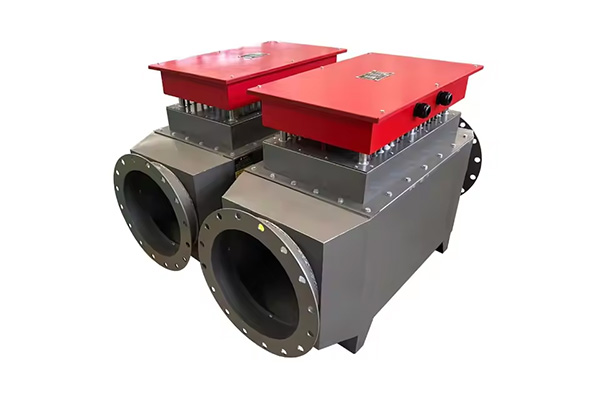
GDRB series oil tank electromagnetic heaters use magnetic induction eddy current heating principle:
- Ultra-high efficiency: Thermal efficiency ≥98%, 10-21% comprehensive power saving and 25% faster heating than resistive heaters.
- Safety & durability: No open flame, explosion-proof, and 10× longer service life than resistive heaters.
- Intelligent control: Automatically adjusts heating power, with overheat and dry-burning protection.
- Field performance: Heats 30℃ crude oil to 50-60℃ in 2-3 hours, ensuring stable oil transportation in Lu 23-3 and Lu 23-4-5 well sites.
6. High-Efficiency Anti-Theft FRP Heating Storage Tank
Integrates crude oil self-heating, closed oil/gas storage, natural gas recovery and direct metering functions.
6.1 Key Specifications
21m³ volume, 0.3MPa maximum working pressure, 8m² heat exchange area, 90℃ maximum working temperature, 30m³/d natural gas consumption for self-heating.
6.2 Working Principle & Advantages
Separates associated gas from crude oil for combustion in the thermal generator, producing 300℃ hot air for radiation heating. It melts solidified crude oil to 60℃ in 3 hours, and solidified crude oil during non-transport periods naturally prevents theft.
6.3 Application Results
In Dongxin Oil Production Plant, it increased production time efficiency from 68% to 87%, with cumulative crude oil production increase of 1,862 tons. It also eliminates environmental pollution and enables production in remote, grid-free wells.