Skip to content
What is an Immersion Heater? (Core Definition)
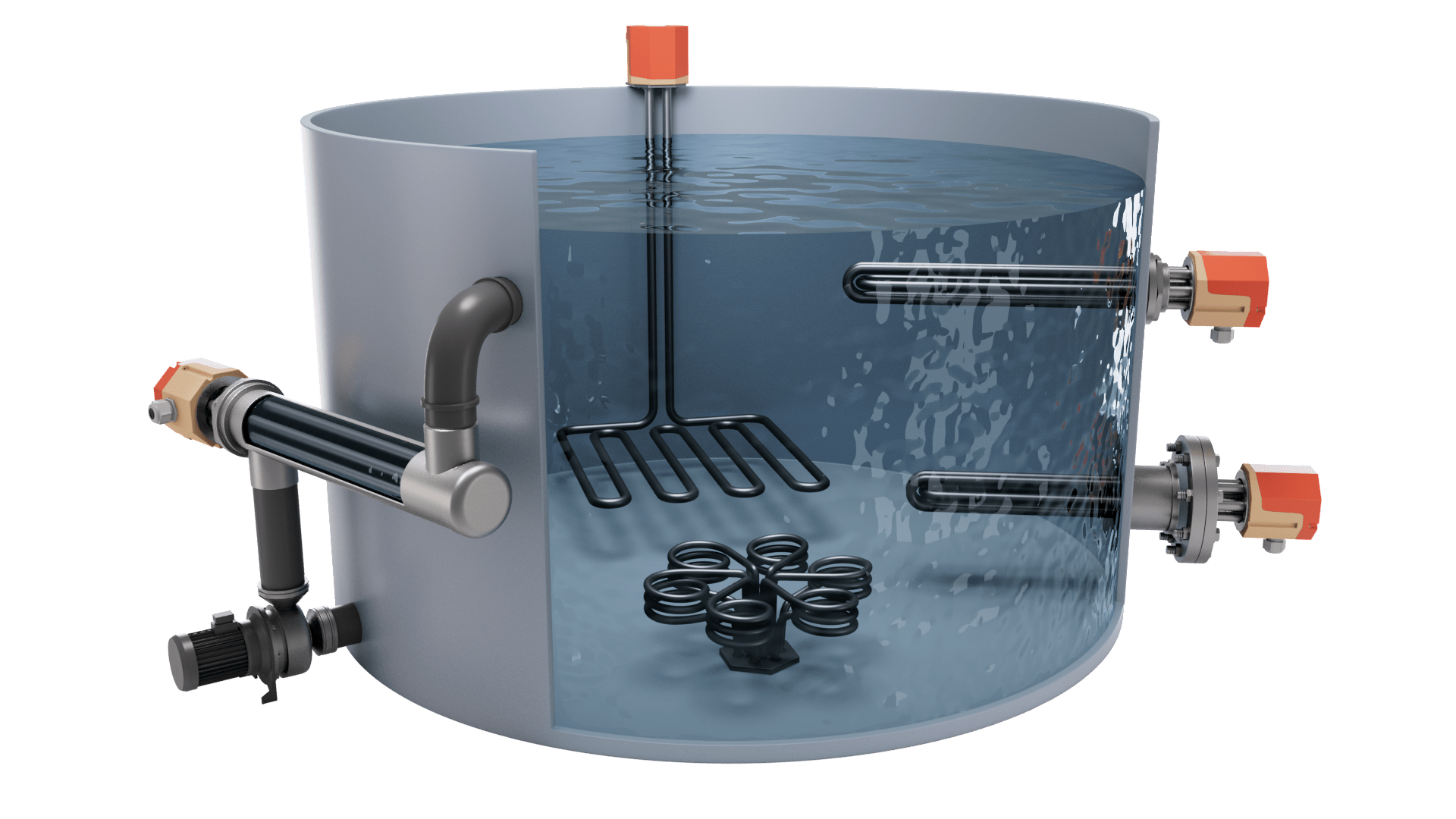
An immersion heater is an electric heating element designed to operate by being placed directly into a liquid or gas medium. Through full contact between its metal shell and the fluid, it converts electrical energy into thermal energy, achieving precise and localized heating. Distinct from external heating tubes or heating pads, it features a short heat conduction path, fast response time, and minimal temperature control error. It is widely used across multiple fields, from industrial production to everyday household life.
Immersion heaters are primarily divided into two main categories: industrial and household. Market prices range from tens to thousands of dollars, depending on power output, materials, and application scenarios. Products designed for different uses also exhibit significant differences in their structural principles and safety standards.
How Does an Immersion Heater Work? (Thermodynamics and Design)
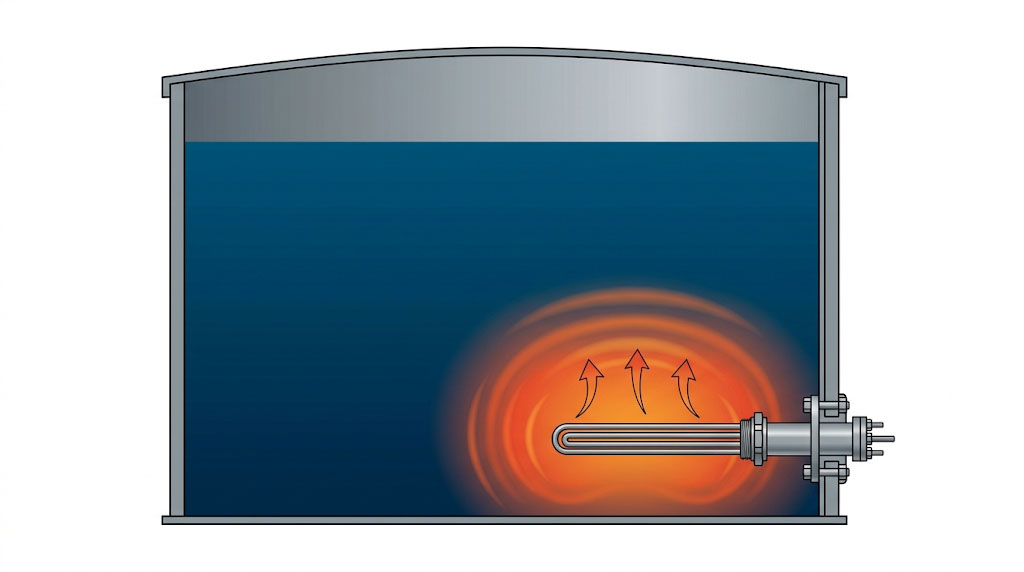
Electric current passes through a resistance wire (such as a nickel-chromium alloy) to generate heat. This heat is then conducted through a magnesium oxide insulation layer to a metal sheath (like 304/316 stainless steel), which directly heats the liquid.
Internal Structure of the Heating Element
A standard immersion heating tube utilizes a "three-layer concentric" design, from the inside out:
- Core Heating Layer: Nickel-chromium (Ni80Cr20) or iron-chromium-aluminum alloy resistance wire, evenly distributed in a spiral shape to ensure consistent heating across the entire tube. Nickel-chromium alloy is the most commonly used heating material due to its strong oxidation resistance and long lifespan. Iron-chromium-aluminum alloy is more cost-effective and suitable for medium to low-temperature scenarios.
- Insulating and Heat-Conducting Layer: High-purity electrical-grade magnesium oxide (MgO) powder, tightly packed between the resistance wire and the metal sheath. It possesses excellent electrical insulation and thermal conductivity, preventing electrical leakage while efficiently transferring heat to the metal shell.
- Protective Outer Shell Layer: A seamless metal tube. Different materials (such as 304/316 stainless steel, titanium, or copper) are selected based on the heating medium and operating temperature to protect the internal structure from chemical corrosion and mechanical damage.
Power cords are routed out through sealed terminals at both ends. Some industrial-grade products are also equipped with ceramic insulators and waterproof seals at the ends to enhance safety and reliability in humid or high-pressure environments.
Types of Immersion Heaters (Mounting Methods)
Threaded / Screw Plug Immersion Heaters
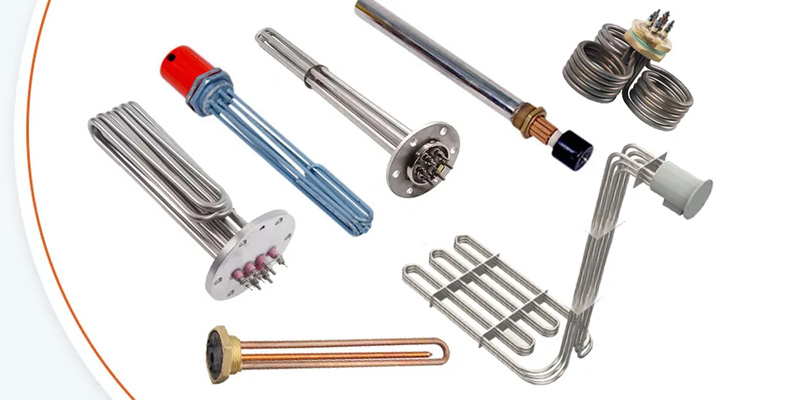
Screw plug immersion heaters feature external threads on the metal tube body. They can be screwed directly into the equipment being heated (e.g., water tanks, oil reservoirs, pipes) without the need for additional brackets. The threaded portion can be metric (e.g., M10–M24) or imperial (e.g., 1/2", 1", 2"). They support rapid installation and are ideal for smaller pressure vessels like household water heaters.
Flanged Immersion Heaters
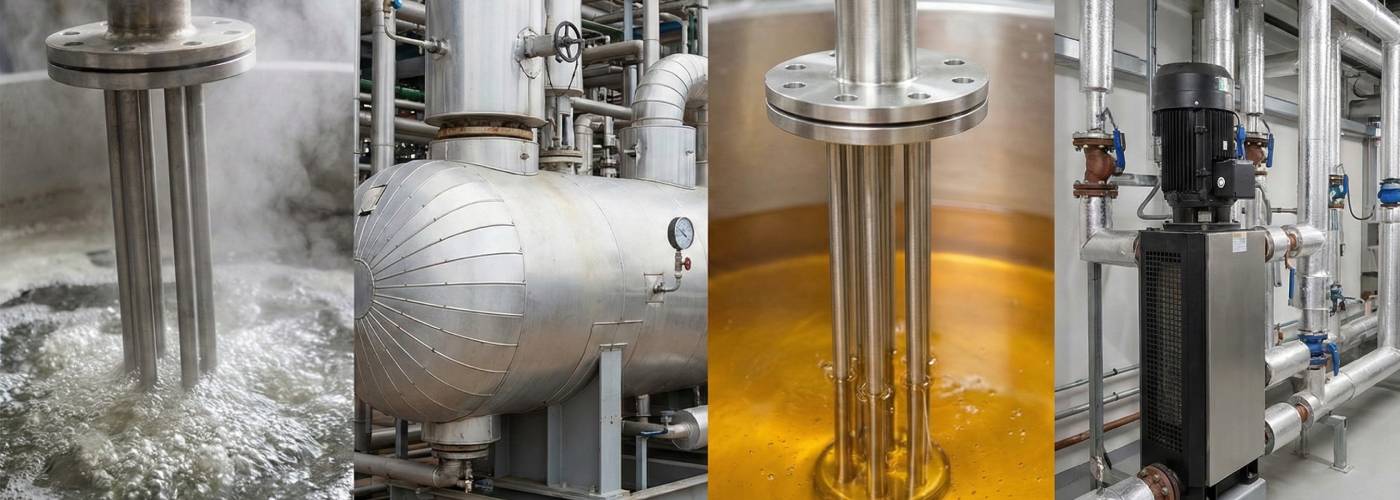
Flange heaters (or flanged immersion heaters) are widely used in industrial electric heating equipment, primarily for directly heating or maintaining the temperature of liquids, gases, or low-melting-point metals. Their core structure involves mounting multiple U-shaped tubular electric heating elements onto a flange plate. They are installed on storage tanks, reactors, pipelines, or oil tanks via flange connections. Thermal efficiency usually reaches 95% (up to 98% for some products). Single heating elements can be replaced, making maintenance convenient and reducing downtime costs.
Over-the-Side Immersion Heaters
Over-the-side immersion heaters are designed for installation on the edges of chemical reactors, electroplating tanks, food processing vats, or pools. They hang on the side wall of the container via a bracket, with the heating portion naturally dropping into the liquid. Dropped in from the top, the heating element immerses directly into the medium without needing to penetrate the container wall. This structure is especially suitable for applications where drilling holes at the bottom or sides is impossible, frequent cleaning is required, or space is limited.
Circulation / In-Line Heaters
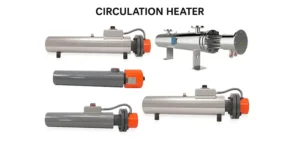
Circulation heaters typically consist of a flanged heater, a cylindrical vessel, and baffles. Using a flanged heater as the heat source, they feature an advanced structure, high thermal efficiency, excellent mechanical strength, and resistance to corrosion and wear. Baffles inside the cylinder ensure the fluid is heated evenly as it flows through. They are ideal for flowing liquids and continuous process applications.
Household vs. Industrial Immersion Heaters
Household Immersion Heaters
These generally refer to small-power (typically ≤3kW) heaters that are simple in structure, safe, reliable, and easy to use and install. Common types include screw plug heaters and portable immersion heaters. They are primarily used in water heaters, water dispensers, bathtubs, and small water tanks. Their design focuses heavily on safety features like electric shock prevention and dry-fire protection, and they are relatively inexpensive.
Industrial Immersion Heaters
Designed specifically for industrial or commercial environments to heat materials, fluids, air, or spaces. They are widely used in chemicals, petroleum, power generation, metallurgy, machinery, food, and pharmaceuticals. Common types include flanged heaters, over-the-side heaters, and circulation heaters. They feature multiple safety mechanisms against over-temperature, over-pressure, electrical leakage, and dry burning. Some equipment can operate under several megapascals of pressure, support high-precision temperature control (±1°C), and integrate intelligent algorithms for remote monitoring and automation.
How to Choose the Right Immersion Heater
Sheath Material Selection
Choosing the right sheath material generally involves two perspectives:
By Heating Medium:
-
Water (Standard/Neutral): 304 stainless steel is the preferred choice for its high cost-effectiveness and good oxidation resistance.
-
Weak Acid / Weak Alkali or Sediment-Heavy Water: 316 stainless steel (contains molybdenum for enhanced corrosion resistance) is recommended.
-
Strong Acid, Strong Alkali, or Highly Corrosive Chemicals:
-
Acidic environments: Titanium or Teflon (PTFE) coated heating tubes are recommended.
-
Alkaline environments: 316L stainless steel is a more economical option.
-
Oil Heating: 304 seamless tubes are typically used, though high-quality welded tubes can also be utilized if manufacturing standards are met.
By Operating Temperature:
- ≤ 300°C: 304 stainless steel is the most common and suitable for heating most liquids and air.
- 300°C – 500°C: 321 stainless steel (contains titanium, resists intergranular corrosion) is recommended for high temperatures.
- 500°C – 800°C: 310S stainless steel (highly resistant to high temperatures and oxidation) is recommended.
How to Select Watt Density
Watt density selection must comprehensively consider the heating medium, heating time, operating environment, mounting method, material properties, and safety redundancy. Watt density refers to the power per unit of heating surface area (W/cm²). If it's too high, the element's surface temperature will be excessive, accelerating scaling and corrosion, and shortening its lifespan. If it's too low, heating speed will be slow, failing to meet process requirements.
- Water Heating: Recommended watt density ≤ 8W/cm² (in hard water areas, ≤ 6W/cm² is advised).
- Oil Heating: Recommended watt density ≤ 2W/cm² (for high-viscosity oil, ≤ 1.5W/cm² is advised).
- Air Heating: Recommended watt density ≤ 1W/cm².
Pros and Cons of Electric Immersion Heating
Core Advantages
- Extremely High Thermal Efficiency: Electrical energy is converted to heat with near 100% efficiency. Direct contact with the medium means no intermediate heat loss, resulting in an overall thermal efficiency of 95%-98%—much higher than gas heating (approx. 60%-80%) or external heating.
- Precise Temperature Control: Can achieve a control accuracy of ±1°C or better, meeting temperature-sensitive process requirements in food processing, pharmaceuticals, etc.
- Fast Response: Generates heat within seconds of being powered on. It heats up rapidly, reaching the set temperature quickly and shortening production cycles.
- Versatile Installation: Offers various mounting options (threaded, flanged, over-the-side, inline) to fit containers of different shapes and sizes without massive modifications to existing equipment.
- Safe and Eco-Friendly: No open flames, no exhaust emissions, and no environmental pollution. Equipped with multiple safety devices (dry-fire protection, over-temp, leakage protection) for reliable use.
- High Space Utilization: Submerged directly into the medium, requiring no extra footprint, making it perfect for space-constrained applications.
Main Disadvantages
- Higher Operating Costs: The unit cost of electricity is generally higher than fossil fuels like natural gas or coal. For large-scale, continuous heating over long periods, operating costs can be steep.
- Susceptible to Scaling: In hard water areas, scale easily forms on the heating tube's surface. This lowers heat conduction efficiency, increases energy consumption, and in severe cases, causes the tube to overheat and burn out.
- Sensitive to Corrosive Media: Direct contact means highly corrosive fluids can accelerate metal sheath degradation, shortening lifespan if the wrong material is chosen.
- Grid Requirements for High Power: Industrial immersion heaters (tens to hundreds of kilowatts) require adequate power supply systems to prevent grid instability.
Maintenance, Lifespan, and Troubleshooting
Combating Scale and Calcification
Scaling and calcification are the most common issues for immersion heaters and the primary cause of a shortened lifespan. When heating hard water, calcium and magnesium ions precipitate onto the tube surface to form insoluble calcium carbonate and magnesium carbonate (scale).
Dangers of Scaling:
- Drastically increases thermal resistance, dropping heat conduction efficiency and raising energy consumption (every 1mm of scale increases energy consumption by approx. 10%).
- Causes localized overheating on the tube surface, leading to the thermal degradation of the internal magnesium oxide insulation.
- In severe cases, it leads to dry-burning, melting the resistance wire, or even safety hazards.
Prevention and Treatment:
- Water Pre-treatment: Install water softeners or ion-exchange equipment to reduce water hardness at the source.
- Control Watt Density: Use a lower watt density (≤ 6W/cm²) in hard water areas to lower the surface temperature of the tube.
- Regular Cleaning: Descale every 3-6 months depending on water quality. Weak acid solutions (like citric or acetic acid) can be used to soak and dissolve the scale. Industrial equipment may require professional chemical or physical cleaning.
- Use Anti-Scaling Agents: Add food-grade anti-scaling agents to the water to inhibit scale crystallization and deposition.
How to Test an Immersion Heater
If an immersion heater fails to heat, heats slowly, or leaks electricity, a multimeter can be used for simple troubleshooting:
Preparation:
- Disconnect the power supply to ensure it is completely powered off.
- Remove the wiring terminals to isolate the heater from the circuit.
- Set the multimeter to the resistance (Ω) setting and choose the appropriate range.
Continuity Test (Checking for open circuits):
- Place the two multimeter probes on the two wiring terminals of the heater.
- If a resistance value is displayed (usually a few ohms to tens of ohms, depending on the power rating), the internal circuit is intact and functioning normally.
- If the multimeter shows infinity (OL), the internal resistance wire has melted/broken. The heater is damaged and must be replaced.
Insulation Resistance Test (Checking for electrical leakage):
- Place one probe on the heater's wiring terminal and the other probe on the metal outer shell.
- If the resistance value is > 2MΩ, insulation performance is good.
- If the resistance value is < 2MΩ (or close to 0Ω), the insulation layer is compromised. There is a high risk of electric shock. Do not use it; replace the heater immediately.
Note: Always ensure power is completely disconnected before testing. Disconnect thermostats or other protection devices before testing the heating tube independently. Regularly calibrate your multimeter for accurate results.
Frequently Asked Questions (FAQ)
Can an immersion heater boil water?
Yes. As long as it has sufficient power and the appropriate safety protections, an immersion heater can easily heat water to its boiling point (100°C at standard atmospheric pressure). Portable immersion heaters and electric kettles use this exact technology. Please note:
- The heating tube must be fully submerged in water. Dry burning is strictly prohibited.
- Never boil water in a sealed, unvented container to prevent dangerous pressure build-up.
- Do not touch the water or the heater while it is operating to avoid severe burns.
How long does it take to heat a water tank?
Heating time depends on tank volume, heater power, initial water temperature, target temperature, and heat loss. You can estimate it using the following formula:
Heating Time (hours) = [Water Volume (Liters) × Temperature Difference (°C) × 4.2] / [Heater Power (kW) × 860 × Thermal Efficiency] (Note: 4.2 is the specific heat capacity of water in kJ/kg·°C; 860 is the heat generated by 1 kW·h of electricity in kcal; Thermal efficiency is generally calculated at 0.95).
Example: Using a 3kW heater to heat 100 liters of water from 20°C to 100°C:
100 × 80 × 4.2 ÷ (3 × 860 × 0.95) ≈ 13.7 hours Actual heating time will be slightly longer due to ambient heat loss from the container.
Does an immersion heater consume a lot of electricity?
Electricity consumption depends on the power rating and operation time. Formula: Electricity Consumption (kWh) = Power (kW) × Usage Time (hours)
- Small Household Heaters: Typically 1–3kW, consuming 1–3 kWh per hour.
- Industrial Heaters: Range from a few kW to hundreds of kW, consuming proportionally more power.
While the thermal efficiency is extremely high, electricity is generally a more expensive energy source. Long, continuous operations can be costly. To reduce power consumption:
- Properly insulate the container to minimize heat loss.
- Set reasonable target temperatures to avoid overheating.
- Utilize time-of-use utility rates by heating during off-peak hours.
- Descale regularly to maintain high thermal efficiency.
Can an immersion heater heat oil?
Yes, but you must select an immersion heater specifically designed for oil. Oil has a different viscosity, lower specific heat capacity, and poorer thermal conductivity compared to water. Therefore, oil heaters use a much lower watt density (typically ≤ 2W/cm²) to prevent the oil from breaking down, carbonizing, or overheating locally.
Precautions when heating oil:
- Ensure the oil level remains above the heating tube at all times (no dry burning).
- Never heat oil with a flashpoint that is too low to avoid fire hazards.
- Regularly inspect the oil quality and replace degraded oil promptly.
What is the lifespan of an immersion heater?
Under normal conditions, household immersion heaters last about 3 to 5 years, while industrial immersion heaters last about 1 to 3 years depending on process intensity.
Key factors affecting lifespan include:
- Corrosiveness and hardness of the heating medium.
- Operating temperatures and pressures.
- Selection of the correct watt density.
- Routine maintenance and care.
- Product manufacturing quality.
Regular descaling, selecting the correct sheath material and watt density, and avoiding dry-burning or over-temperature operation can significantly extend the life of your heater.