 Skip to content
Precise temperature control is essential in semiconductor manufacturing, where even small temperature variations can affect process stability and product quality. Cartridge heaters provide reliable, localized heating for semiconductor equipment, including chamber walls, susceptors, bonding platforms, hot plates, and gas valve blocks. In this article, we explore their key applications and the engineering considerations for selecting the right cartridge heater for demanding semiconductor environments.
Introduction
Let's start with the key point: in semiconductor equipment, cartridge heaters rarely heat wafers directly. Instead, they are typically installed in heating plates, chamber walls, valve blocks, bonding heads, and other components to provide localized heating, thermal compensation, and condensation prevention.

Wafers are generally heated by lamps, electrostatic chucks (ESCs), or heated platens. Cartridge heaters often serve as the heat source behind these components.
Semiconductor applications have very different requirements from conventional industrial heating. When a standard industrial heater fails, replacing it may be relatively straightforward. However, unplanned downtime in semiconductor manufacturing can result in significant production losses.
That's why cartridge heaters used in semiconductor equipment must meet several critical requirements:
- Temperature uniformity: Minimize temperature variations across the heated surface.
- Low outgassing under vacuum: Prevent contamination of the process environment.
- Corrosion resistance: Withstand exposure to process gases and demanding operating conditions.
- Reliable lead connections: Prevent lead wires from breaking during installation and operation.
- Fast thermal response: Enable accurate temperature control and efficient process adjustments.
Let's look at several practical applications and the engineering considerations behind them.
1. Chamber Wall Heating: Preventing Byproduct Deposition
In PECVD, ALD, and etching equipment, low chamber wall temperatures can cause reaction byproducts to accumulate on the walls. Over time, these deposits may become a source of particle contamination.
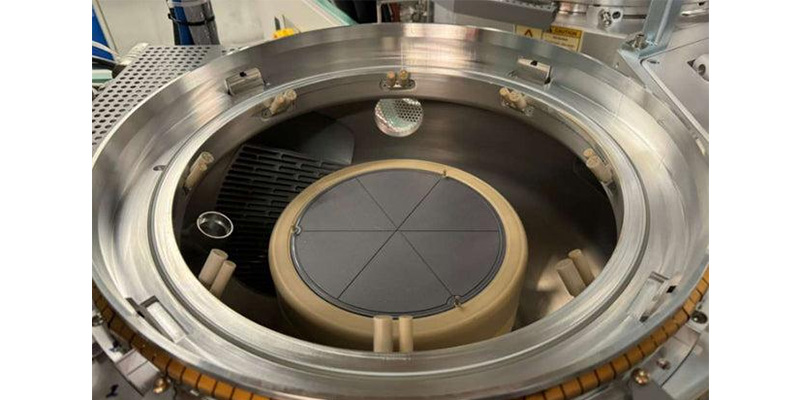
One PECVD customer had a chamber wall temperature setpoint of 80°C. The original design used heating tapes, but temperature variations around corners and flanges created cold spots. When the chamber was opened for inspection, powdery deposits were found in these areas.
We developed six custom cartridge heaters with SS316 stainless steel sheaths. Each heater had a diameter of 10 mm, with its length customized to match the individual chamber wall sections.
The heaters were inserted into aluminum blocks, which were then mounted against the chamber walls. Each heater incorporated a built-in Type K thermocouple, allowing independent temperature control for different zones.
During operation, the chamber wall temperature variation was reduced from approximately ±10°C to ±3°C. The chamber cleaning interval was extended from two weeks to four weeks.
The heaters themselves were relatively straightforward. The real challenge was optimizing heater placement and heat transfer.
Simply increasing the heating power will not eliminate cold spots if the thermal design is inadequate.
2. Susceptor Heating: Improving Thin-Film Deposition Uniformity
In CVD and ALD systems, susceptors and wafer support platforms must maintain uniform temperatures, typically ranging from 300°C to 600°C, depending on the process.
Uneven temperatures can lead to variations in film thickness and negatively affect process consistency.
One ALD reactor had a susceptor with a diameter of 300 mm and a process temperature of 400°C. The original single-heater design produced a temperature difference of approximately 15°C between the center and the edge, resulting in inconsistent film thickness.
We redesigned the heating system using nine cartridge heaters: three in the inner zone and six in the outer zone. The heaters were embedded in the aluminum susceptor, with separate PID temperature control for the two zones.
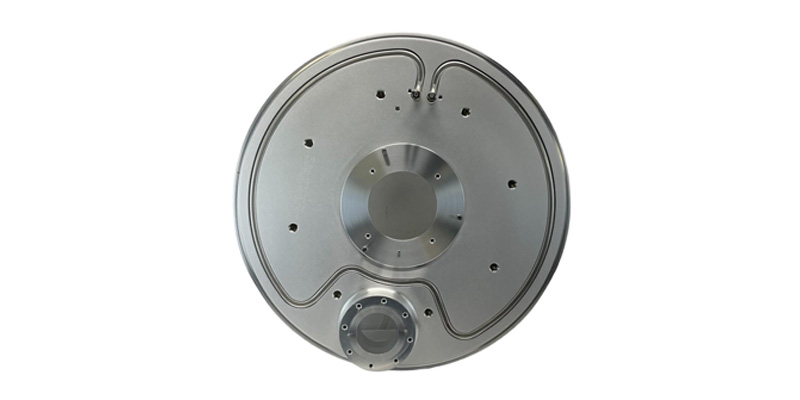
The outer heating zone was specifically designed to compensate for greater heat losses near the edges.
The redesigned system achieved a susceptor surface temperature uniformity of ±2°C at 400°C, significantly improving film thickness uniformity.
One important engineering consideration is that heat transfer behaves differently under vacuum. Without effective convective heat transfer, heater power density cannot be selected using atmospheric operating conditions as the sole reference.
For example, a power density of 45 W/cm² that may be usable in an atmospheric application could cause excessive heater temperatures in a vacuum environment.
The heater design must account for heat conduction through the surrounding material, contact conditions, and the thermal resistance between the heater and the heated component. In some applications, improved conductive heat transfer or a lower heater power density is necessary to prevent overheating.
3. Eutectic Bonding Hot Plates: Reducing Bonding Voids
Eutectic bonding is widely used in semiconductor packaging. For gold-tin (AuSn) soldering applications, the bonding platform may operate at temperatures between 300°C and 400°C.
Poor temperature uniformity can lead to inconsistent solder melting and increased void formation in the bond layer.
One customer operating a vacuum eutectic bonding furnace experienced a temperature uniformity of approximately ±8°C across the bonding platform, accompanied by a relatively high void rate.
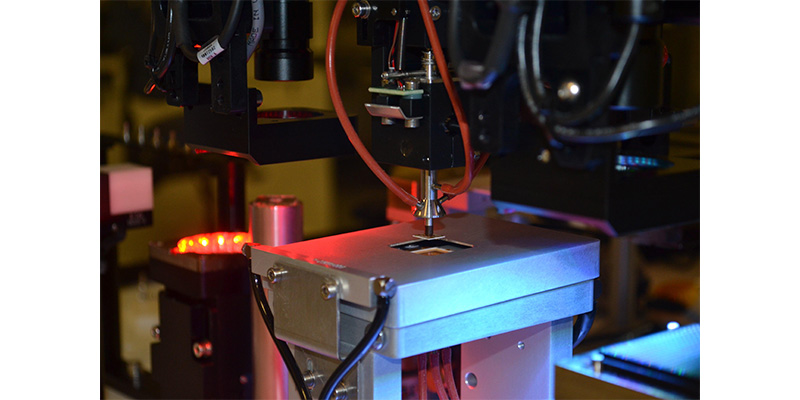
We supplied custom cartridge heaters featuring Incoloy 800 sheaths, an 8 mm diameter, and built-in Type K thermocouples. The resistance wire was designed with segmented winding arrangements to help achieve the required heating distribution.
The final bonding platform achieved temperature uniformity within ±1.5°C, and the bonding void rate decreased.
Incoloy 800 was selected for its high-temperature performance and oxidation resistance. Although SS316 stainless steel can also be suitable for certain applications around 400°C, the customer's additional high-temperature aging requirements made Incoloy 800 a more appropriate choice.
Material selection should consider the entire process cycle, not just the nominal operating temperature. Exposure time, thermal cycling, atmosphere, and chemical compatibility must all be evaluated.
4. Photoresist Coating and Developing Hot Plates: Pre-Bake Applications
In semiconductor track systems, hot plates are used to pre-bake photoresist before subsequent lithography steps.
These applications require precise temperature control, often targeting temperatures around 100°C with a specified uniformity of ±0.5°C.
One original design had a temperature variation of approximately ±2°C, contributing to inconsistent linewidth results.
We redesigned the heating arrangement using multiple 2 mm and 6 mm cartridge heaters with multi-zone PID temperature control.
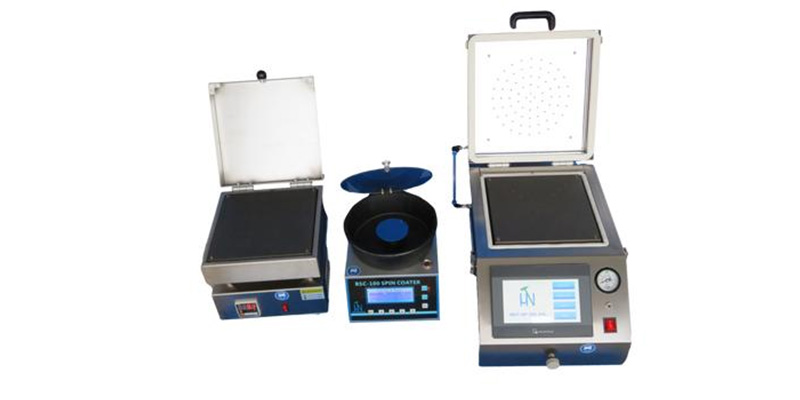
The redesigned system achieved approximately ±0.3°C temperature variation in the center and ±0.8°C near the edges.
The edges were more difficult to control because of greater heat loss to the surrounding environment. Achieving ±0.5°C uniformity across the entire surface requires a coordinated approach involving hot plate structure, thermal insulation, and cooling or airflow management.
The cartridge heater is only the heat source; it cannot compensate for every limitation in the overall thermal design.
Thermocouple placement is particularly important in hot plate applications.
The temperature measured inside a cartridge heater is not the same as the surface temperature of the heated plate. For accurate control, the temperature sensor should be positioned in the heated component or integrated into the hot plate at an appropriate measurement location.
Otherwise, the controller may regulate the heater temperature without accurately controlling the actual process surface temperature.
5. Gas Valve Block Heating: Preventing Crystallization and Blockages
In MOCVD and CVD equipment, certain specialty gases and process chemicals can condense or form solid deposits when local temperatures fall below the required operating range.
These deposits can accumulate in valves and gas delivery lines, eventually restricting flow or causing blockages.
One customer originally used heating tapes around a valve block. However, insufficient heating around the valve created cold spots, and crystallized deposits appeared after a period of operation.
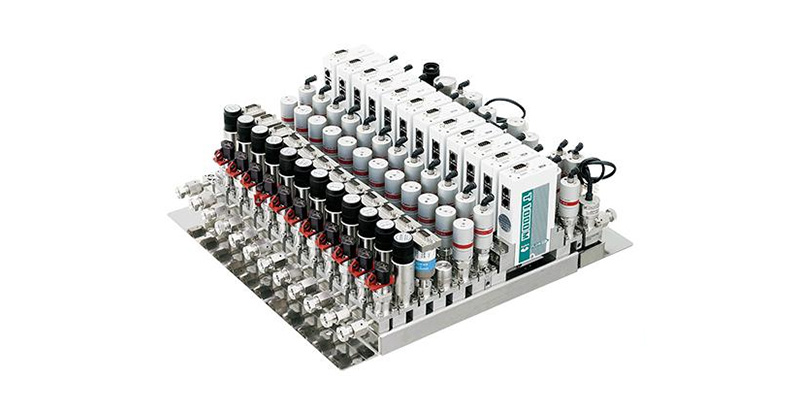
We replaced this arrangement with miniature 2 mm cartridge heaters inserted directly into holes in the valve block.
The redesigned system maintained a stable temperature of 80°C within approximately ±2°C, eliminating the reported crystallization problem under the customer's operating conditions.
Installation space was a key design consideration. The heater leads required right-angle routing, and high-temperature PTFE-insulated or fiberglass-insulated wires were selected to suit the installation environment.
In compact equipment, cartridge heater lead failures are not always caused by a damaged resistance element. Repeated bending, tight routing, and mechanical stress during installation can also break the lead wires.
For this reason, lead direction, wire insulation, available installation space, and strain relief should all be considered during the initial design stage.
Key Information Required for Cartridge Heater Selection
When selecting cartridge heaters for semiconductor equipment, specifying only a target temperature, such as 300°C, is not sufficient.
To develop a suitable heating solution, the following information should be provided.
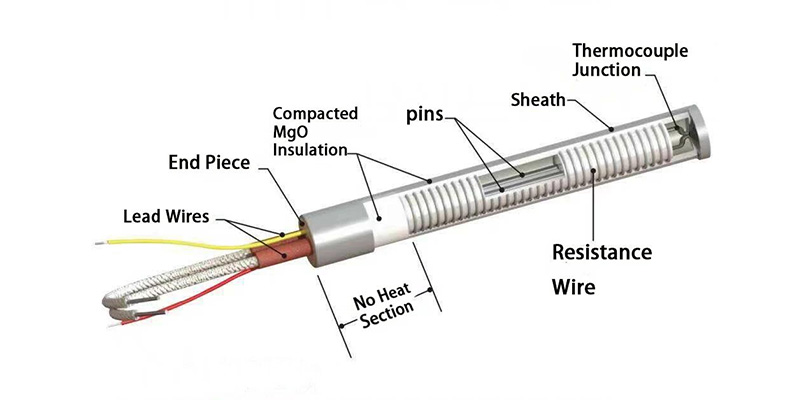
- Heated component: Chamber wall, aluminum block, stainless steel susceptor, valve block, bonding head, or another component.
- Target temperature: Required operating temperature, whether it refers to the internal or surface temperature, and the allowable temperature variation.
- Operating environment: Vacuum level, atmospheric pressure, nitrogen atmosphere, corrosive gases, and potential plasma exposure.
- Installation hole dimensions: Hole diameter, depth, tolerances, and whether thermal interface materials or an interference fit can be used.
- Electrical requirements: Available power, supply voltage, and required heater wattage.
- Lead configuration: Straight or right-angle leads, lead length, and the need for high-temperature wire insulation.
- Temperature sensing: Whether a built-in Type K or Type J thermocouple is required and where the temperature needs to be measured.
How to Choose the Right Sheath Material
The sheath material must be selected according to the operating temperature, process atmosphere, corrosion exposure, and service life requirements.
- SS304 stainless steel: Suitable for many general-purpose heating applications where corrosion requirements are moderate.
- SS316 stainless steel: Offers improved corrosion resistance in many environments and may be suitable for applications involving certain process chemicals.
- Incoloy 800 / 840: Nickel-iron-chromium alloys that can offer improved high-temperature performance and oxidation resistance in suitable operating environments.
For vacuum applications, material selection alone is not enough. Surface cleanliness, manufacturing residues, insulation materials, and the complete heater assembly must also be evaluated for potential outgassing and contamination.
The final selection should be based on the actual process conditions rather than temperature rating alone.
Conclusion
In semiconductor equipment, cartridge heaters play important supporting roles in chamber wall heating, susceptor temperature control, eutectic bonding, photoresist pre-baking, and gas valve block heating.
Although cartridge heaters are relatively compact components, incorrect material selection, excessive power density, poor installation, or inadequate temperature sensing can compromise process stability and equipment reliability.
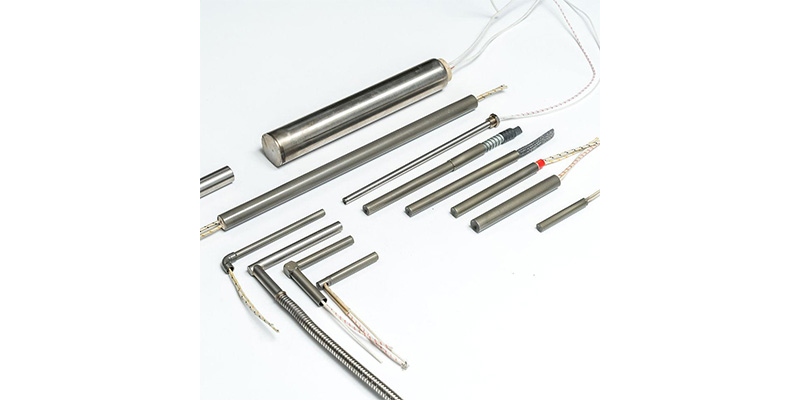
At ELEKHEAT, we specialize in custom cartridge heaters for industrial and semiconductor-related heating applications.
Whether you need a compact miniature heater for a valve block or a multi-zone heating solution for a precision thermal platform, we can help customize the sheath material, dimensions, wattage, thermocouple configuration, and lead arrangement to match your installation requirements and operating environment.
Have a specific application, technical drawing, or temperature requirement? Contact ELEKHEAT to discuss a customized cartridge heater solution designed around your equipment and process conditions.

