 Skip to content
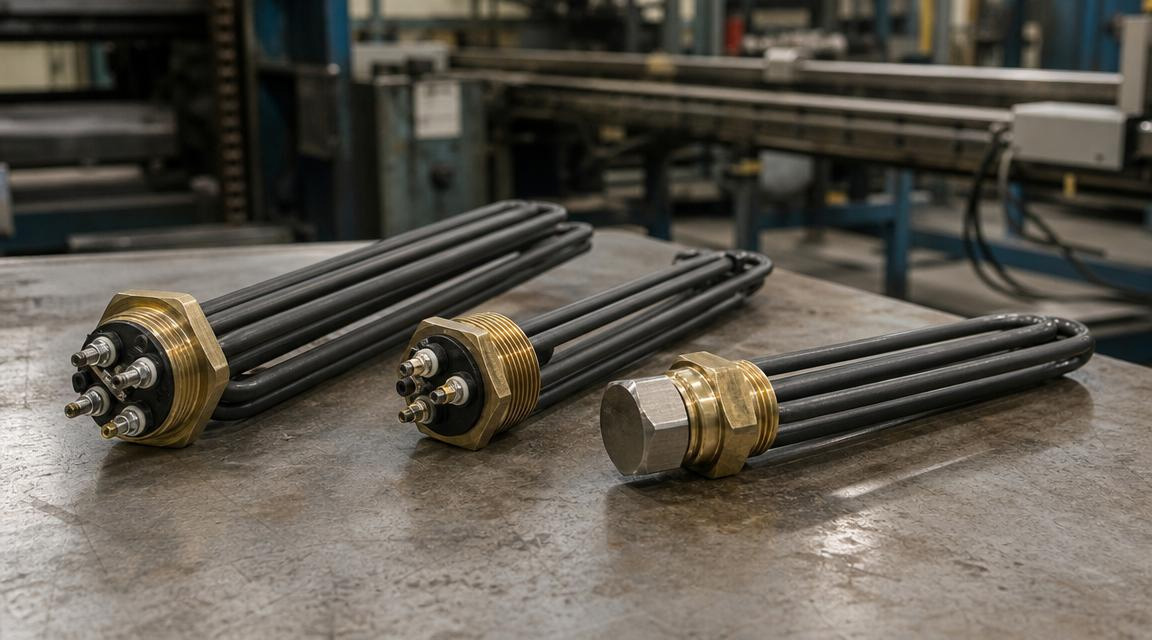
Electric heating elements are commonly used in industrial ovens, tanks, molds, dryers, process heating equipment, air heaters, water heaters, and many other machines. In many applications, one heating element is not enough, so several heating elements are connected together to provide the required heating power. The way these elements are connected is important because the wiring method determines how much voltage each element receives and how much heat it produces.
The good news is that electric heating element wiring is not as complicated as it may seem. Once you understand the basic relationship between voltage, resistance, current, and power, you can easily understand the most common wiring methods, including series connection, parallel connection, star (Y) connection, and delta (Δ) connection.
First, Understand Two Basic Things
Before looking at different wiring methods, there are two simple points to understand.
Electric Heating Elements Do Not Have Positive and Negative Poles
Most standard electric heating elements are resistive loads. The heating wire inside the element produces heat when electrical current passes through it, so there is normally no positive or negative terminal like you would find on a battery or diode. In other words, the two terminals of a standard resistive heating element can generally be connected in either direction.
However, this does not mean that you can connect the heating element to any voltage. The voltage rating is very important.
The Resistance of a Heating Element Is Determined by Its Design
A heating element is designed with a specific resistance so that it can produce the required power at its rated voltage. The basic formula is:
R = V² / P
Where:
- R = resistance in ohms (Ω)
- V = rated voltage in volts (V)
- P = rated power in watts (W)
For example, suppose a heating element is rated at 220 V and 1000 W. Its approximate resistance is:
R = 220² / 1000 = 48.4 Ω
Once the resistance is fixed, the actual power depends on the voltage applied to the element:
P = V² / R
This is why the correct voltage is so important. If you apply a higher voltage, the heating element will produce much more power. If you apply a lower voltage, it will produce less power.
For example, a 220 V heating element should not simply be connected to 380 V. Because power increases with the square of voltage, the element can become severely overloaded. This can cause excessive heating, insulation damage, or premature failure.
Always check the rated voltage of the heating element before wiring it.
Common Ways to Wire Electric Heating Elements
When several heating elements are used together, there are four common wiring methods: series, parallel, star, and delta. The correct method depends mainly on the rated voltage of the heating elements and the available power supply.
1. Series Connection
A series connection is one of the simplest wiring methods. The heating elements are connected one after another, with the end of one element connected to the beginning of the next element.
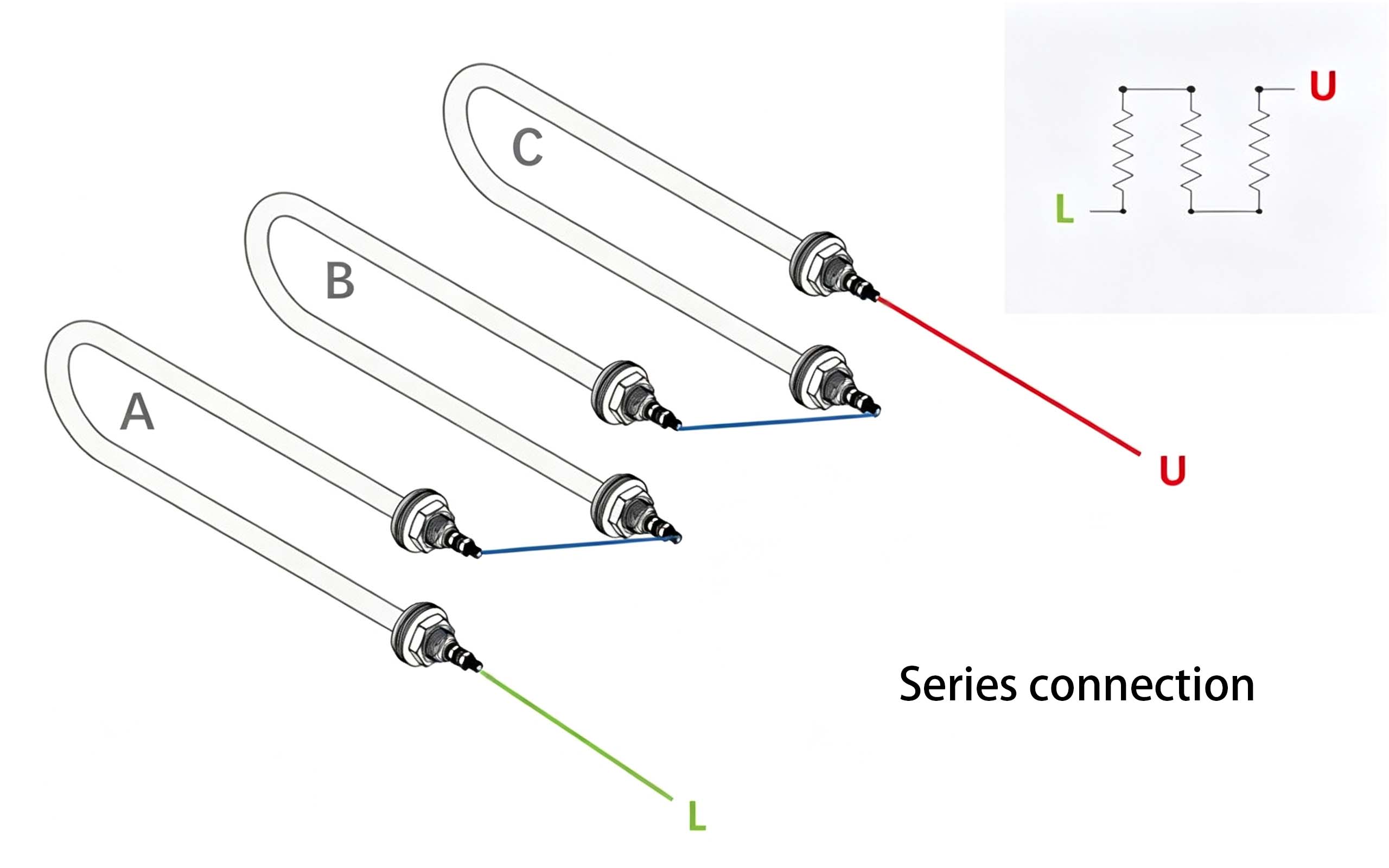
In a series circuit, the same current flows through every heating element. The total resistance is the sum of the resistance of all the elements:
Rtotal = R1 + R2 + R3 + ...
For example, if three heating elements each have a resistance of 50 Ω, the total resistance will be:
50 + 50 + 50 = 150 Ω
The total current can then be calculated from the total voltage and total resistance.
One important point is that the voltage is shared between the heating elements. If all the elements have the same resistance, the voltage will be divided relatively evenly. If the elements have different resistance values, they will receive different voltages and produce different amounts of power.
For this reason, series connection is normally used when the heating elements and the electrical system have been specifically designed for this arrangement. It is not recommended to simply connect different heating elements in series without checking the electrical calculations.
2. Parallel Connection
Parallel connection is very common in industrial heating equipment. In this arrangement, all the heating elements are connected across the same power supply.
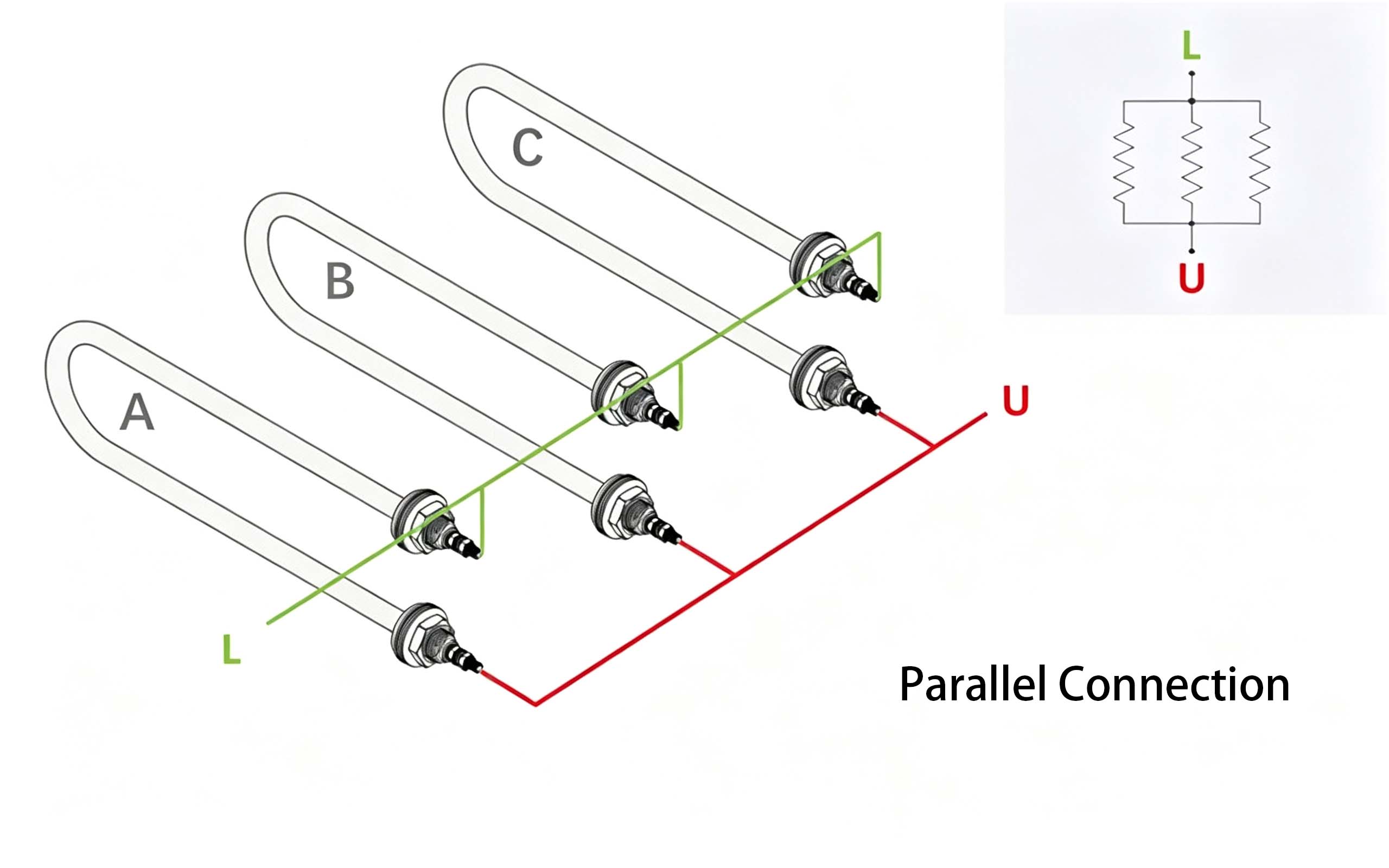
The most important thing to remember is:
Every heating element receives the same voltage.
For example, if several 220 V heating elements are connected in parallel to a 220 V power supply, each element receives 220 V.
The current through each element depends on its resistance:
I = V / R
The total current is the sum of the current through all the heating elements:
Itotal = I1 + I2 + I3 + ...
The advantage of parallel wiring is that you can increase the total heating power by adding more heating elements while keeping the same supply voltage.
For example, if one 220 V heating element produces 1000 W, four identical elements connected in parallel can theoretically provide approximately 4000 W of total heating power, assuming the power supply and electrical components are properly sized.
This is one of the easiest ways to understand parallel heating systems: same voltage, more elements, more total heating power.
3. Star Connection (Y Connection)
Star connection, also called Y connection, is commonly used with three-phase power supplies.
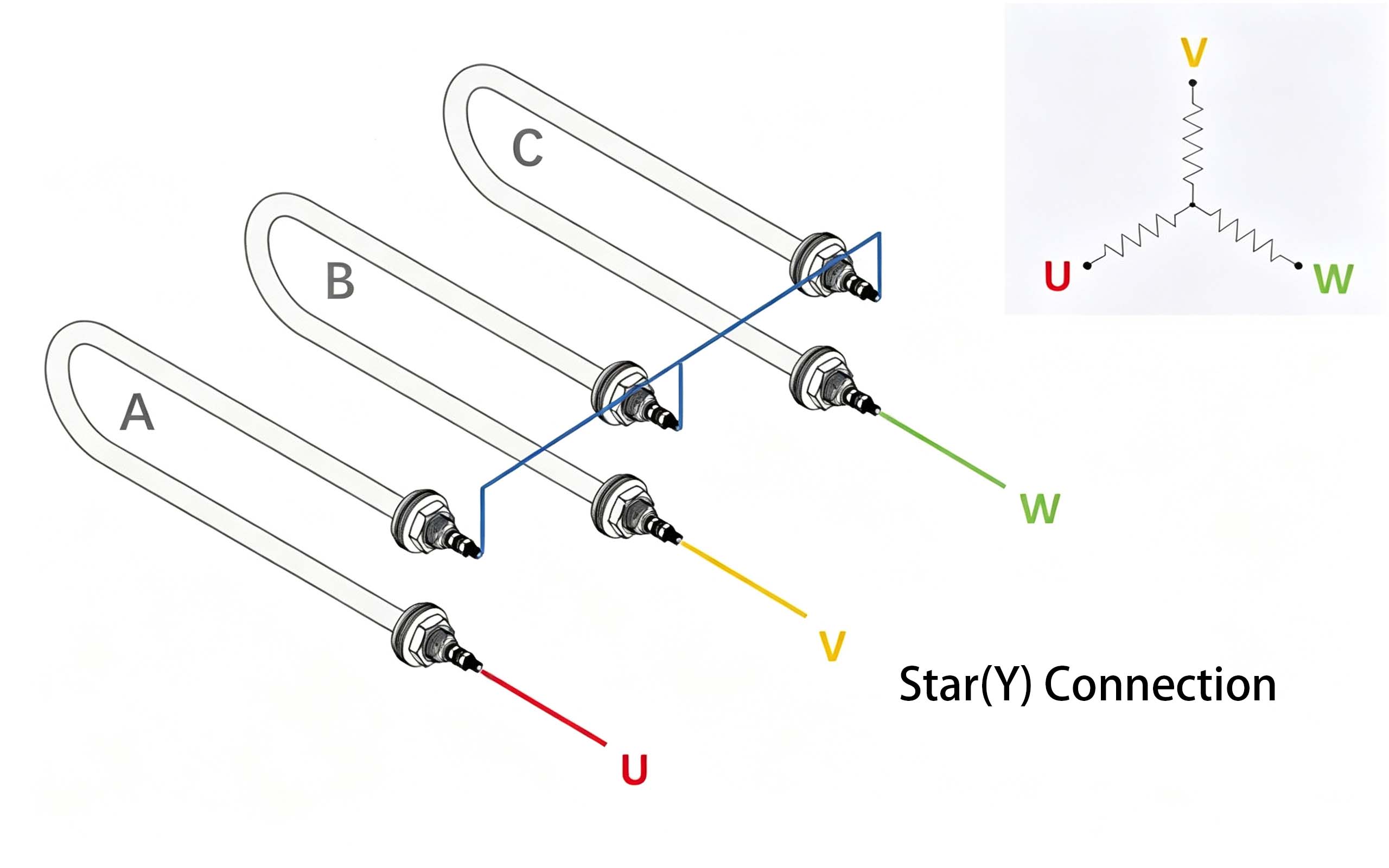
In a star connection, one end of each of three heating elements is connected together. The other three ends are connected to the three phases of the power supply.
The important thing to remember is that each heating element receives a voltage lower than the line-to-line voltage.
For a standard balanced three-phase system:
Phase voltage = Line voltage / √3
For example, if the power supply is 380 V three-phase:
380 / √3 ≈ 220 V
This means that a heating element designed for approximately 220 V can be used in a 380 V three-phase system when the three elements are correctly connected in a star configuration.
This is a very common arrangement in industrial heating equipment.
A simple way to remember it is:
380 V supply + 220 V heating elements → Star (Y) connection
Of course, the actual system design, element ratings, and electrical protection must all be checked before installation.
4. Delta Connection (Δ Connection)
Delta connection is another common method for three-phase heating systems.
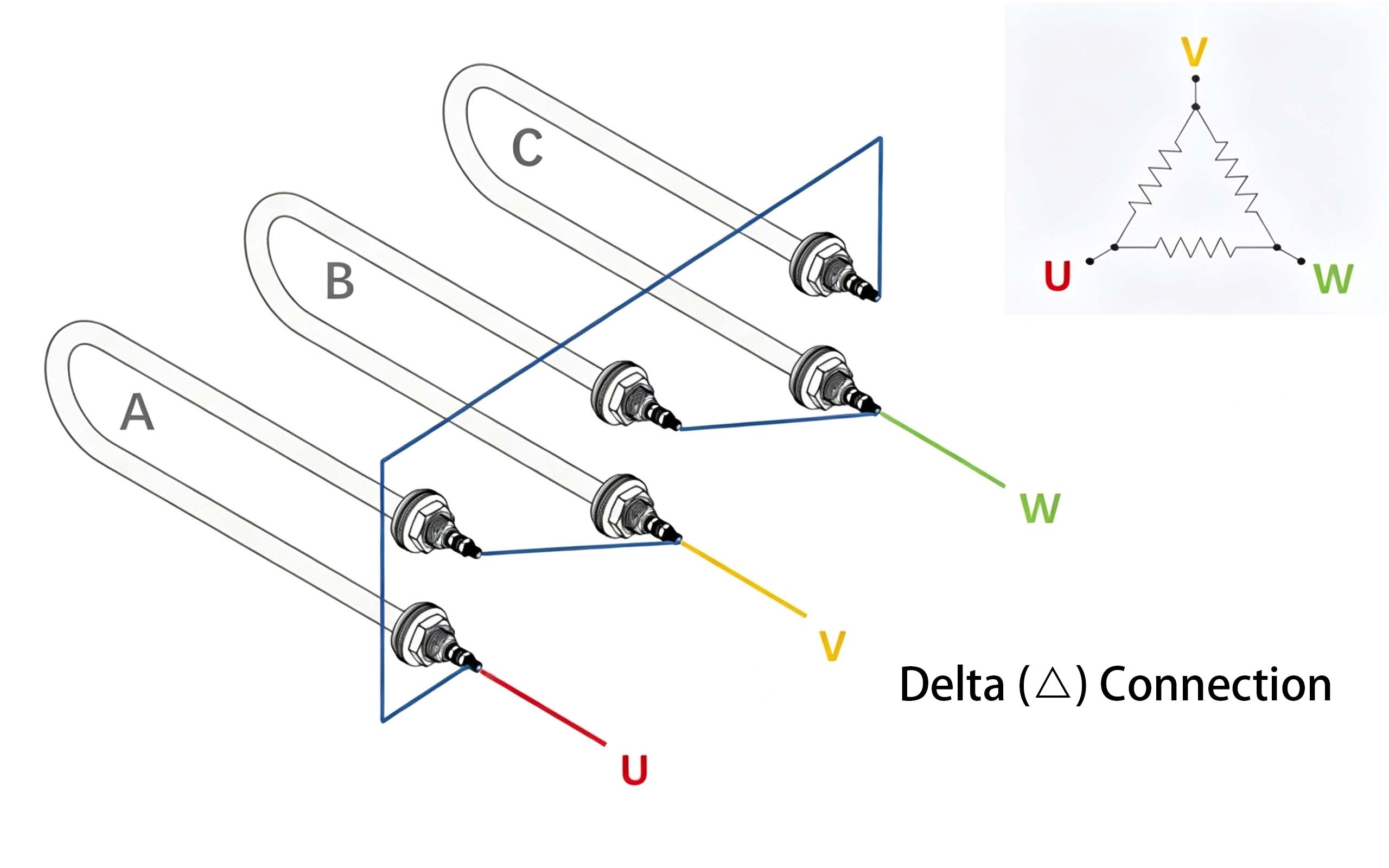
In a delta connection, the three heating elements are connected end-to-end to form a closed loop. The three connection points are then connected to the three phases of the power supply.
The key difference from a star connection is that each heating element receives the full line voltage.
For example, with a 380 V three-phase power supply:
Delta connection → approximately 380 V across each heating element
Therefore, heating elements designed for 380 V can be connected in a delta configuration when the rest of the electrical system is designed accordingly.
A simple way to remember the difference is:
380 V supply + 220 V heating elements → Star connection
380 V supply + 380 V heating elements → Delta connection
This is only a basic selection rule. The actual heating element specifications and electrical design should always be confirmed before wiring.
Star Connection vs. Delta Connection
The difference between star and delta wiring is mainly about the voltage applied to each heating element.
| Wiring Method | Voltage Across Each Element | Typical Example |
|---|---|---|
| Star (Y) | Line voltage ÷ √3 | 220 V elements on a 380 V supply |
| Delta (Δ) | Line voltage | 380 V elements on a 380 V supply |
For example, if you have a 380 V three-phase power supply and three identical heating elements, you cannot choose the wiring method only by looking at the power supply. You also need to check the rated voltage of each heating element.
If the elements are rated for 220 V, a star connection may be appropriate. If the elements are rated for 380 V, a delta connection may be appropriate.
The important point is simple: the rated voltage of the heating element must match the voltage it actually receives.
Why Does the Wiring Method Change Heating Power?
This is one of the most important things to understand when wiring heating elements.
A resistive heating element follows the formula:
P = V² / R
Because voltage is squared in this formula, a change in voltage can cause a much larger change in power.
For example, imagine a heating element designed for 220 V and 1000 W. If the same element were accidentally connected to 380 V while its resistance remained the same, its theoretical power would be:
1000 × (380 / 220)² ≈ 2975 W
So the element could theoretically produce almost three times its rated power.
This is why using the wrong wiring method can be dangerous. The heating element may become much hotter than intended, which can damage the element, surrounding equipment, insulation, wiring, or temperature-control system.
On the other hand, if a 220 V heating element receives significantly less than 220 V, its heating power will also decrease. The equipment may therefore heat too slowly or fail to reach the required operating temperature.
How to Choose the Right Wiring Method
When selecting a wiring method, you do not need to start with complicated electrical calculations. First, collect the basic information about your heating system:
- Power supply voltage
- Single-phase or three-phase power supply
- Rated voltage of each heating element
- Rated power of each heating element
- Number of heating elements
- Required total heating power
- Whether the elements will be connected in series, parallel, star, or delta
Once these parameters are known, the appropriate wiring configuration can be determined.
For custom industrial heaters, it is also a good idea to tell the heating element manufacturer how the elements will be connected. This information can affect the required resistance, voltage, wattage, number of elements, terminal design, and overall electrical configuration.
A Simple Example: 380 V Three-Phase Heating System
Let's take a common industrial example.
Suppose you have a 380 V three-phase power supply and three identical heating elements.
If each heating element is rated at 220 V, the three elements can be connected in a star configuration so that each element receives approximately 220 V.
If each heating element is rated at 380 V, a delta configuration can be used so that each element receives the full 380 V line voltage.
This is why simply telling a heater manufacturer, "I need a 380 V heater," may not always provide enough information. The manufacturer may also need to know how the heating elements will be connected and what voltage each individual element needs to receive.
What Happens If the Voltage Is Wrong?
Using the wrong voltage is one of the most common mistakes when wiring electric heating elements.
If the applied voltage is too high, the heating element can produce excessive power. This may cause overheating, rapid failure, insulation damage, or other electrical problems.
If the applied voltage is too low, the element will produce less heat than its rated power. The equipment may therefore heat too slowly or fail to reach the required operating temperature.
For this reason, never select a wiring method only because it is physically possible to connect the wires. The electrical specifications must also be correct.
Safety Tips for Electric Heating Element Wiring
Before powering an electric heating system, check the rated voltage and wattage of every heating element and make sure the selected wiring method matches the electrical design. The power supply, cables, terminals, contactors, circuit breakers, grounding system, temperature controller, and safety protection should also be properly selected for the total electrical load.
For high-power industrial heaters, installation and wiring should be carried out by qualified electrical personnel. If you are unsure whether your heating elements should be connected in series, parallel, star, or delta, it is better to confirm the configuration with the heater manufacturer before applying power.
Need Help Selecting or Wiring Heating Elements?
Choosing the right heating element is not only about selecting the required wattage. The voltage, resistance, number of elements, wiring configuration, dimensions, sheath material, watt density, terminal design, operating temperature, and application environment can all affect the final heating performance.
ELEKHEAT manufactures customized electric heating elements and industrial heaters for a wide range of heating applications. We can design heating elements according to your required voltage, wattage, dimensions, heating length, terminal configuration, installation method, and operating conditions.
If you are not sure which wiring method is suitable for your application, send us your power supply voltage, heating power, number of heating elements, and element specifications. Our engineers can help you determine a suitable configuration for your heating system.
