 Skip to content
Are you experiencing premature heater burnouts, inconsistent mold temperatures, or excessive equipment downtime? For industrial engineers and B2B procurement professionals, selecting the right thermal solution is critical to operational efficiency.
This comprehensive guide dives deep into the engineering behind industrial heating elements, specifically focusing on the workhorse of localized heating: the cartridge heater. Whether you are dealing with injection mold heating or semiconductor manufacturing, we will unpack how these devices work, how to specify them correctly, and how to install them to maximize their lifespan.
What is a Cartridge Heater? Unveiling the Core
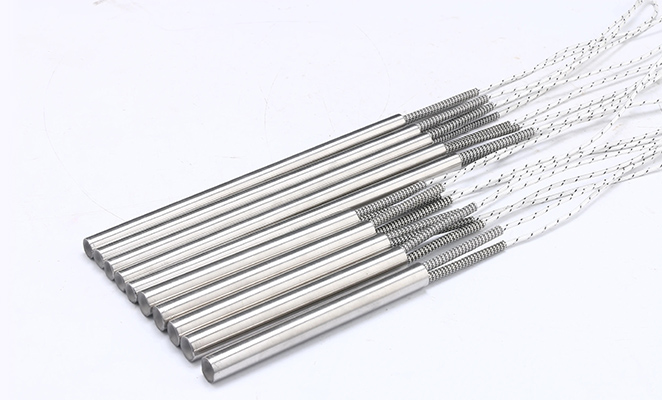
A cartridge heater is a heavy-duty, tube-shaped, single-ended industrial heating element designed to be inserted into precisely drilled holes in metal blocks. Unlike standard tubular heaters where wiring exits from both ends, a cartridge heater features a "single-ended" wiring structure, making it ideal for tight, complex machinery spaces.
The Internal Anatomy
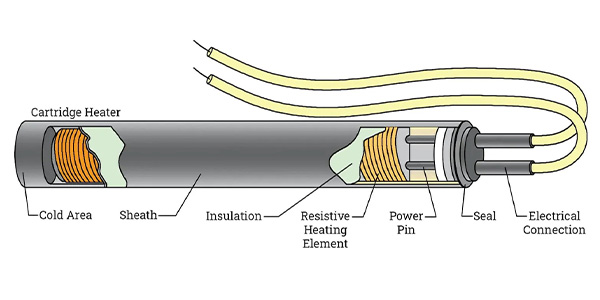
The superior performance of a cartridge heater relies on its robust three-layer construction:
- Heating Core: A highly engineered Nickel-Chromium (NiCr) resistance wire coiled around a ceramic core.
- Insulation: High-purity Magnesium Oxide (MgO) powder tightly compacted to ensure excellent thermal conductivity and dielectric strength.
- Protective Sheath: A durable outer casing made of stainless steel or specialized alloys (like Incoloy) to resist corrosion and oxidation.
The Golden Rule of Cartridge Heaters: The "Tight Fit" principle. The efficiency and lifespan of these heaters depend almost entirely on how closely the heater's outer diameter matches the bore hole.
Cartridge Heaters vs. Tubular Heaters: A Comparative Analysis
When designing a thermal system, engineers often weigh cartridge heaters against traditional tubular alternatives. Here is a breakdown to guide your selection:
| Comparison Dimension | Cartridge Heaters | Standard Tubular Heaters |
|---|---|---|
| Wiring Design | Single-ended (wiring exits from one side) | Double-ended (wiring exits from both ends) |
| Power Density | Extremely High (Up to 50 W/cm² in premium models) | Moderate (Typically lower than cartridge types) |
| Installation | Inserted into precisely drilled, close-tolerance holes | Clamped to surfaces, immersed in liquids, or in air |
| Core Applications | Injection mold heating, 3D printing blocks, hot runner systems | Ovens, large tank immersion heating, air ducts |
| Maintenance | Easy to replace from one side of the equipment | Requires access to both ends for removal/wiring |
Key Industrial Applications of Cartridge Heaters
Cartridge heaters are incredibly versatile. By customizing their materials and internal winding profiles, they serve critical roles across various high-stakes industries:
1. Plastic Injection Mold Heating
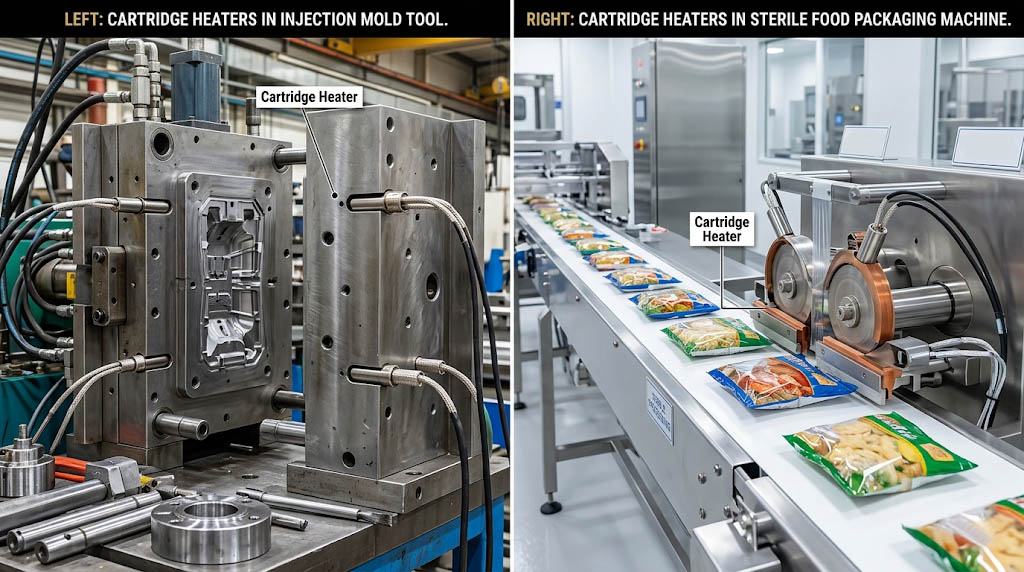
Injection molding creates severe thermal shocks due to continuous water cooling cycles. Cartridge heaters designed for molds often feature an extended cold zone to protect the electrical transition area from rapid temperature fluctuations, ensuring consistent resin flow.
2. 3D Printing Equipment
Industrial 3D printers require micro-cartridge heaters. These specialized units are designed with a precise 2mm isothermal zone, ensuring that temperature sensors read accurately and filament melts uniformly without clogging.
3. Food Processing Machinery
To prevent the carbonization of sensitive food materials, heaters in this sector must strictly control their surface watt density (≤ 4 W/cm²). Furthermore, they are housed in FDA-compliant stainless steel (such as 321 or 840 alloys) to guarantee sanitation.
4. Semiconductor Wafer Equipment
Semiconductor manufacturing pushes heaters to their absolute limits. These environments demand Incoloy 800 sheaths and high-density MgO to withstand 1000°C high temperatures, extreme pressures, and exposure to inert gases like argon.
Expert Purchasing Guide: Sourcing the Right Heating Elements
To buy industrial cartridge heaters that actually last, B2B buyers and engineers must look beyond just wattage and voltage. Here is your technical selection checklist:
- Cartridge Heater Power Density Calculation: Never look solely at total wattage. Evaluate the watt density. For mold heating, aim for ≤12 W/cm². For open-air dry heating, keep it strictly ≤8 W/cm² to prevent rapid burnout.
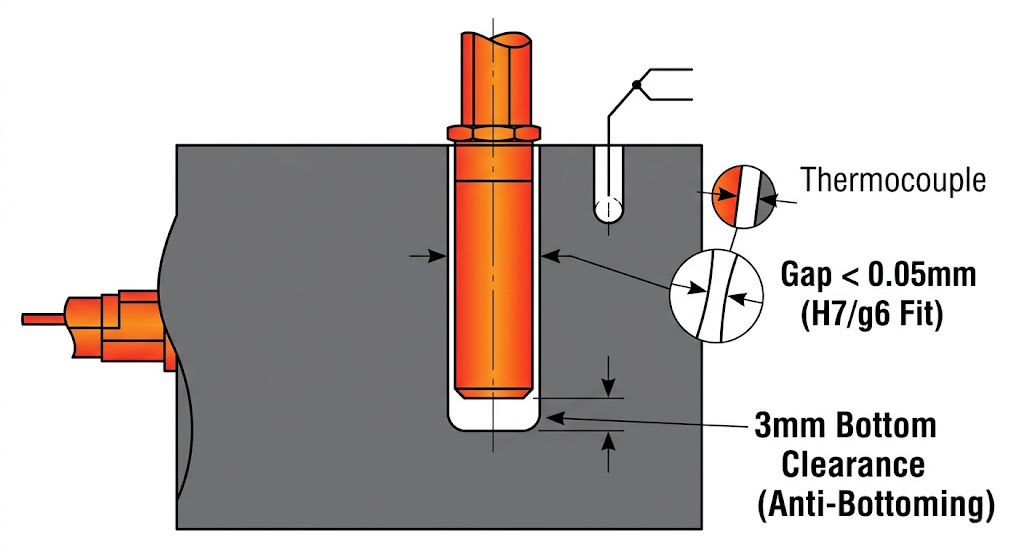
- Precision Dimensional Tolerances: Demand an H7/g6 fit tolerance. The gap between the heater and the hole must be less than 0.05mm on a single side to ensure proper heat dissipation.
- Wiring Structures: Choose Swaged-in (Internal) leads for environments with high vibration or tight spaces. Opt for Crimped-on (External) leads if ease of field maintenance and cost-efficiency are your priorities.
- Material and Environment Matching: * Air/Dry Heating: 304 SS
- Mildly Acidic Water: 316L SS
- Highly Corrosive/Acidic: Titanium or Teflon-coated
- High-Temp/Sterile: Alloy 840 or Incoloy 800
- Voltage Matching: Always verify facility voltage. Connecting a 220V heater to a 380V power source will triple the wattage output, causing catastrophic failure within minutes.
Temperature Control: The "Brain" of Your Cartridge Heater
Even the best custom cartridge heater manufacturer cannot prevent a burnout if the control system is flawed.
PID Controller vs. On/Off Control
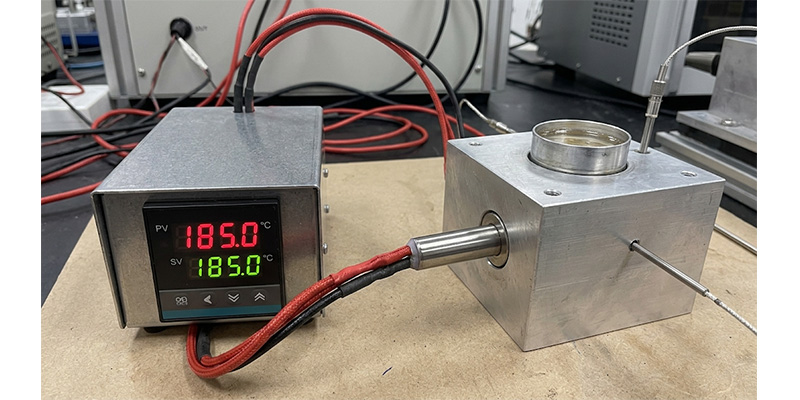
Avoid simple On/Off switches; the constant thermal expansion and contraction will snap the internal resistance wire. A PID controller for cartridge heaters is the industry standard. It modulates power smoothly, holding temperatures steady and dramatically extending heater life.
System Optimization Tips
- Sensor Placement: Place the thermocouple precisely between the heater and the working surface for the most accurate readings.
- Multi-Zone Control: For large injection molds, divide the heating system into multiple zones to eliminate cold spots.
- Soft-Start Implementation: Use a "soft-start" feature to slowly bake out any accumulated moisture inside the MgO insulation before applying full power, preventing electrical shorts.
Cartridge Heater Installation Guide & Best Practices
Improper installation is the #1 cause of cartridge heater failures. Follow these golden rules to protect your investment:
- The 0.05mm Limit Gap: Always use a reamer to finish the drilled hole. A gap larger than 0.05mm creates an air pocket that acts as an insulator, causing the heater's internal temperature to skyrocket and the element to fail.
- The 3mm Anti-Bottoming Rule: Leave a 3mm gap at the bottom of a blind hole. This allows expanding gases to escape, preventing an "air lock" that traps heat.
- Use the Right Thermal Medium: Discard standard PC thermal paste. For temperatures under 600°C, use Boron Nitride (BN). For extreme temperatures, upgrade to Aluminum Nitride (AlN) pastes.
- Radial Clamping, Axial Floating: Secure the heater radially, but allow axial movement to accommodate thermal expansion. Rigidly fixing both ends will sheer the tube or snap the welds.
- Protect the Cold End: Use heat sink collars to keep the cold end (wiring exit) below 180°C. This simple step reduces failure rates from 5‰ down to 50ppm.
Understanding Cartridge Heater Sleeve Types
To further enhance stability, engineers utilize cartridge heater sleeve types (flanges, plates, or threaded fittings).
- Core Functions: Sleeves provide geometric anchoring to prevent the heater from backing out under vibration. They also offer pressure isolation for liquid heating applications.
- Selection: Use circular flanges for standard vessel insertion, square plates for mold mounting, and specify materials (Aluminum, 321 SS, Titanium) based on the surrounding chemical environment.
Maintenance and Troubleshooting
Routine maintenance minimizes downtime. Regularly inspect leads for fraying or embrittlement caused by excessive heat. If experiencing cartridge heater failures and troubleshooting, check the following first:
- Blackened Sheath? Usually indicates contamination (oil/plastic melting onto the heater) or excessive watt density.
- Swelling/Burst Sheath? Almost always caused by moisture ingress followed by rapid heating, or poor fitment causing the sheath to melt.
- Premature Wire Breakage? Check for excessive vibration or ensure you are using a PID controller rather than an On/Off relay.
People Also Ask (FAQ)
How does a cartridge heater work? It converts electrical energy into heat through a resistive NiCr wire coiled inside the tube. This heat transfers through compacted MgO insulation to the outer metal sheath, which conducts the heat directly into the surrounding metal block or liquid.
How do you calculate cartridge heater power density? Power density (Watt Density) is calculated by dividing the total wattage by the heated surface area of the tube. The formula is: Wattage / (π × Diameter × Heated Length). Keeping this number within safe limits based on the application is crucial for longevity.
What causes a cartridge heater to fail? The most common causes are improper fitment (holes drilled too large), incorrect voltage applied, contamination of the lead end by moisture or oil, and lack of proper temperature control (PID).
Can cartridge heaters be used in water? Yes, but they must be specifically designed for immersion with waterproof seals (like silicone or epoxy) and threaded fittings. Standard mold heaters will short out if submerged.
Elevate Your Thermal Systems with elekheat
Building a reliable industrial thermal system requires a systemic approach—from calculating precise tolerances and watt densities to selecting the right PID controls and installation methods.
Don't let subpar heating elements bottleneck your production. As a premier custom cartridge heater manufacturer, elekheat provides highly engineered thermal solutions tailored to your specific operational challenges. Whether you need specialized Elekheat cartridge heaters for high-temperature semiconductor tools or robust elements for injection molding, our engineering team is ready to assist.
Ready to eliminate thermal failures? Contact the elekheat technical team today for a customized heating element quote, CAD design support, and expert application assistance. Let's build a thermal system that lasts.
