Skip to content
Electric heating elements are the core components behind industrial heaters, cartridge heaters, immersion heaters, ovens, plastic processing systems, and thousands of thermal applications.
But despite being widely used across manufacturing industries, many engineers and buyers still ask:
- How does a heating element actually work?
- Why do some heaters fail early?
- What material is best for high temperature applications?
- How do you select the right watt density?
- What determines heating efficiency and lifespan?
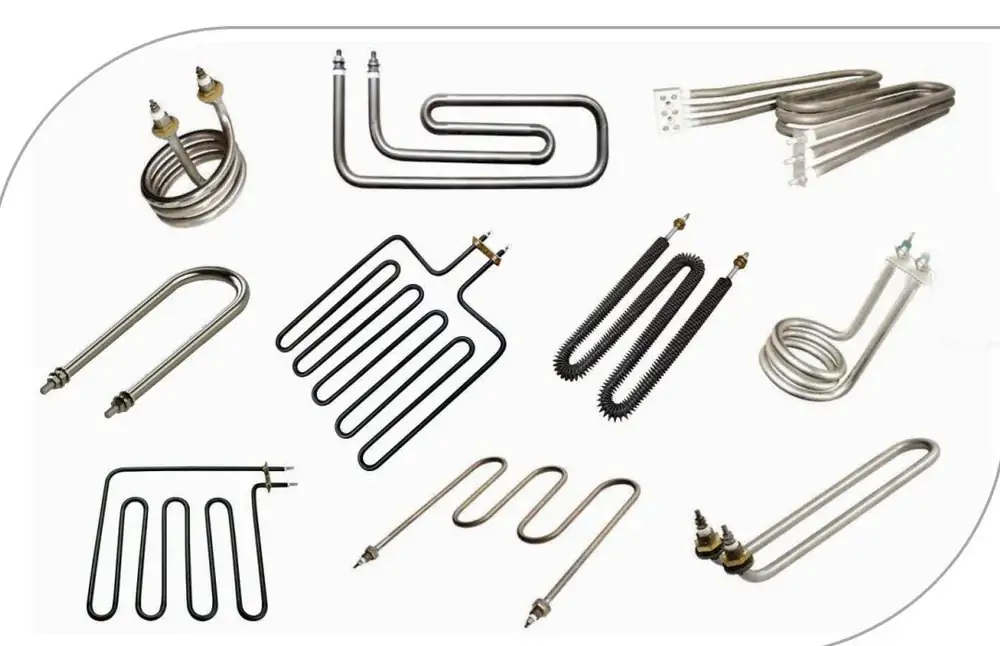
This guide explains heating element fundamentals in simple engineering terms while also covering industrial design considerations used in real manufacturing environments.
Quick Answer Box
| Question | Quick Answer |
|---|---|
| What does a heating element do? | Converts electrical energy into heat through electrical resistance |
| Most common resistance wire materials | Nichrome (NiCr) and FeCrAl |
| Best heater for liquids | Immersion heaters |
| Best heater for molds and dies | Cartridge heaters |
| Main cause of heater burnout | Excessive watt density and overheating |
| What insulation is used inside heaters? | High-purity magnesium oxide (MgO) powder |
| What affects heater lifespan most? | Temperature, watt density, moisture, and heat dissipation |
What Is a Heating Element?
A heating element is a resistive component that converts electricity into heat.
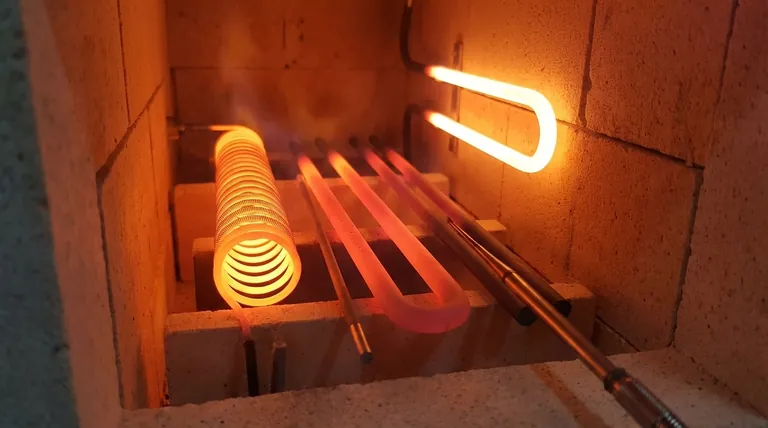
When electric current flows through a resistance wire, the wire resists the flow of electrons. This electrical resistance generates thermal energy according to Joule heating principles.
The generated heat is then transferred to:
- Air
- Liquids
- Metal surfaces
- Molds
- Pipes
- Industrial equipment
Heating elements are used in: Industrial process heating, plastic extrusion, packaging equipment, water heating systems, HVAC systems, food processing equipment, medical equipment, laboratory systems, and semiconductor manufacturing.
How Does a Heating Element Work?
At the core of every electric heater is resistance wire. When voltage is applied:
- Electric current flows through the resistance wire.
- The wire resists electron flow.
- Electrical energy converts into heat.
- Heat transfers outward through insulation and the metal sheath.
- The target medium absorbs the heat.
The amount of heat generated depends on voltage, resistance value, current, watt density, and heat dissipation conditions.
The basic electrical heating relationship is:
P = frac{V^2}{R}
Where:
- P = Power (Watts)
- V = Voltage
- R = Resistance
Higher resistance generates more heat under controlled electrical conditions.
Internal Structure of a Heating Element
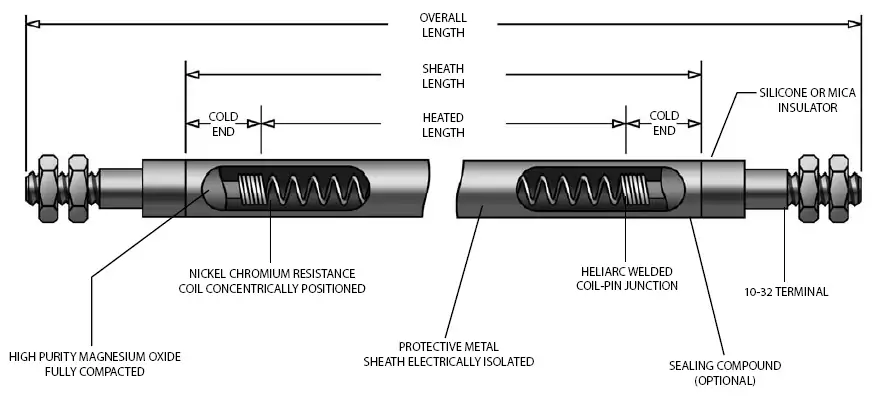
Although heater designs vary, most industrial heating elements contain the following core components:
| Component | Function |
|---|---|
| Resistance Wire | Generates heat |
| Magnesium Oxide Powder | Electrical insulation and thermal transfer |
| Metal Sheath | Mechanical protection and heat transfer |
| Terminal Pins | Electrical connection |
| Seals | Prevent moisture contamination |
The internal structure is critical for heater performance and lifespan. Poor MgO compaction, insufficient insulation purity, or low-quality sheath materials often lead to premature heater failure.
Real Manufacturing Experience: Why Heater Compaction Matters In industrial tubular heaters, MgO powder density directly affects dielectric strength, thermal conductivity, resistance stability, and heater lifespan. In one extrusion heating project, a customer experienced repeated heater burnout within 2–3 months. The actual issue was insufficient MgO compaction inside low-quality imported heaters. The poor compaction created air gaps around the resistance wire, causing localized overheating. After switching to higher-density compacted heaters, operational lifespan increased to more than 12 months.
Common Heating Element Materials
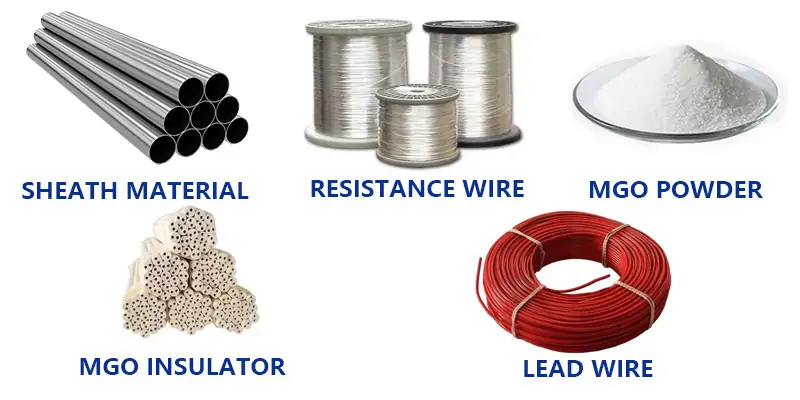
The resistance wire material determines maximum temperature, oxidation resistance, lifespan, cost, and heating efficiency.
Nichrome (NiCr)
Nichrome is one of the most widely used heating element materials.
- Advantages: Excellent oxidation resistance, stable resistance at high temperatures, long lifespan, easy forming and winding.
- Common applications: Cartridge heaters, household appliances, air heaters, industrial ovens.
FeCrAl (Iron Chromium Aluminum)
FeCrAl alloys operate at higher temperatures than Nichrome.
- Advantages: Higher maximum operating temperature, excellent oxidation resistance, lower material cost, good long-term stability.
- Applications: Industrial furnaces, high-temperature air heating, ceramic kilns, heat treatment systems.
Why Magnesium Oxide (MgO) Powder Is Important
MgO powder is one of the most critical materials inside industrial heaters. Its main functions are electrically insulating the resistance wire, conducting heat efficiently to the sheath, stabilizing internal heater structure, and improving dielectric strength. High-purity electrical grade MgO powder offers better thermal conductivity and longer heater lifespan.
Types of Heating Elements
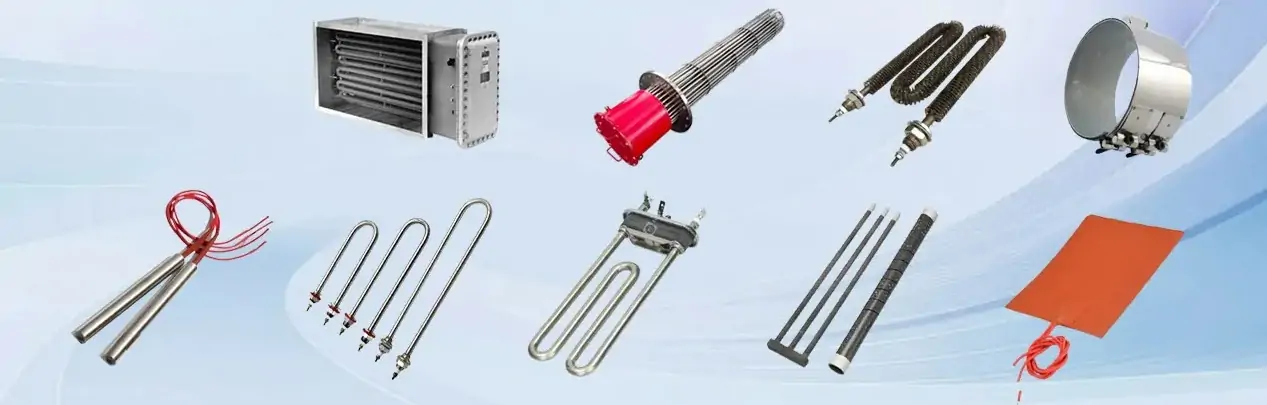
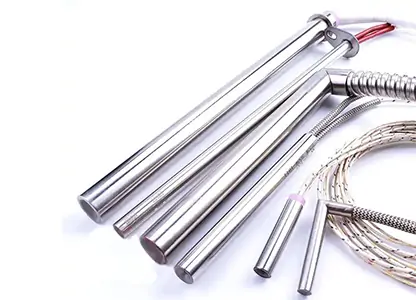
1. Cartridge Heaters
Cartridge heaters are compact cylindrical heaters inserted into drilled holes in metal blocks.
- Best for: Injection molds, packaging equipment, hot plates, dies, sealing systems.
- Advantages: High watt density, compact size, fast heat transfer, precise localized heating.
2. Tubular Heaters
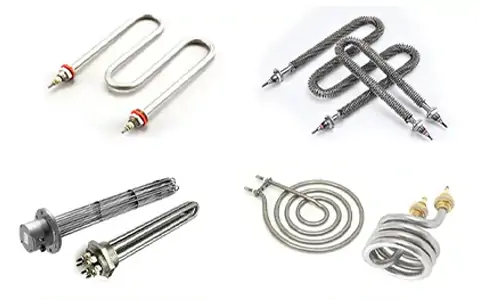
Tubular heaters are versatile industrial heaters that can be bent into different shapes.
- Applications: Air heating, surface heating, liquid heating, industrial machinery.
- Advantages: Flexible configurations, durable structure, high mechanical strength.
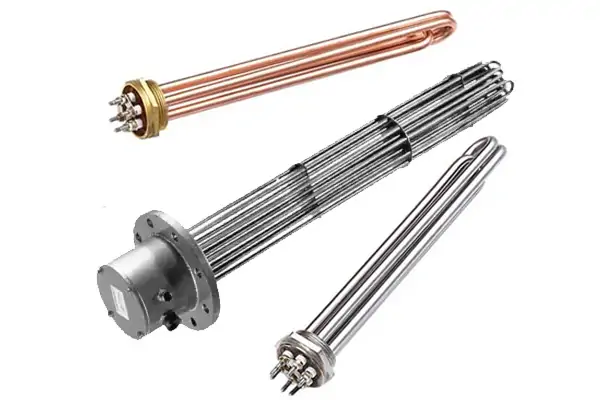
3. Immersion Heaters
Immersion heaters directly heat liquids.
- Applications: Water tanks, oil heating, chemical processing, industrial cleaning systems.
- Advantages: High thermal efficiency, fast heat transfer, compact installation.
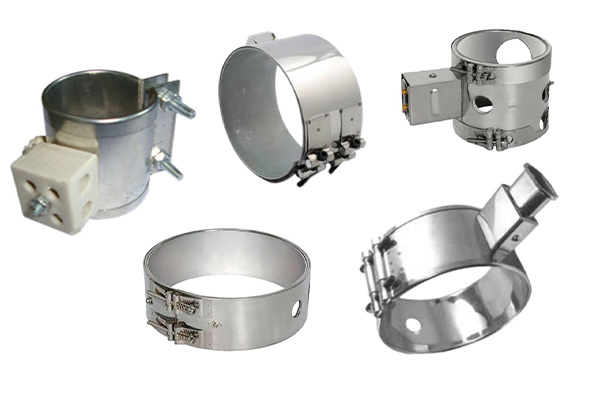
4. Ceramic Heaters
Ceramic heaters use ceramic insulation materials to achieve high-temperature operation.
- Applications: Plastic extrusion, industrial furnaces, high-temperature processing.
Watt Density: The Most Important Heater Design Factor
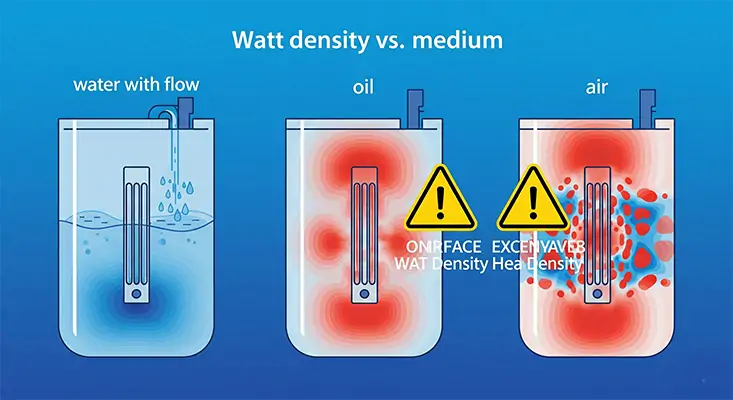
Watt density refers to the amount of power generated per unit surface area.
- High watt density provides: Faster heating, smaller heater size, higher thermal response.
- Excessive watt density may cause: Overheating, carbonization, scaling, heater burnout, reduced lifespan.
Real Engineering Example: Excessive Watt Density Failure A plastic processing customer originally used 8 W/cm² cartridge heaters in an application with poor heat dissipation. The heaters failed repeatedly within several weeks. After thermal analysis, the watt density was reduced to 5 W/cm² and hole fit tolerance was improved. Results: Heater life increased significantly, temperature stability improved, and maintenance downtime decreased.
Common Causes of Heating Element Failure
- Excessive Temperature: Overheating accelerates oxidation and wire degradation.
- Improper Watt Density: Poor watt density selection creates localized hotspots.
- Moisture Contamination: Moisture reduces insulation resistance and may cause electrical leakage.
- Poor Heat Dissipation: Insufficient contact or airflow traps heat inside the heater.
- Voltage Instability: Overvoltage increases power output and accelerates burnout.
- Low-Quality Manufacturing: Common manufacturing defects include poor MgO compaction, uneven resistance wire spacing, and inferior sheath materials.
How to Select the Right Heating Element
Choosing the right heating element requires more than matching voltage and wattage.
| Selection Factor | Why It Matters |
|---|---|
| Operating Temperature | Determines wire and sheath material |
| Medium Type | Air, liquid, metal contact, corrosive chemicals |
| Watt Density | Controls surface temperature |
| Installation Space | Determines heater size and shape |
| Voltage | Affects electrical design |
| Control Method | PID, SSR, thermocouple compatibility |
Temperature Control Systems
Industrial heating systems often use thermocouples, RTD sensors, PID controllers, and SSR relays. Proper temperature control improves process stability, energy efficiency, and heater lifespan.
Real Factory Experience: Why Some Heaters Burn Out in Weeks In one tank heating application, the heater surface was partially exposed because the liquid level frequently dropped below the active heating zone. This caused dry firing conditions. The exposed section overheated rapidly and failed. After redesigning the tank level control system and lowering watt density, heater lifespan improved dramatically.
Frequently Asked Questions
What is the best material for heating elements? Nichrome and FeCrAl are the most common industrial heating element materials. The best choice depends on operating temperature and application environment.
Why do heating elements fail? The most common causes are excessive watt density, overheating, moisture contamination, poor heat dissipation, and voltage instability.
What is watt density? Watt density is the amount of power generated per unit surface area. It is one of the most important factors affecting heater lifespan.
How long do industrial heating elements last? Heater lifespan depends on operating temperature, watt density, environment, manufacturing quality, and installation conditions. They may last from several months to many years.
Need Help Selecting the Right Heating Element?
ELEKHEAT provides custom industrial heating elements, OEM manufacturing, and engineering support to ensure your thermal systems operate flawlessly.
Whether you need cartridge heaters, tubular heaters, immersion heaters, or precise temperature control solutions, our engineers can help optimize your watt density and thermal design.
To recommend the correct heater configuration, our engineers typically need:
- Voltage & Power
- Operating temperature
- Medium type
- Installation dimensions
- Working environment
Final Thoughts
Heating elements may appear simple from the outside, but their internal structure, material quality, watt density, and thermal design all strongly affect performance and lifespan. Understanding these heating element basics helps engineers and buyers avoid common design mistakes and improve long-term heating system performance.