 Skip to content

The sheath alloy is the barrier between a resistive heating element and the surrounding process. Choosing between SS316L and Incoloy 800 is not simply a premium-versus-standard decision — it is a decision about which failure mode you need to prevent.
Cartridge heater buyers often treat sheath material as a line item on a specification sheet. In practice, it is one of the most important factors influencing corrosion resistance, oxidation behavior, contamination risk, and service life. SS316L and Incoloy 800 offer different advantages under different operating conditions. SS316L is often selected for corrosion resistance and cleanability, while Incoloy 800 is designed for applications where high-temperature strength and oxidation resistance are important.
Specifying the wrong material can shorten heater life, increase maintenance requirements, and introduce contamination risks that the rest of the system was never designed to tolerate.
This guide compares SS316L and Incoloy 800 across temperature capability, corrosion chemistry, cleanroom and vacuum considerations, and total cost of ownership. It also provides a practical selection matrix and an RFQ checklist to help engineers and technical buyers make an informed material decision.
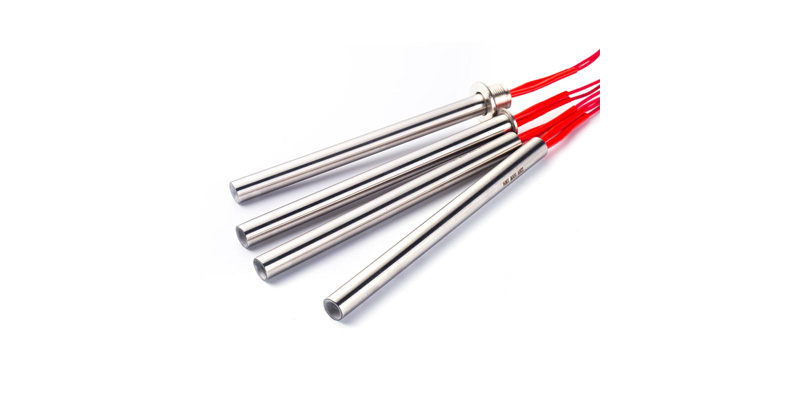
SS316L vs. Incoloy 800: Quick Comparison
The right sheath material depends on the actual operating environment, not simply on which alloy offers a higher temperature rating or a higher purchase price.
| Selection factor | SS316L stainless steel | Incoloy 800 |
|---|---|---|
| Primary advantage | Corrosion resistance and cleanability in suitable environments | High-temperature strength and oxidation resistance |
| Typical application focus | Process equipment, aqueous environments, sanitary equipment, and selected cleanroom applications | Industrial heating, high-temperature air, heat-sealing equipment, and thermal processing |
| High-temperature performance | Depends on temperature, atmosphere, mechanical loading, and heater construction | Generally better suited to sustained high-temperature service |
| Aqueous corrosion | Good resistance in many suitable aqueous environments; susceptible to localized corrosion in some chloride conditions | Must be evaluated for the specific fluid and corrosion mechanism |
| High-temperature oxidation | Performance depends on temperature and atmosphere; oxidation can become a limiting factor | Generally offers improved resistance to high-temperature oxidation compared with 316 stainless steel in suitable conditions |
| Surface finishing | Mechanical polishing, electropolishing, and other specified finishes may be available | Finish should be selected according to the process and operating environment |
| Cleanroom suitability | Can be suitable when surface finish, cleaning, sealing, and contamination requirements are controlled | Can be suitable for some high-temperature applications but requires application-specific qualification |
| Main selection risk | Pitting, crevice corrosion, overheating, or unsuitable surface condition | Incorrect alloy selection for the process chemistry or operating atmosphere |
| Purchasing consideration | Verify grade, surface finish, and corrosion compatibility | Verify exact alloy grade, temperature conditions, and oxidation environment |
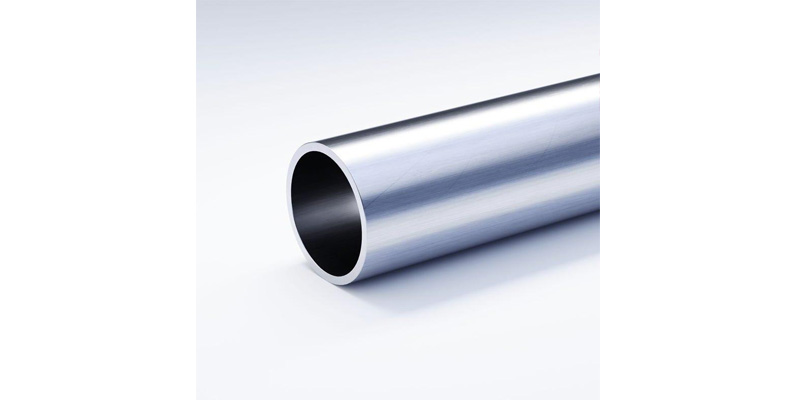
Important: Neither material is universally superior. Actual heater performance depends on the sheath alloy, watt density, dimensions, installation fit, heat transfer, electrical insulation, terminal sealing, and operating conditions.
Understanding the Two Alloys Without the Marketing Language
What SS316L actually is — and why the "L" matters
SS316L is a low-carbon austenitic stainless steel containing chromium, nickel, and typically 2–3% molybdenum. Its carbon content is limited to a maximum of 0.03% under the applicable standard.
The molybdenum content distinguishes 316L from 304 stainless steel in important ways. It generally improves resistance to pitting and crevice corrosion in chloride-containing environments, although the degree of improvement depends on the actual chemistry, temperature, and exposure conditions.
The low-carbon "L" grade is particularly relevant when welding or elevated-temperature exposure could cause sensitization. Sensitization occurs when chromium carbides precipitate at grain boundaries, potentially reducing local corrosion resistance. Using a low-carbon grade helps reduce this risk, although the complete fabrication and thermal history still matter.
For cartridge heater sheaths, SS316L offers a useful combination of corrosion resistance, cleanability, availability, and surface-finish flexibility. It is commonly considered for food-processing equipment, selected pharmaceutical applications, process machinery, and certain semiconductor equipment.
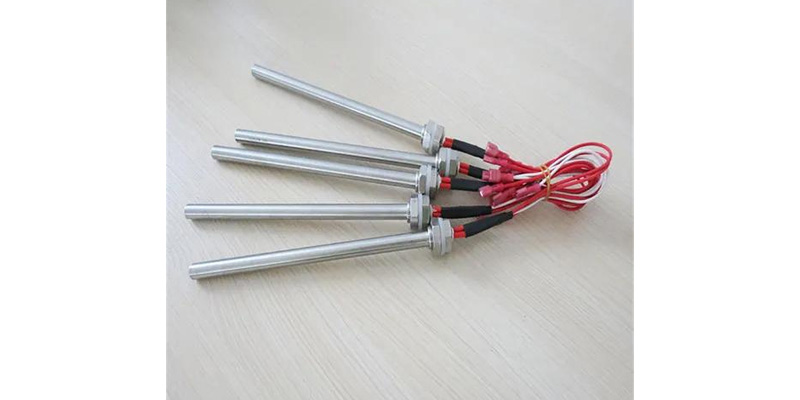
However, SS316L should not automatically be treated as a cleanroom-qualified or low-outgassing material simply because it is a low-carbon stainless steel. Surface contamination, cleaning procedures, insulation materials, terminal seals, and the finished heater construction also influence cleanliness and vacuum performance.
SS316L is also not a universal high-temperature solution. Its suitability at elevated temperatures depends on mechanical strength, oxidation conditions, operating duration, and the design of the cartridge heater. The allowable sheath temperature must be confirmed for the actual construction rather than inferred from the alloy designation alone.
What Incoloy 800 actually is — and where it earns its cost
Incoloy 800, commonly designated Alloy 800 or UNS N08800, is an iron-nickel-chromium alloy containing approximately 30–35% nickel and 19–23% chromium, with iron making up most of the remainder.
Its relatively high nickel content helps stabilize the austenitic structure, while chromium contributes to oxidation resistance. The alloy is used in elevated-temperature equipment where resistance to oxidation, carburization, and thermal degradation is important.
For cartridge heaters, Incoloy 800 can be advantageous when the sheath must withstand prolonged exposure to elevated temperatures or environments in which stainless steel oxidation becomes a concern.
However, a material's maximum service temperature is not the same as the maximum allowable temperature of a finished cartridge heater. The actual limit depends on the sheath diameter, wall thickness, watt density, internal insulation, terminal construction, installation fit, and surrounding atmosphere.
Incoloy 800 also does not automatically outperform SS316L in every corrosive environment. Its suitability for aqueous chemicals, acids, and chloride-containing fluids must be assessed separately from its high-temperature oxidation performance.
For example, hot nitric acid service requires specific compatibility evaluation; the alloy name alone is not sufficient to determine whether a particular concentration and temperature are acceptable.
The practical distinction is straightforward: SS316L is often favored when aqueous corrosion resistance and surface cleanliness dominate, while Incoloy 800 becomes attractive when sustained high-temperature performance and oxidation resistance dominate.
The Three-Dimensional Decision: Temperature, Corrosion, and Cleanliness
Most cartridge heater material problems begin with a mismatch between the alloy and the actual operating environment. A material that performs well in one dimension may be unsuitable in another.
SS316L and Incoloy 800 should therefore be evaluated across three dimensions: temperature, corrosion chemistry, and cleanliness requirements.

Dimension 1: Temperature capability and oxidation resistance
Temperature is one of the most important factors in cartridge heater material selection, but it should not be reduced to a single universal cutoff.
The actual sheath temperature may differ substantially from the surrounding process temperature. In a tightly fitted cartridge heater, for example, poor heat transfer or an excessive local watt density can create hot spots even when the measured process temperature appears acceptable.
SS316L can be suitable for many moderate-temperature applications and may also perform at higher temperatures under appropriate conditions. Its limitations depend on mechanical loading, exposure duration, atmosphere, and oxidation behavior.
Incoloy 800 is generally better suited to applications involving sustained elevated temperatures where oxidation resistance and high-temperature mechanical performance become increasingly important.
At very high temperatures, the selection must account for the atmosphere, thermal cycling, surface loading, and the possibility of scale formation. Other nickel-based alloys may also be worth evaluating when the operating conditions exceed the capabilities of the proposed grades.
| Operating condition | SS316L suitability | Incoloy 800 suitability |
|---|---|---|
| Moderate temperature with compatible aqueous media | Often suitable | May be unnecessary unless other requirements justify it |
| Elevated temperature in a controlled environment | Requires construction-specific evaluation | Often a strong candidate |
| Sustained high-temperature operation in air | Evaluate oxidation, strength, and service duration | Often preferred when its temperature and atmosphere limits are satisfied |
| Repeated high-temperature cycling | Evaluate thermal fatigue, oxidation, and installation conditions | Evaluate thermal cycling and the complete heater design |
| Extremely high temperature or aggressive atmosphere | Requires specific engineering review | Requires specific engineering review; other alloys may be more suitable |
The important question is not simply which alloy has the higher temperature capability. It is whether the selected alloy can operate reliably at the actual sheath temperature and watt density throughout the required service life.
Dimension 2: Corrosion chemistry — where 316L wins and where it stops
The molybdenum addition in SS316L generally improves its resistance to chloride-related pitting and crevice corrosion compared with 304 stainless steel. It can be a suitable choice for many aqueous process environments, mild chemicals, and applications where cleanable metal surfaces are required.
However, 316L is not immune to chloride corrosion. Warm chloride solutions, stagnant liquid, deposits, narrow crevices, and unfavorable surface conditions can increase the risk of localized attack.
There is no universal chloride concentration at which 316L suddenly becomes safe or unsafe. Corrosion depends on the complete chemical environment, including temperature, pH, dissolved oxygen, exposure time, and the geometry of the heater installation.
Strong acids also require careful evaluation. Depending on concentration, temperature, and other process conditions, SS316L may experience unacceptable corrosion in sulfuric acid, hydrochloric acid, or other aggressive media.
Incoloy 800 occupies a different performance niche. Its principal advantages include high-temperature strength and oxidation resistance, with additional corrosion behavior that must be assessed for the specific environment. It should not be selected solely because it contains more nickel.
For chloride-rich immersion, seawater, aggressive plating baths, or strong reducing acids, neither SS316L nor Incoloy 800 should be assumed suitable without compatibility data. Titanium or other specialized alloys may be more appropriate, depending on the fluid and operating conditions.
Practical corrosion rule for cartridge heaters:
- Moderate-temperature aqueous service with compatible chemistry → Consider SS316L.
- High-temperature air heating or oxidation-prone service → Consider Incoloy 800.
- Strong acids, aggressive chloride solutions, or uncertain chemical compatibility → Evaluate the actual chemistry and compare alternative materials before specifying either alloy.
The material should be selected using the process chemistry and operating temperature together, not by treating corrosion resistance and temperature resistance as interchangeable properties.
Dimension 3: Cleanroom compatibility — surface finish and contamination control matter
Cleanroom compatibility is a process qualification issue, not simply a material selection issue. In semiconductor, pharmaceutical, and biopharmaceutical environments, a heater must meet the relevant requirements for particles, chemical contamination, cleanability, and, where applicable, vacuum performance.
SS316L is frequently considered for cleanliness-sensitive applications because it offers good corrosion resistance in suitable environments and supports a range of controlled surface finishes.
Electropolishing can improve surface smoothness and remove a mechanically disturbed surface layer. It may also support cleaning and contamination-control objectives when the process is properly specified and validated.
However, there is no universal rule that every ISO 7 or cleaner environment requires electropolished 316L with Ra ≤ 0.4 μm. The required roughness should be established by the equipment design, process specifications, customer requirements, and applicable cleanliness standards.
A specified roughness value also does not independently prove low particle shedding, low outgassing, or compatibility with a semiconductor process.
For vacuum applications, performance depends on more than the sheath alloy. Moisture in magnesium oxide insulation, terminal seals, organic materials, surface contamination, and bake-out procedures can all affect vacuum behavior.
Incoloy 800 may be useful in high-temperature cleanliness-sensitive applications when oxidation and scale formation are major concerns. A more oxidation-resistant sheath can reduce the risk associated with excessive scaling under suitable operating conditions.
Nevertheless, Incoloy 800 should not automatically be considered superior for ultra-high-vacuum applications. Vacuum suitability must be established using the operating temperature, pressure range, material condition, and complete heater construction.
| Cleanroom consideration | SS316L | Incoloy 800 |
|---|---|---|
| Typical selection rationale | Corrosion resistance, cleanability, and controlled surface finishing | High-temperature operation where oxidation resistance is important |
| Surface finish | Mechanical polishing or electropolishing according to the specification | Finish selected according to process and service requirements |
| Particle control | Requires appropriate finishing, cleaning, and contamination controls | Requires evaluation of surface condition and high-temperature oxidation |
| Vacuum suitability | Depends on the complete assembly and outgassing requirements | Depends on the complete assembly and outgassing requirements |
| Primary selection risk | Corrosion, surface contamination, or inadequate cleaning | Oxidation, unsuitable process chemistry, or unqualified vacuum construction |
For both materials, the finished heater must be evaluated as a complete assembly. The sheath alloy alone cannot establish cleanroom or vacuum qualification.
Selection Matrix: Matching the Alloy to the Application
The following matrix provides practical guidance for preliminary material selection. It is intended as a starting point for engineering review rather than a substitute for corrosion testing or heater design verification.
| Application | Initial material recommendation | Reasoning and conditions |
|---|---|---|
| DI water, compatible aqueous media, and moderate-temperature process equipment | SS316L | Often suitable where corrosion resistance and cleanability are important; verify water chemistry and actual operating conditions |
| Food-processing equipment and sanitary heating surfaces | SS316L | Offers useful corrosion resistance and surface-finishing options; final suitability depends on cleaning agents and applicable requirements |
| Semiconductor equipment and cleanliness-sensitive heating | High-quality SS316L or another qualified material | Specify surface finish, cleaning, sealing, and contamination requirements; validate the complete assembly |
| Industrial air heating at elevated temperatures | Incoloy 800 as a candidate | Offers useful high-temperature oxidation resistance; confirm temperature, atmosphere, and watt density |
| Heat-sealing equipment and plastic-processing machinery | SS316L or Incoloy 800, depending on conditions | Selection depends on actual sheath temperature, cycle duration, and oxidation exposure |
| High-temperature vacuum heating | Application-specific alloy selection | Evaluate outgassing, insulation moisture, terminal sealing, temperature, and vacuum level |
| Seawater, aggressive chloride solutions, or strong acids | Neither should be assumed suitable | Evaluate titanium or other specialized alloys using verified compatibility data |
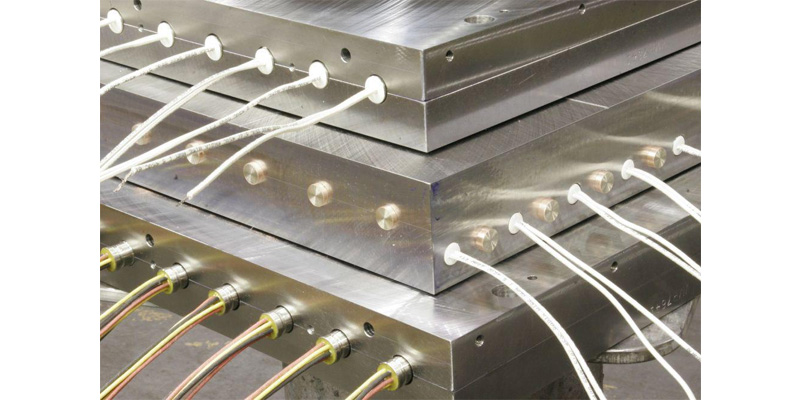
A common specification mistake is to select the sheath material without reviewing the associated fittings, terminals, and installation hardware.
Differential thermal expansion, thread galling, corrosion, and connection reliability can affect the performance of the complete assembly. However, using the same alloy family for every component is not an absolute requirement. The correct approach is to assess material compatibility, temperature exposure, mechanical loading, and connection design together.
Why the Material Decision Is Also a Total-Cost Decision
The purchase price difference between SS316L and Incoloy 800 is only one part of the total cost. The more important question is whether the selected alloy reduces the risk of premature failure under the intended operating conditions.
The total-cost calculation changes in three scenarios.
1. Downtime is expensive or access is difficult
In a mold, manifold, chamber, or automated production line, replacing a cartridge heater may require equipment disassembly, production interruption, and repeated commissioning.
Under these conditions, a more suitable sheath material may justify a higher initial price if it reduces the likelihood of oxidation-related damage or premature failure.
However, an alloy upgrade cannot compensate for poor heat transfer, excessive watt density, or an unsuitable installation fit. Material selection and thermal design must be considered together.
2. The heater is a potential contamination source
In semiconductor and other cleanliness-sensitive processes, particles, corrosion products, or outgassing can affect product quality.
The material decision should therefore consider not only heater durability but also surface condition, cleaning procedures, sealing materials, and the requirements of the surrounding process.
For some applications, a specified SS316L surface finish may be the appropriate solution. For high-temperature applications where stainless steel oxidation becomes problematic, Incoloy 800 may be worth evaluating.
The final decision should be based on actual contamination-control requirements rather than the assumption that one alloy is always cleaner than the other.
3. The failure mode creates safety or compliance risks
In food, pharmaceutical, and regulated manufacturing environments, sheath corrosion or material degradation may introduce contamination and trigger additional inspection or qualification work.
Selecting a suitable material, obtaining traceable material documentation, and verifying the finished heater construction can reduce these risks.
The appropriate level of documentation depends on the application and customer requirements.
Conversely, Incoloy 800 is not a blanket upgrade. In a moderate-temperature application where SS316L already meets the corrosion and cleanliness requirements, the additional alloy cost may not provide a meaningful benefit.
The objective is not to purchase the most expensive alloy. It is to select the material that delivers the required performance at the lowest justified lifecycle cost.
Specifying the Material Correctly: What to Put on the RFQ
A material name alone is not a complete cartridge heater specification. When requesting a quotation for SS316L or Incoloy 800 cartridge heaters, provide enough information for the manufacturer to evaluate the material, thermal design, and construction.
1. Alloy designation and material certification
For stainless steel, specify SS316L and the applicable material standard or grade requirements. For Incoloy 800, identify the intended grade, such as Alloy 800 / UNS N08800, and confirm the material documentation available from the supplier.
Do not assume that similar alloy names represent identical chemical compositions or performance.
2. Surface finish and cleanliness requirements
If the heater will be installed in a sanitary, semiconductor, or cleanliness-sensitive application, specify the required surface finish and cleaning procedure.
If electropolishing is required, state the target roughness, measurement method, and whether the requirement applies to the finished sheath.
For vacuum applications, include the required vacuum level, operating temperature, and any applicable outgassing or bake-out requirements.
3. Operating temperature and watt density
Provide the process temperature and the estimated or required maximum sheath temperature. These values are not necessarily the same.
Also specify the heater dimensions, heated length, wattage, voltage, installation fit, and operating cycle. These parameters influence heat transfer and local sheath temperature.
Ask the manufacturer to confirm the proposed watt density and material suitability for the intended operating conditions.
4. Process medium and operating atmosphere
Describe whether the heater operates in air, vacuum, water, oil, steam, chemical solutions, or another medium.
For corrosive service, provide the chemical composition, concentration, operating temperature, pH where relevant, and cleaning agents.
For high-temperature applications, identify the atmosphere and any relevant exposure to oxidation, carburization, sulfur-containing compounds, or thermal cycling.
5. Fittings, terminals, and sealing
Specify the mounting arrangement, threaded fittings, terminal configuration, lead wires, and sealing requirements.
The fitting and terminal materials should be evaluated for thermal expansion, corrosion compatibility, and mechanical reliability.
For vacuum or contamination-sensitive service, the sealing system and internal insulation require particular attention.
6. Testing and documentation
Depending on the application, request relevant material certificates, dimensional inspection records, electrical insulation tests, dielectric withstand tests, and any required leak, vacuum, or surface-finish verification.
Testing requirements should reflect the actual operating environment and customer acceptance criteria rather than relying on a generic claim that a heater has passed quality inspection.
At ELEKHEAT, cartridge heaters can be configured around the intended application, with sheath options including 304, 316L, 310S stainless steel, and Incoloy 800/840, subject to project requirements and manufacturing review.
Material selection can be evaluated alongside watt density, dimensions, surface finish, terminal configuration, and sealing requirements. For cleanliness-sensitive applications, the proposed construction and finishing requirements should be reviewed together. For high-temperature applications, the selected alloy must be confirmed against the actual sheath temperature, atmosphere, and expected operating cycle.
If you are evaluating a material change or specifying a new cartridge heater for a corrosive, high-temperature, or cleanliness-sensitive process, contact ELEKHEAT's engineering team with your operating conditions for a material recommendation and configuration-specific quotation.
Frequently Asked Questions
Is Incoloy 800 always better than SS316L for cartridge heaters?
No. Incoloy 800 is often advantageous for high-temperature service where oxidation resistance and sustained thermal performance are important. SS316L is frequently selected for compatible aqueous environments, corrosion resistance, and applications requiring controlled surface finishing.
Neither material is universally superior. The correct choice depends on temperature, atmosphere, process chemistry, watt density, and the complete heater construction.
What is the maximum temperature for an SS316L cartridge heater?
There is no single maximum temperature that applies to every SS316L cartridge heater. The allowable sheath temperature depends on the heater design, operating duration, atmosphere, mechanical conditions, and thermal loading.
A supplier should confirm the maximum allowable sheath temperature for the actual heater configuration rather than relying on a generic material temperature limit.
Can SS316L be used in a cleanroom?
Yes, SS316L can be suitable for many cleanliness-sensitive applications when the material, surface finish, cleaning process, seals, and insulation meet the relevant requirements.
Electropolishing may be appropriate where specified, but no single surface roughness value guarantees cleanroom compatibility. The finished heater should be qualified against the requirements of the intended process.
Why does the "L" in SS316L matter?
The "L" indicates a low-carbon grade, with a maximum carbon content of 0.03% under the applicable specification.
Lower carbon content helps reduce sensitization during welding or certain elevated-temperature exposures. It does not, by itself, guarantee lower outgassing or qualify a heater for cleanroom or vacuum use.
Is Incoloy 800 suitable for vacuum cartridge heaters?
Incoloy 800 may be considered for certain high-temperature vacuum applications, but suitability depends on the required vacuum level, operating temperature, outgassing limits, insulation materials, terminal seals, and complete heater construction.
The sheath alloy alone does not establish vacuum compatibility. Confirm the design and testing requirements with the heater manufacturer.
What watt density should I use with SS316L or Incoloy 800?
Watt density is application-specific. It depends on sheath geometry, installation fit, heat transfer, process medium, operating cycle, and allowable sheath temperature.
Neither SS316L nor Incoloy 800 has a single universal watt-density limit suitable for every cartridge heater.
Provide the manufacturer with the heater dimensions, power, voltage, process temperature, medium, and installation conditions so the appropriate watt density can be evaluated.
Which material is more cost-effective: SS316L or Incoloy 800?
The more cost-effective material is the one that meets the required performance without unnecessary material or manufacturing costs.
SS316L may be the better choice when its corrosion resistance and temperature capability meet the application requirements. Incoloy 800 may justify its higher material cost when high-temperature oxidation resistance and service reliability are critical.
The comparison should consider the expected service life, replacement labor, downtime, contamination risk, and the cost of any additional qualification requirements.
Final Recommendation
SS316L and Incoloy 800 solve different engineering problems. SS316L is often a strong candidate for compatible aqueous environments, corrosion-sensitive applications, and controlled surface finishing. Incoloy 800 is often more appropriate when sustained elevated temperatures and oxidation resistance dominate the material decision.
The most reliable selection process starts with the actual operating conditions, not a generic temperature threshold or a simple comparison of alloy prices.
Before specifying a cartridge heater, verify the sheath temperature, watt density, process chemistry, installation fit, surface finish, and terminal construction with the manufacturer.
For custom cartridge heaters, ELEKHEAT can review these requirements and recommend a suitable configuration for the intended application.
Contact ELEKHEAT for cartridge heater material selection and a custom quotation.
