 Skip to content
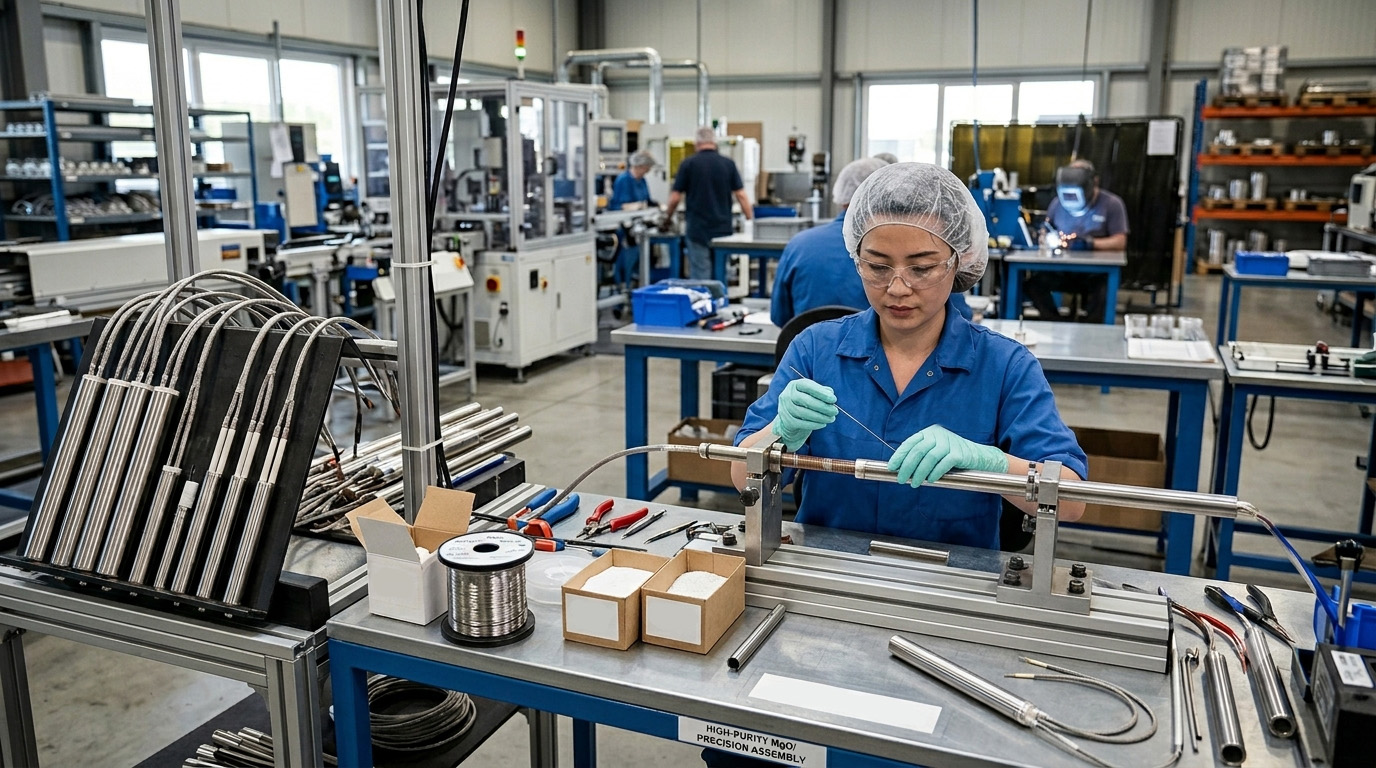
The price of a cartridge heater is mainly determined by material quality, heater dimensions, watt density, manufacturing complexity, order quantity, and application requirements. High-performance cartridge heaters use premium resistance wire, high-purity magnesium oxide insulation, precision compaction processes, and tighter manufacturing tolerances, resulting in higher costs but significantly longer service life and better heating performance.
Key Takeaway
Cartridge heater pricing is not determined by size alone. Material quality, manufacturing process, installation requirements, and production volume often have a greater impact on final cost than physical dimensions.
What Is a Cartridge Heater?
A cartridge heater is a cylindrical electric heating element designed for insertion into drilled holes in metal parts, molds, dies, platens, and industrial equipment.
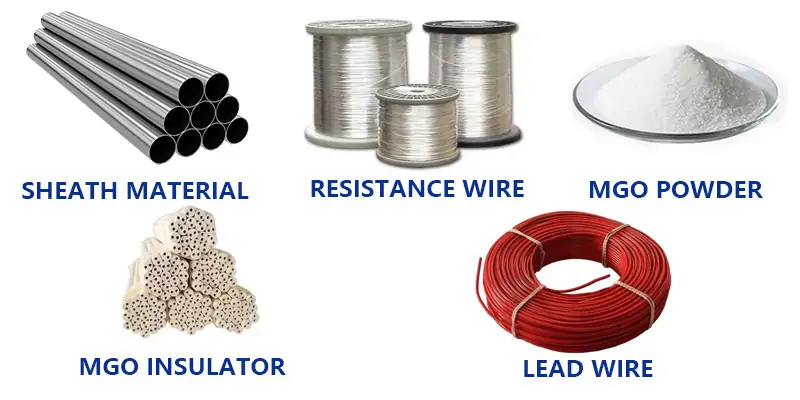
It converts electrical energy into heat through resistance wire embedded inside compacted magnesium oxide insulation and protected by a metal sheath.
Typical applications include:
- Injection molds
- Packaging machinery
- Hot runner systems
- Medical equipment
- Food processing machinery
- Semiconductor equipment
How Does Cartridge Heater Pricing Work?
Unlike standard catalog products, most industrial cartridge heaters are custom-engineered components.
Therefore, accurate pricing requires information such as:
- Diameter
- Heated length
- Overall length
- Voltage
- Power rating
- Lead wire type
- Operating temperature
- Installation method
- Quantity required
Without these parameters, any quoted price is only an estimate.
Industry Fact
Two cartridge heaters with identical dimensions can differ in price by more than 100% due to differences in materials, watt density, temperature requirements, and manufacturing precision.
Main Factors Affecting Cartridge Heater Prices
1. Internal Materials
Internal materials have a direct impact on heating performance and service life.
Resistance Wire
Common resistance wire materials include:
| Material | Performance | Relative Cost |
|---|---|---|
| NiCr 80/20 | Excellent oxidation resistance | High |
| NiCr 60/15 | Good performance | Medium |
| Lower-grade alloys | Shorter lifespan | Low |
Higher-quality resistance wire provides:
- Better temperature stability
- Longer operating life
- Lower failure rates
Magnesium Oxide Powder
Magnesium oxide acts as both insulation and thermal conductor.
| MgO Purity | Thermal Conductivity | Cost |
|---|---|---|
| >99% | Excellent | High |
| Standard Grade | Moderate | Medium |
| Low Purity | Reduced Performance | Low |
Poor-quality MgO often causes:
- Slow heat transfer
- Internal hotspots
- Premature heater failure
Key Takeaway
High-purity magnesium oxide and premium nickel-chromium resistance wire significantly increase heater lifespan and reliability.
2. Sheath Material Selection
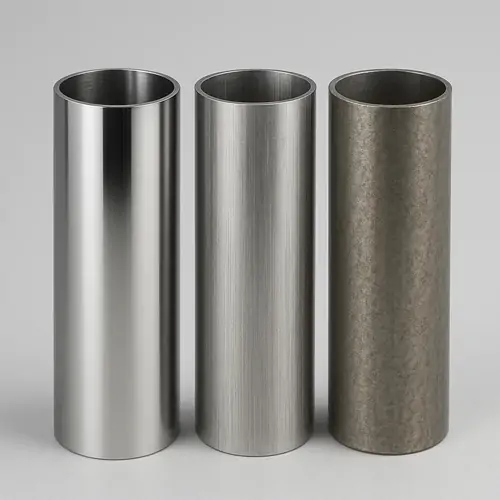
The outer sheath must match the operating environment.
Common sheath materials include:
| Material | Application | Cost Level |
|---|---|---|
| Stainless Steel 304 | General industrial use | Low |
| Stainless Steel 321 | High-temperature service | Medium |
| Stainless Steel 316 | Corrosive environments | Medium-High |
| Incoloy 800 | Extreme temperature applications | High |
| Titanium | Chemical industries | Very High |
More expensive sheath materials provide:
- Better corrosion resistance
- Higher temperature tolerance
- Longer service life
3. Manufacturing Complexity
Not all cartridge heaters are manufactured the same way.
Additional processes increase production cost:
- Swaged construction
- Internal thermocouples
- Zoned heating
- Bent cartridge heaters
- Distributed watt density designs
- Special lead exits
- Moisture-resistant sealing
Each additional process increases labor, equipment usage, and quality control requirements.
Industry Fact
Swaged cartridge heaters require high-pressure compaction equipment and typically cost more than non-swaged heaters, but provide superior heat transfer and longer service life.
4. Design Parameters
Engineering specifications strongly influence price.
Important design parameters include:
- Watt density
- Voltage
- Power
- Operating temperature
- Heating length
- Tolerance requirements
For example:
A 12 mm × 100 mm cartridge heater operating at 5 W/cm² is much easier to manufacture than one operating at 20 W/cm².
Higher watt densities require:
- Better materials
- Tighter winding control
- Enhanced compaction processes
This increases production costs.
Key Takeaway
Higher watt density generally results in higher manufacturing costs because tighter engineering tolerances are required.
5. Scrap Rate During Production
Scrap rate is a hidden but significant cost factor.
Cartridge heaters with:
- Small diameters
- Long lengths
- Tight tolerances
- Complex structures
often have higher rejection rates during manufacturing.
Examples include:
- Diameter tolerance ±0.02 mm
- Extra-long heaters
- Multi-zone designs
Higher scrap rates increase overall production costs.
6. Order Quantity
Production volume has one of the largest effects on unit price.
| Quantity | Typical Unit Cost |
|---|---|
| 1–10 pcs | Highest |
| 50–100 pcs | Lower |
| 500+ pcs | Much Lower |
| 1000+ pcs | Lowest |
Reasons include:
- Reduced setup cost per unit
- Improved material purchasing efficiency
- Lower production overhead allocation
Industry Fact
In many cases, a batch order of 500 heaters may reduce the unit price by 20–40% compared with a prototype order.
7. Application Requirements
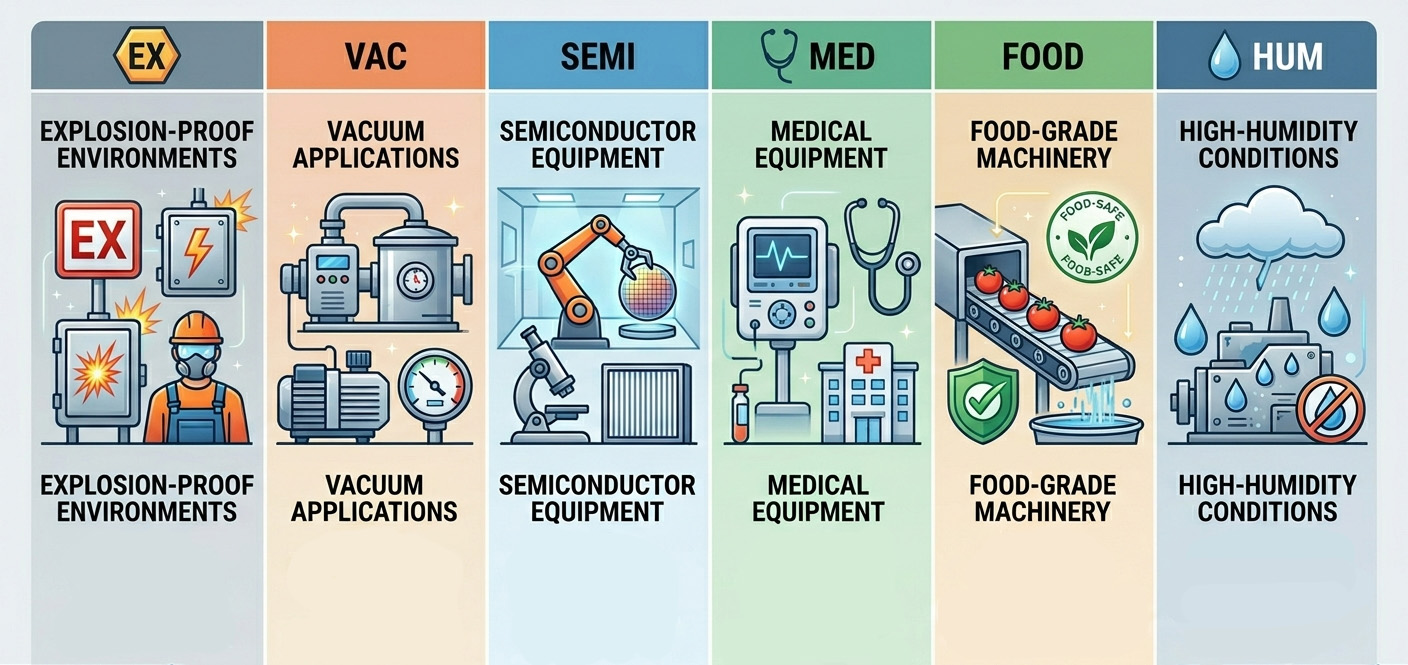
Special operating conditions increase manufacturing costs.
Examples include:
- Explosion-proof environments
- Vacuum applications
- Semiconductor equipment
- Medical equipment
- Food-grade machinery
- High-humidity conditions
These applications often require:
- Special certifications
- Enhanced sealing
- Premium materials
- Additional testing
8. Supplier Capabilities
Different manufacturers operate at different quality levels.
Price differences often reflect:
- Manufacturing equipment
- Engineering expertise
- Quality control standards
- Testing procedures
- Traceability systems
Based on ELEKHEAT manufacturing experience, premium cartridge heaters often cost more initially but provide lower lifetime operating costs due to reduced downtime and replacement frequency.
Key Takeaway
The lowest purchase price does not necessarily represent the lowest total ownership cost.
Selection Guide
Before requesting a quotation, prepare the following information:
| Parameter | Required |
|---|---|
| Diameter | Yes |
| Heated Length | Yes |
| Overall Length | Yes |
| Voltage | Yes |
| Power | Yes |
| Quantity | Yes |
| Operating Temperature | Recommended |
| Application Description | Recommended |
| Drawing or Photo | Recommended |
Providing complete information allows manufacturers to offer faster and more accurate quotations.
Common Pricing Mistakes
Comparing Industrial Heaters with Retail Products
Retail heaters are often mass-produced standard products.
Industrial cartridge heaters are usually:
- Custom-designed
- Precision-manufactured
- Application-specific
Direct price comparisons are often misleading.
Ignoring Lifetime Cost
A low-cost heater may result in:
- Frequent replacement
- Equipment downtime
- Reduced production efficiency
The total operating cost may ultimately be much higher.
FAQ
Why can't manufacturers quote a cartridge heater immediately?
Because most cartridge heaters are custom-made products that require detailed specifications before pricing.
Does a larger cartridge heater always cost more?
Not necessarily. Material selection, watt density, and manufacturing complexity often have a greater impact on cost.
Why do high watt density heaters cost more?
They require better materials, tighter manufacturing tolerances, and more advanced production processes.
Does order quantity affect pricing?
Yes. Larger production volumes generally reduce the unit price significantly.
Is the cheapest cartridge heater the best option?
Usually not. Long-term reliability and service life are often more important than initial purchase price.
What information is required for a quotation?
Diameter, length, voltage, wattage, quantity, and application details are the most important parameters.
Do special sheath materials increase cost?
Yes. Materials such as Incoloy, titanium, and stainless steel 316 are more expensive than standard stainless steel.
Why do heaters with internal thermocouples cost more?
They require additional components, assembly processes, and testing procedures.
Final Answer
The price of a cartridge heater is primarily affected by internal materials, sheath material, watt density, manufacturing complexity, design requirements, order quantity, and application conditions. Because most cartridge heaters are custom-engineered products, accurate pricing requires complete technical specifications. In industrial applications, long-term reliability, service life, and heating performance are often more important than the initial purchase price.

