Skip to content
In food and beverage manufacturing, consistent heating is not merely a process requirement — it directly determines product quality, safety compliance, and operational cost. Whether you are pasteurizing milk, reducing sauces, drying fruit, or maintaining precise fermentation temperatures, the right heating system can mean the difference between a premium product and a rejected batch.
Electric heating has become the preferred choice for many food processors because of its clean operation, precise temperature control, and high energy efficiency. Unlike fossil fuel-based systems, electric heaters produce no combustion gases, smoke, or fuel contamination — making them inherently suited to hygienic food production environments.
This guide covers the main types of food grade heating elements, their typical applications, material selection criteria, and practical considerations for choosing the right system for your operation.
Why Electric Heating for Food Manufacturing?
High Thermal Efficiency
Electric energy converts directly into heat at the point of use, achieving thermal efficiency of 95% or higher. Steam systems, by contrast, lose energy through boiler inefficiency, pipeline distribution, and condensate return. For food processors looking to reduce energy costs and environmental impact, electric heating offers a compelling advantage.
Precise Temperature Control
Modern electric heating systems use PID controllers combined with SSR (Solid State Relay) or SCR (Silicon Controlled Rectifier) power regulation. This combination delivers steady-state temperature accuracy of ±1°C, with dynamic load variations typically held within ±3°C. For processes where even small temperature deviations affect taste, texture, or sterilization efficacy, this level of control is essential.
Clean and Hygienic Operation
Electric heaters produce no flue gas, no soot, and no fuel residue. In food processing facilities where hygiene is audited and regulated, this eliminates an entire category of contamination risk. Food contact surfaces can be constructed from stainless steel grades approved for food service, and the systems are compatible with Clean-in-Place (CIP) protocols.
Main Types of Food Processing Electric Heaters
1. Flange Immersion Heaters
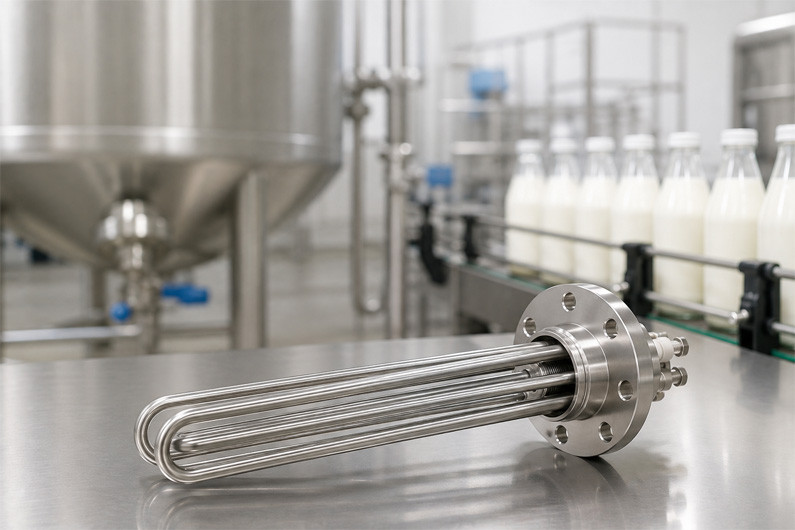
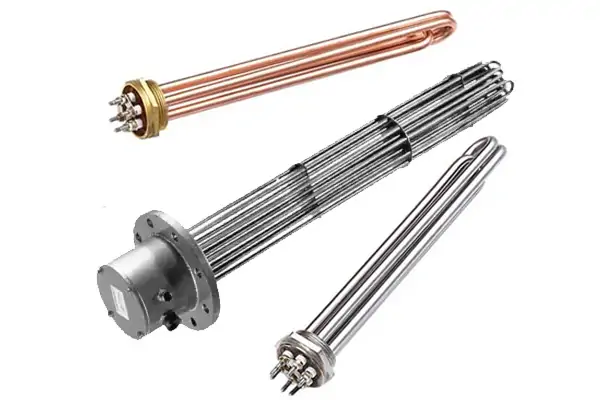
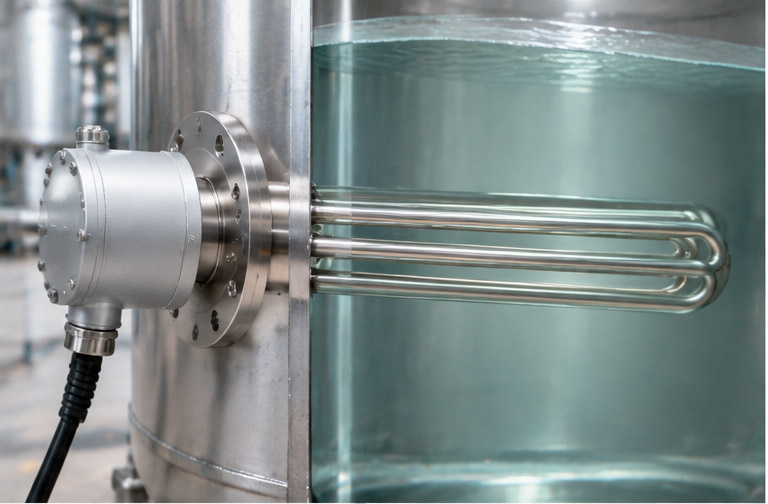
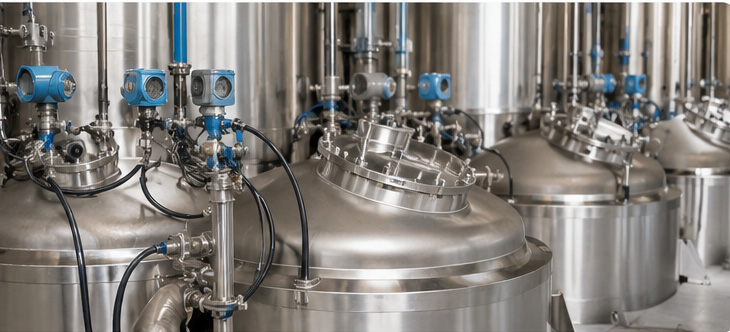
Flange immersion heaters are the workhorse of liquid food heating. The heating elements are welded or brazed to a flange that mounts directly to a tank wall or vessel nozzle, submerging the elements directly into the process liquid.
Key specifications:
- Power range: 9 kW to 1000 kW
- Sheath materials: SS304, SS316, Incoloy
- Suitable media: water, edible oil, milk, juice, syrup, sauces
- Control: PID with SCR power regulation
- Installation: tank flange mounting
Best for: Storage tanks, batch reactors, processing vessels, and large-volume liquid heating where direct immersion provides the fastest heat transfer.
2. Circulation Heaters
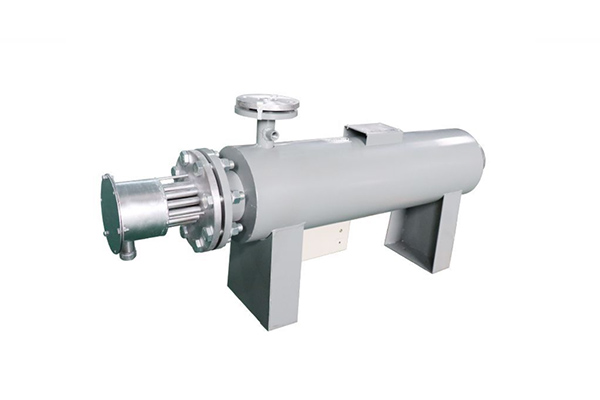
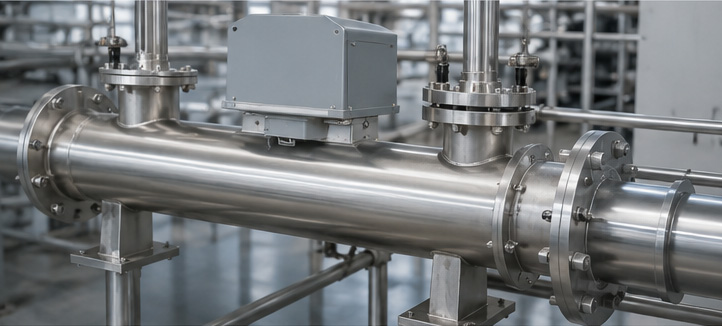
Circulation heaters (also called inline heaters) heat liquid as it flows through a pipeline or vessel. The heating elements are housed inside a chamber, and the process fluid passes over them continuously.
Key specifications:
- Power range: 3 kW to 500 kW
- Wetted parts: SS304 / SS316L
- Maximum temperature: up to 300°C
- Suitable for CIP systems
Best for: Continuous liquid processing, pasteurization lines, beverage sterilization, and CIP hot water heating. Because the liquid is in constant motion, circulation heaters are less prone to fouling than static immersion systems.
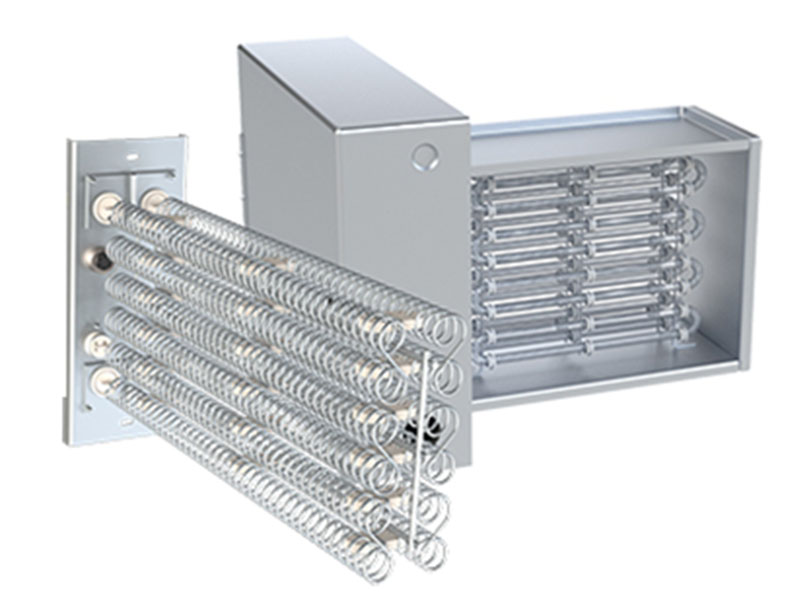
3. Air Duct Heaters
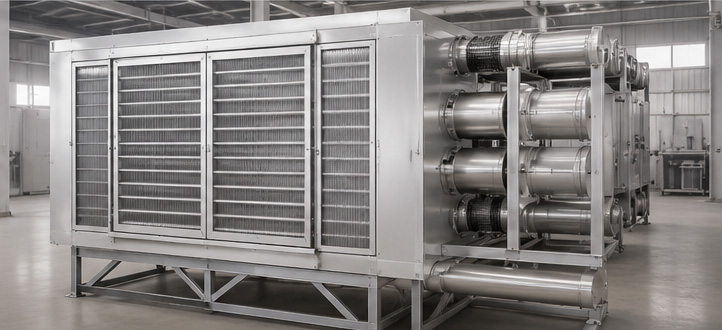
Air duct heaters provide clean, controlled hot air for drying and baking applications. Finned tubular heating elements are installed inside a duct, and a fan forces air across the elements to raise its temperature.
Key specifications:
- Power range: 3 kW to 500 kW
- Heating tube: SS304 / SS310S
- Air temperature: up to 300°C
- Finned tubular elements for enhanced heat transfer
- PID temperature control
Best for: Fruit and vegetable dehydration, meat drying, bakery drying ovens, and industrial drying chambers where combustion-free hot air is required.
4. Electric Thermal Oil Heaters
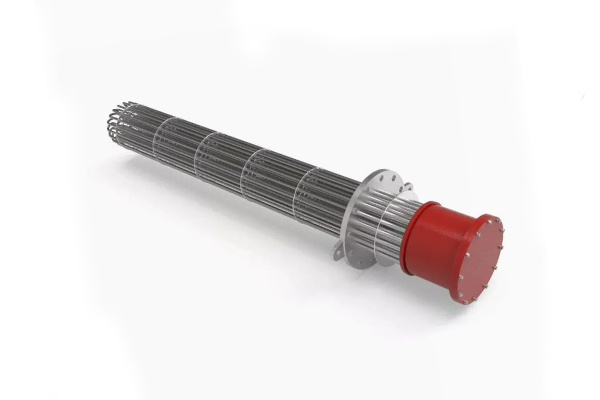
Thermal oil heaters use a closed-loop heat transfer fluid (thermal oil) to deliver indirect, uniform heating to process equipment. The oil is heated electrically and circulated through jackets, coils, or heat exchangers.
Key specifications:
- Power range: 9 kW to 1000 kW
- Working temperature: up to 300°C
- Stable, uniform heat transfer
- Suitable for high-viscosity products
Best for: Processes requiring gentle, even heating where direct element contact could cause localized overheating — such as chocolate tempering, confectionery production, and high-viscosity sauce processing.
5. Electric Jacketed Kettles
Jacketed kettles combine a cooking vessel with an integrated heating jacket, providing uniform heat around the entire container surface.
Key specifications:
- Construction: SS304 / SS316L
- Uniform jacket heating
- Suitable for sauces, jams, and confectionery
Best for: Cooking, concentration, and mixing of sauces, jams, caramel, and other products where scorching must be avoided and consistent heat distribution is critical.
Key Applications in Food and Beverage Processing
Liquid Food Heating
Direct immersion heating is widely used for milk, juice, syrup, edible oil, and sauces. Flange immersion heaters and circulation heaters provide rapid, controllable heat transfer without introducing contamination.
Sterilization and Pasteurization
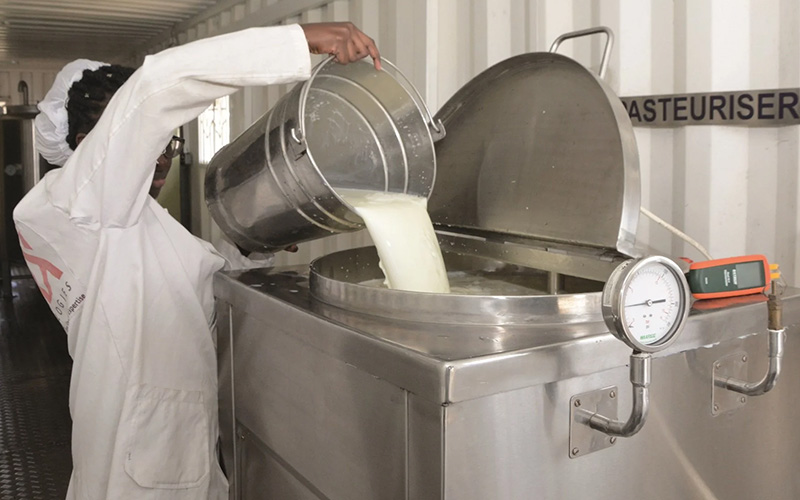
Inline electric heating enables continuous thermal treatment of liquids. Milk pasteurization, beverage sterilization, and CIP hot water heating all rely on precise, repeatable temperature profiles that electric systems deliver consistently.
Food Drying
Electric air duct heaters supply clean hot air for dehydration processes. Unlike coal-fired or gas furnaces, electric systems produce no emissions that could contact food products, and they maintain stable drying temperatures with SCR power control.
Cooking and Concentration
Uniform heating solutions are essential for sauces, jams, and confectionery. Electric jacketed kettles and thermal oil systems prevent scorching and ensure consistent product quality across batches.
Material Selection for Food-Grade Heating Elements
Choosing the right sheath material is critical for food safety, corrosion resistance, and heater longevity. The selection depends on the specific food medium and its chemical properties:
| Food Medium | Recommended Sheath Material |
|---|---|
| Water / pure water | SS304 or SS316L |
| Milk / dairy (with CIP) | SS316L electropolished |
| Edible oil / fat | SS304 or SS316L |
| Acidic juice (pH < 4.5) | SS316L or Incoloy 825 |
| Soy sauce / brine | Incoloy 800 or Titanium |
| Syrup / honey | SS304 with low surface load (≤3 W/cm²) |
| Hot air | SS304 finned tube or SS310S (above 400°C) |
Understanding Surface Watt Density
Surface watt density (measured in W/cm²) is the heating power per unit of element surface area. It is one of the most critical design parameters for food processing heaters because it directly affects product quality, fouling, and equipment lifespan.
- General liquid heating: ≤4.5 W/cm²
- Viscous or sugar-rich media: ≤3.0 W/cm²
Higher surface watt densities can cause localized overheating, leading to coking, scorching, and protein denaturation — especially in sugar-rich or protein-heavy products. Lower surface densities reduce fouling, extend cleaning intervals, and protect product quality.
Temperature Control and Safety Features
A reliable food processing heating system includes multiple layers of control and protection:
- PID control: Maintains setpoint with ±1°C steady-state accuracy
- SSR/SCR power regulation: Adjusts heat output smoothly rather than cycling on/off
- Over-temperature protection: Shuts down power if temperature exceeds safe limits
- Leakage protection: Detects electrical faults to ground
- Dry heating protection: Prevents element damage if the liquid level drops below the heating zone
For hazardous environments — such as solvent extraction facilities, flour mills, or sugar dust areas — explosion-proof configurations (Ex d IIB T1-T4) are available.
Electric vs. Steam Heating: A Practical Comparison
| Factor | Electric Heating | Steam Heating |
|---|---|---|
| Thermal efficiency (point of use) | 90–95% | Lower due to boiler and distribution losses |
| Temperature control | ±1°C with PID | Less precise, pressure-dependent |
| Emissions | None | Flue gas from boiler |
| Maintenance | Minimal (no steam traps, no condensate return) | Higher (boiler, traps, piping, water treatment) |
| Installation | Compact, modular | Requires boiler room, piping, insulation |
| Response time | Fast, direct | Slower, system-dependent |
For food processors, the combination of cleanliness, precision, and lower maintenance often makes electric heating the more cost-effective choice over the equipment lifecycle.
Real-World Applications: Three Case Examples
Edible Oil Refinery
A refinery using steam coil heating experienced unstable oil temperature during the refining process. The solution was to install 240 kW flange immersion heaters with independent temperature control. The result was improved temperature stability and reduced steam system maintenance.
Sauce Manufacturing Plant
A sauce producer faced frequent plate heat exchanger fouling that required regular cleaning and production downtime. Installing an SS316L circulation electric heater for direct inline heating reduced fouling problems and improved continuous production capability.
Food Drying Factory
A drying facility using a coal-fired hot air furnace struggled with temperature fluctuation and combustion emissions. Replacing it with an electric air heating system with SCR power control delivered stable drying temperatures and eliminated combustion emissions entirely.
How to Select the Right Heater for Your Process
To get an accurately sized and configured heating system, provide the following engineering information:
- Heating medium: Water, oil, milk, juice, syrup, sauce, air, or other process material
- Thermal requirement: Initial temperature, target temperature, and required heating time
- Equipment condition: Tank volume, pipeline flow rate, installation space, and electrical supply
- Material compatibility: Corrosion conditions to determine SS304, SS316L, or special alloy selection
- Safety requirement: Standard industrial design or explosion-proof configuration
- Control requirement: ON/OFF, PID temperature control, or automatic power adjustment
Certifications and Quality Standards
Food processing heating equipment should meet relevant safety and quality standards. Common certifications include:
- GB 16798-2023 (food machinery safety)
- GB/T 4654-2008
- GB 4706.1
- CE-LVD / CE-EMC
- Optional: UL 1030
- Explosion-proof: Ex d IIB T1-T4
Always verify that the manufacturer can provide the certifications relevant to your target market and application.
Maintenance and Service Life
Proper maintenance extends heater life and ensures consistent performance. Recommended cleaning intervals vary by application:
- Edible oil: every 45–60 days
- Milk / juice: CIP cleaning every 4–6 weeks
- Syrup / sugar: monthly inspection
Maintenance includes checking electrical connections, measuring insulation resistance, and removing deposits with approved cleaners. A well-maintained heating element can achieve a service life of 20,000 hours or more.
Conclusion
Food grade heating elements are a critical investment for any food and beverage operation. The right system ensures consistent product quality, compliance with food safety standards, and efficient energy use. When selecting a heating solution, consider the specific requirements of your process — medium, temperature range, volume, and hygiene needs — and work with a manufacturer that can provide engineering support, custom configuration, and quality-tested equipment.
Elekheat has manufactured industrial heating elements and customized heating equipment since 1997, with dedicated production lines and engineering support for food processing applications. Every heater undergoes resistance testing, insulation resistance testing, voltage withstand testing, and dimensional inspection before delivery. Contact Elekheat for a customized heating solution tailored to your food processing requirements.